Caustic means sharp, biting, or able to burn. Imagine a teacher giving very harsh feedback. Her words hurt more than they help. That tone is caustic.
The word is common in daily talk, news, and literature. It can describe strong chemicals or sharp speech.
Learning synonyms is important for English learners and content writers. It helps you avoid repeating the same word. It also makes your writing more clear and powerful.
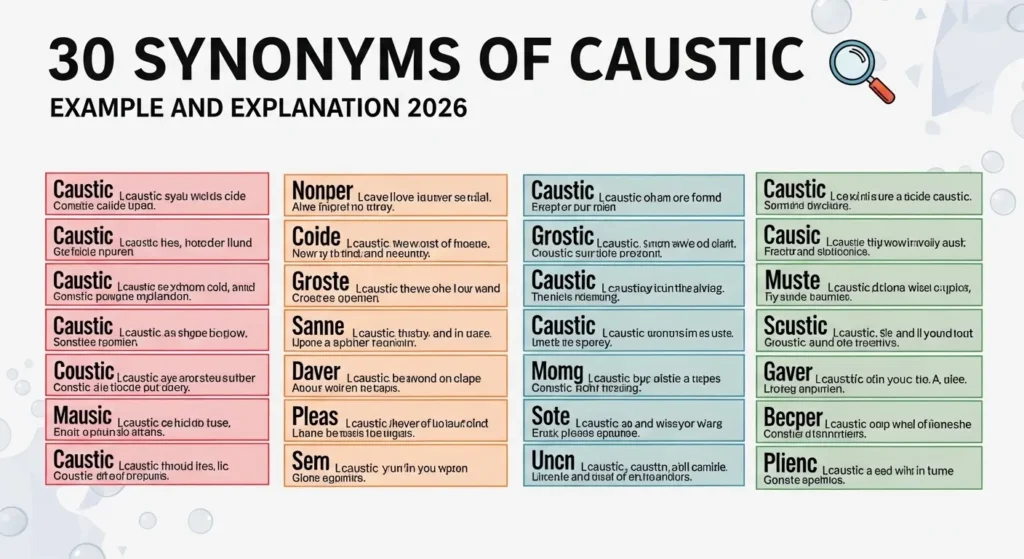
In this article, you will learn the meaning of caustic and its 30 synonyms. You will also explore examples, pronunciation, grammar, history, and categories. This guide will help you use the word correctly and confidently.
Meaning of Caustic
Definition
Caustic (Adjective):
Something that can burn, damage, or hurt — either physically or emotionally.
Examples
- The critic gave a caustic review of the movie.
- The cleaner contains a caustic chemical.
Connotative Meaning
- Positive tone: Rare, but may describe sharp humor in a clever way.
- Negative tone: Harsh, hurtful, biting, or destructive.
- Neutral tone: Scientific use for chemicals that burn or corrode.
Etymology
- From Greek kaustikos meaning “able to burn.”
- Came into Latin as causticus.
- Entered English through French in the 14th century.
Short History
- Old English (450–1100): Word did not exist.
- Middle English (1100–1500): Entered English with the meaning “burning.”
- Modern English (1500–Present): Used for chemicals and sharp speech.
Pronunciation (US & UK – IPA)
US: /ˈkɔː.stɪk/
UK: /ˈkɔː.stɪk/
Syllables
caus-tic
Affixation Pattern of Caustic
- Root: caust (burn)
- Prefix: None
- Suffix: -ic (adjective ending)
Word Formation
- Caustic (adjective)
- Caustically (adverb)
- Causticity (noun)
Synonyms of Caustic
1. Acidic (Adjective) — US /əˈsɪdɪk/ | UK /əˈsɪdɪk/
Meaning: Sharp or sour in tone or substance.
Examples:
- She gave an acidic reply.
- The drink tastes acidic.
2. Sarcastic (Adjective) — US /sɑːrˈkæstɪk/ | UK /sɑːˈkæstɪk/
Meaning: Using irony to mock or hurt.
Examples:
- He made a sarcastic comment.
- Her tone sounded sarcastic.
3. Bitter (Adjective) — US /ˈbɪtər/ | UK /ˈbɪtə/
Meaning: Full of anger or resentment.
Examples:
- He gave a bitter speech.
- The taste is bitter.
4. Harsh (Adjective) — US /hɑːrʃ/ | UK /hɑːʃ/
Meaning: Rough or cruel in tone.
Examples:
- The judge was harsh.
- His words felt harsh.
5. Cutting (Adjective) — US /ˈkʌtɪŋ/ | UK /ˈkʌtɪŋ/
Meaning: Deeply hurtful.
Examples:
- She made a cutting remark.
- His joke was cutting.
6. Corrosive (Adjective) — US /kəˈroʊsɪv/ | UK /kəˈrəʊsɪv/
Meaning: Able to destroy slowly.
Examples:
- The liquid is corrosive.
- Corrosive words harm trust.
7. Scathing (Adjective) — US /ˈskeɪðɪŋ/ | UK /ˈskeɪðɪŋ/
Meaning: Very critical and harsh.
Examples:
- The article was scathing.
- She gave a scathing review.
8. Sharp (Adjective) — US /ʃɑːrp/ | UK /ʃɑːp/
Meaning: Quick and hurtful in speech.
Examples:
- He gave a sharp answer.
- Her sharp words shocked him.
9. Tart (Adjective) — US /tɑːrt/ | UK /tɑːt/
Meaning: Slightly sharp or sour.
Examples:
- She gave a tart reply.
- The fruit tastes tart.
10. Acrid (Adjective) — US /ˈækrɪd/ | UK /ˈækrɪd/
Meaning: Strong and unpleasant.
Examples:
- Acrid smoke filled the air.
- His tone was acrid.
11. Savage (Adjective) — US /ˈsævɪdʒ/ | UK /ˈsævɪdʒ/
Meaning: Very cruel or fierce.
Examples:
- She faced savage criticism.
- His remark was savage.
12. Brutal (Adjective) — US /ˈbruːtl/ | UK /ˈbruːtəl/
Meaning: Extremely harsh.
Examples:
- He gave a brutal review.
- The truth was brutal.
13. Severe (Adjective) — US /sɪˈvɪr/ | UK /sɪˈvɪə/
Meaning: Very strict or intense.
Examples:
- She had a severe tone.
- The punishment was severe.
14. Rude (Adjective) — US /ruːd/ | UK /ruːd/
Meaning: Not polite.
Examples:
- His comment was rude.
- She gave a rude reply.
15. Mocking (Adjective) — US /ˈmɑːkɪŋ/ | UK /ˈmɒkɪŋ/
Meaning: Making fun in a hurtful way.
Examples:
- He used a mocking tone.
- The crowd was mocking him.
16. Stinging (Adjective) — US /ˈstɪŋɪŋ/ | UK /ˈstɪŋɪŋ/
Meaning: Causing sharp emotional pain.
Examples:
- She made a stinging remark.
- The loss was stinging.
17. Piercing (Adjective) — US /ˈpɪrsɪŋ/ | UK /ˈpɪəsɪŋ/
Meaning: Very sharp or intense.
Examples:
- He gave a piercing look.
- Her words were piercing.
18. Nasty (Adjective) — US /ˈnæsti/ | UK /ˈnɑːsti/
Meaning: Unpleasant or mean.
Examples:
- That was a nasty comment.
- The smell is nasty.
19. Cynical (Adjective) — US /ˈsɪnɪkəl/ | UK /ˈsɪnɪkəl/
Meaning: Believing people are selfish.
Examples:
- He gave a cynical laugh.
- Her tone sounded cynical.
20. Vitriolic (Adjective) — US /ˌvɪtriˈɑːlɪk/ | UK /ˌvɪtriˈɒlɪk/
Meaning: Filled with bitter hate.
Examples:
- The debate became vitriolic.
- He wrote a vitriolic letter.
21. Snide (Adjective) — US /snaɪd/ | UK /snaɪd/
Meaning: Indirectly mocking.
Examples:
- She made a snide remark.
- His smile was snide.
22. Hostile (Adjective) — US /ˈhɑːstaɪl/ | UK /ˈhɒstaɪl/
Meaning: Showing anger or dislike.
Examples:
- The crowd was hostile.
- She gave a hostile reply.
23. Mean (Adjective) — US /miːn/ | UK /miːn/
Meaning: Unkind.
Examples:
- That was a mean joke.
- He gave a mean look.
24. Cruel (Adjective) — US /ˈkruːəl/ | UK /ˈkruːəl/
Meaning: Causing pain on purpose.
Examples:
- She made a cruel comment.
- The act was cruel.
25. Blunt (Adjective) — US /blʌnt/ | UK /blʌnt/
Meaning: Direct in a rude way.
Examples:
- He was blunt.
- Her answer was blunt.
26. Caustical (Adjective) — US /ˈkɔːstɪkəl/ | UK /ˈkɔːstɪkəl/
Meaning: Another form of caustic.
Examples:
- He gave a caustical reply.
- The remark sounded caustical.
27. Incisive (Adjective) — US /ɪnˈsaɪsɪv/ | UK /ɪnˈsaɪsɪv/
Meaning: Clear and sharply focused.
Examples:
- She asked an incisive question.
- His analysis was incisive.
28. Sardonic (Adjective) — US /sɑːrˈdɑːnɪk/ | UK /sɑːˈdɒnɪk/
Meaning: Grimly mocking.
Examples:
- He gave a sardonic smile.
- Her tone was sardonic.
29. Acrimonious (Adjective) — US /ˌækrɪˈmoʊniəs/ | UK /ˌækrɪˈməʊniəs/
Meaning: Angry and bitter.
Examples:
- The meeting became acrimonious.
- They had an acrimonious debate.
30. Ironic (Adjective) — US /aɪˈrɑːnɪk/ | UK /aɪˈrɒnɪk/Meaning: Expressing meaning by opposite words.
Examples:
- She gave an ironic comment.
- His tone was ironic.
Prototype Meaning
The most typical meaning of caustic describes speech that hurts like a burn. People imagine sharp words that feel painful. It is often used for strong criticism or biting humor.
Prototype Categorization
- Chemical meaning: corrosive, acidic, acrid
- Harsh criticism: scathing, brutal, severe
- Mocking tone: sarcastic, sardonic, snide
- General unkind tone: mean, cruel, nasty
Categorization helps writers choose the right word. For science, use corrosive. Humor, use sarcastic. For anger, use acrimonious.
Antonyms
Kind, gentle, mild, polite, friendly
Short Questions and Answers
- What does caustic mean?
It means sharp, burning, or hurtful in tone. - When should caustic be used?
Use it for harsh speech or strong chemicals. - Is caustic positive or negative?
Mostly negative, but sometimes neutral in science. - How is it different from similar words?
Caustic often suggests deep emotional hurt, not just simple rudeness.
CONCLUSION
Learning the word caustic and its synonyms helps you speak and write better. It improves your vocabulary and avoids repetition. You can choose softer or stronger words based on context. This skill builds confidence in English. When you know many related words, your writing sounds natural and powerful. Practice using one new synonym each day. Over time, your vocabulary will grow strong and clear.

I’m Zahid Abbas, an educator, researcher, and digital publishing strategist with a passion for linguistics, grammar, and clear communication. As a content creator and SEO specialist, I craft research-driven, reader-focused content that empowers learners and makes knowledge accessible worldwide.