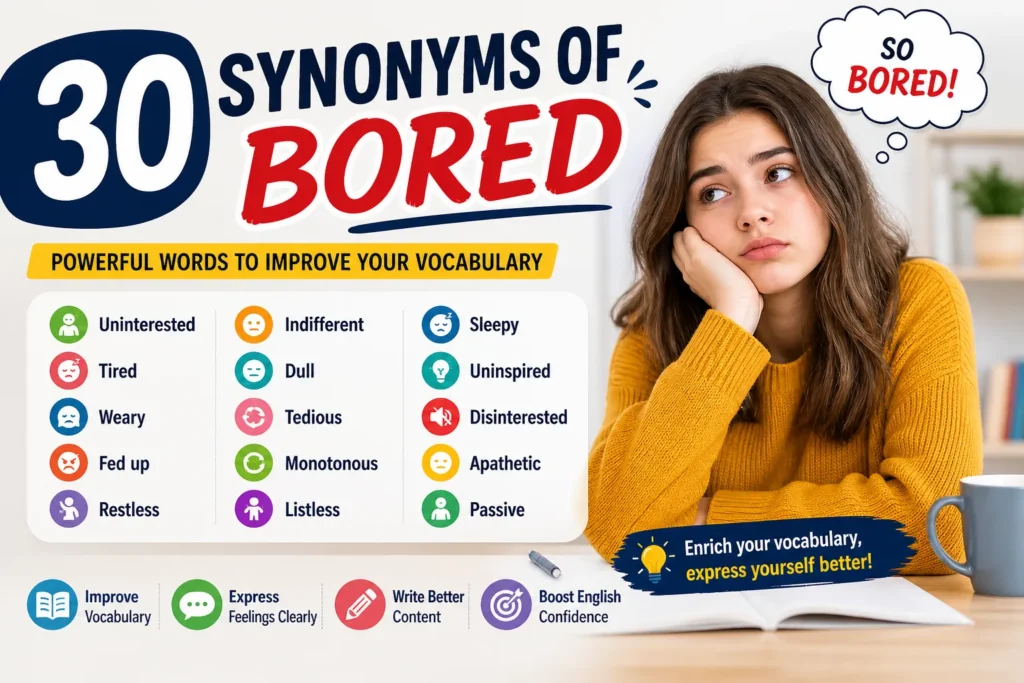
The word bored means feeling tired, uninterested, or unhappy because something is not exciting. Imagine sitting in a long meeting with nothing fun happening. Your mind starts to wander, and you feel bored.
People use this word often in daily conversations, school, work, and social situations. It is a common English word because everyone experiences boredom sometimes. However, using the same word again and again can make speaking and writing repetitive.
Learning synonyms of bored helps English learners improve vocabulary and express feelings more clearly. It also helps writers create more natural and interesting content. In this article, you will learn the meaning of bored, its pronunciation, history, grammar, and 30 useful synonyms with meanings and examples.
You will also explore semantic categories, antonyms, and simple questions to improve your English communication skills.
Meaning of Bored
Definition
Bored (adjective): feeling tired and uninterested because something is dull or not exciting.
Examples
- I felt bored during the lecture.
- The children became bored at home.
Connotative Meaning
(Connotation means the feeling or emotion a word suggests beyond its basic meaning.)
- Positive tone: sometimes suggests calmness or relaxation
- Negative tone: lack of excitement, frustration, dullness
- Neutral tone: simply feeling uninterested
Etymology
- From the verb bore, meaning “to make someone tired or uninterested”
- Origin may come from French and Germanic language roots
Short History:
- Old English (450–1100): no direct use of “bored”
- Middle English (1100–1500): similar words meant tiring or troublesome
- Modern English (1500–Present): “bored” became common for lack of interest
Pronunciation (US & UK – IPA)
- US: /bɔːrd/
- UK: /bɔːd/
Syllables
- bored
Affixation Pattern of Bored
- Root: bore
- Prefix: none
- Suffix: -ed
Word Formation:
- bore (verb)
- boredom (noun)
- boring (adjective)
- bored (adjective)
Synonyms of Bored
1. Tired (adjective)
US: /taɪrd/ | UK: /taɪəd/
Meaning: feeling mentally or physically exhausted
Examples:
- I felt tired after the class.
- She looked tired during the meeting.
2. Uninterested (adjective)
US: /ʌnˈɪntrəstɪd/ | UK: /ʌnˈɪntrəstɪd/
Meaning: not interested in something
Examples:
- He seemed uninterested in sports.
- The students looked uninterested.
3. Weary (adjective)
US: /ˈwɪri/ | UK: /ˈwɪəri/
Meaning: feeling tired and bored
Examples:
- She grew weary of waiting.
- He sounded weary after work.
4. Fed Up (adjective)
US: /fɛd ʌp/ | UK: /fɛd ʌp/
Meaning: annoyed because of too much repetition
Examples:
- I am fed up with homework.
- They felt fed up with delays.
5. Restless (adjective)
US: /ˈrɛstləs/ | UK: /ˈrestləs/
Meaning: unable to relax because of boredom
Examples:
- The child became restless.
- He felt restless during the trip.
6. Apathetic (adjective)
US: /ˌæpəˈθɛtɪk/ | UK: /ˌæpəˈθetɪk/
Meaning: showing little interest or emotion
Examples:
- She felt apathetic at work.
- His response was apathetic.
7. Indifferent (adjective)
US: /ɪnˈdɪfrənt/ | UK: /ɪnˈdɪfrənt/
Meaning: not caring much
Examples:
- He seemed indifferent to the game.
- She stayed indifferent during discussion.
8. Disinterested (adjective)
US: /dɪsˈɪntrəstɪd/ | UK: /dɪsˈɪntrəstɪd/
Meaning: lacking interest
Examples:
- The audience looked disinterested.
- Students became disinterested quickly.
9. Dull (adjective)
US: /dʌl/ | UK: /dʌl/
Meaning: not exciting or interesting
Examples:
- The movie was dull.
- It was a dull afternoon.
10. Tedious (adjective)
US: /ˈtiːdiəs/ | UK: /ˈtiːdiəs/
Meaning: too repetitive and boring
Examples:
- The task felt tedious.
- Long forms are tedious.
11. Monotonous (adjective)
US: /məˈnɑːtənəs/ | UK: /məˈnɒtənəs/
Meaning: always the same and boring
Examples:
- Factory work became monotonous.
- His voice sounded monotonous.
12. Jaded (adjective)
US: /ˈdʒeɪdɪd/ | UK: /ˈdʒeɪdɪd/
Meaning: tired from too much experience
Examples:
- She felt jaded after years of travel.
- He became jaded with city life.
13. Listless (adjective)
US: /ˈlɪstləs/ | UK: /ˈlɪstləs/
Meaning: lacking energy or interest
Examples:
- He sat listless in class.
- She looked listless all day.
14. Lifeless (adjective)
US: /ˈlaɪfləs/ | UK: /ˈlaɪfləs/
Meaning: lacking excitement or energy
Examples:
- The event felt lifeless.
- His speech sounded lifeless.
15. Sleepy (adjective)
US: /ˈsliːpi/ | UK: /ˈsliːpi/
Meaning: feeling ready to sleep because of boredom
Examples:
- The warm room made me sleepy.
- He became sleepy during class.
16. Uninspired (adjective)
US: /ˌʌnɪnˈspaɪərd/ | UK: /ˌʌnɪnˈspaɪəd/
Meaning: not excited or creative
Examples:
- The lesson felt uninspired.
- Her work seemed uninspired.
17. Passive (adjective)
US: /ˈpæsɪv/ | UK: /ˈpæsɪv/
Meaning: not active or involved
Examples:
- He stayed passive during discussion.
- The audience became passive.
18. Blasé (adjective)
US: /blɑːˈzeɪ/ | UK: /ˈblɑːzeɪ/
Meaning: unimpressed because of overfamiliarity
Examples:
- She sounded blasé about fame.
- He seemed blasé at the event.
19. Unenthusiastic (adjective)
US: /ˌʌnɪnˌθuːziˈæstɪk/ | UK: /ˌʌnɪnˌθjuːziˈæstɪk/
Meaning: lacking excitement
Examples:
- His reply was unenthusiastic.
- The team looked unenthusiastic.
20. Detached (adjective)
US: /dɪˈtætʃt/ | UK: /dɪˈtætʃt/
Meaning: emotionally disconnected
Examples:
- She felt detached from the conversation.
- He stayed detached during class.
21. Frustrated (adjective)
US: /ˈfrʌstreɪtɪd/ | UK: /frʌˈstreɪtɪd/
Meaning: upset because of boredom or problems
Examples:
- He became frustrated at work.
- The children felt frustrated indoors.
22. Annoyed (adjective)
US: /əˈnɔɪd/ | UK: /əˈnɔɪd/
Meaning: slightly angry or irritated
Examples:
- She felt annoyed during the delay.
- He sounded annoyed and bored.
23. Miserable (adjective)
US: /ˈmɪzərəbəl/ | UK: /ˈmɪzərəbəl/
Meaning: very unhappy
Examples:
- He felt miserable staying home.
- She looked miserable at the party.
24. Empty (adjective)
US: /ˈɛmpti/ | UK: /ˈempti/
Meaning: lacking feeling or interest
Examples:
- The day felt empty.
- He gave an empty smile.
25. Drained (adjective)
US: /dreɪnd/ | UK: /dreɪnd/
Meaning: mentally exhausted
Examples:
- I felt drained after work.
- She looked emotionally drained.
26. Numb (adjective)
US: /nʌm/ | UK: /nʌm/
Meaning: unable to feel excitement
Examples:
- He felt emotionally numb.
- She became numb from repetition.
27. Stale (adjective)
US: /steɪl/ | UK: /steɪl/
Meaning: no longer fresh or exciting
Examples:
- The routine became stale.
- His jokes sounded stale.
28. Dreary (adjective)
US: /ˈdrɪri/ | UK: /ˈdrɪəri/
Meaning: dull and depressing
Examples:
- It was a dreary afternoon.
- The office felt dreary.
29. Wearied (adjective)
US: /ˈwɪrid/ | UK: /ˈwɪərid/
Meaning: tired from too much repetition
Examples:
- She felt wearied by the noise.
- He sounded wearied after travel.
30. Burned Out (adjective)
US: /bɜːrnd aʊt/ | UK: /bɜːnd aʊt/
Meaning: extremely tired and uninterested
Examples:
- Many workers feel burned out.
- She became burned out after exams.
Prototype Meaning
The most common meaning of bored is feeling uninterested because something lacks excitement or variety. People usually imagine waiting too long, doing repetitive tasks, or sitting through dull activities.
Prototype Categorization
- Lack of interest: uninterested, indifferent, disinterested
- Mental tiredness: weary, drained, burned out
- Dullness and repetition: monotonous, tedious, stale
- Emotional distance: detached, apathetic, numb
Categorization helps writers choose the best synonym based on emotion, tone, and situation.
Antonyms of Bored
Antonyms
- Excited (adjective): feeling happy and interested
- Interested (adjective): wanting to know more
- Energetic (adjective): full of energy
- Enthusiastic (adjective): showing strong excitement
- Engaged (adjective): fully involved and interested
Short Questions and Answers
What does bored mean?
- It means feeling uninterested or tired because something is not exciting.
When should bored be used?
- Use it when talking about dull situations or lack of interest.
Is bored positive or negative?
- It is usually negative because it suggests unhappiness or dullness.
How is it different from similar words?
- “Bored” focuses on lack of interest, while “tired” may describe physical exhaustion.
Conclusion
Learning synonyms of bored and Synonyms of Bored improves vocabulary and communication skills. It helps English learners describe feelings more clearly in speaking and writing. Using different synonyms also avoids repetition and makes sentences more natural.Understanding emotional vocabulary builds confidence in conversations, storytelling, and creative writing. These words also help people express different levels of interest, frustration, and mental tiredness more accurately. Practice learning and using new words every day. Small daily vocabulary habits can make your English stronger, richer, and more fluent over time.

I’m Zahid Abbas, an educator, researcher, and digital publishing strategist with a passion for linguistics, grammar, and clear communication. As a content creator and SEO specialist, I craft research-driven, reader-focused content that empowers learners and makes knowledge accessible worldwide.