Interpersonal skills are the abilities people use to communicate and work well with others. Imagine a worker helping teammates calmly during a busy day. Good listening, respect, and clear speaking show strong interpersonal skills.
This term is common in schools, offices, interviews, and business communication. Employers often look for people with strong interpersonal skills because teamwork and communication are important in every job.
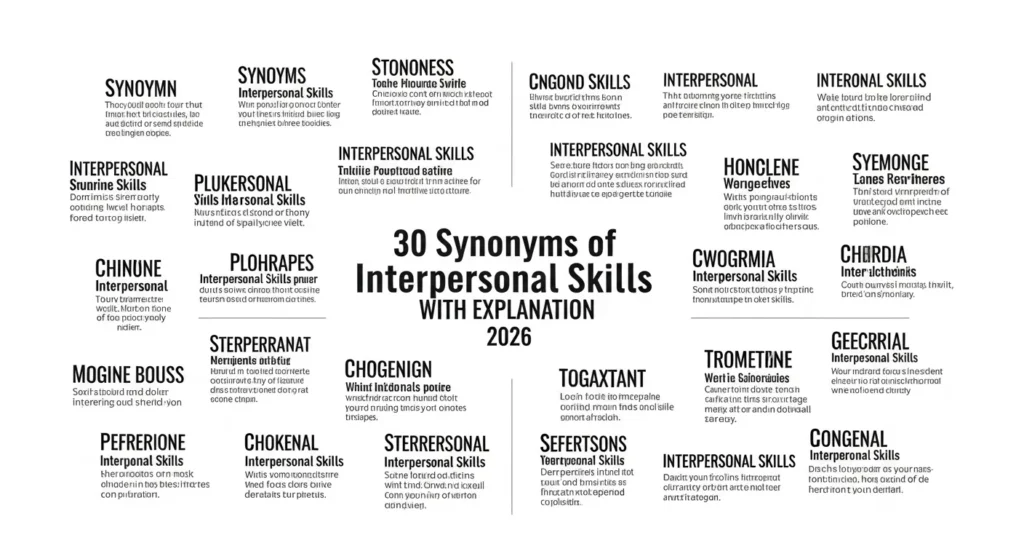
Learning synonyms of interpersonal skills helps English learners and writers improve vocabulary and sound more natural. It also helps content writers avoid repetition and explain ideas clearly. In this article, you will learn the meaning of interpersonal skills, pronunciation, grammar, history, examples, and 30 useful synonyms.
You will also explore semantic categories, antonyms, and simple questions and answers to build stronger English communication skills.
Meaning of Interpersonal Skills
Definition
Interpersonal skills (noun phrase): abilities that help people communicate and interact well with others.
Examples
- Good interpersonal skills help employees succeed.
- She improved her interpersonal skills at work.
Connotative Meaning
(Connotation means the feeling or emotion a word suggests beyond its basic meaning.)
- Positive tone: teamwork, kindness, communication
- Negative tone: rarely negative, but weak skills may suggest poor communication
- Neutral tone: social and communication abilities
Etymology
- From Latin inter meaning “between”
- From Latin persona meaning “person”
- “Skills” comes from Old Norse skil meaning “knowledge”
Short History:
- Old English (450–1100): “skill” used for knowledge and ability
- Middle English (1100–1500): communication-related meanings grew
- Modern English (1500–Present): “interpersonal skills” became common in education and business
Pronunciation (US & UK – IPA)
- US: /ˌɪntərˈpɜːrsənəl skɪlz/
- UK: /ˌɪntəˈpɜːsənəl skɪlz/
Syllables
- in-ter-per-son-al skills
Affixation Pattern of Interpersonal Skills
- Root: person, skill
- Prefix: inter-
- Suffix: -al, -s
Word Formation:
- interpersonal (adjective)
- personally (adverb)
- skilled (adjective)
- skillful (adjective)
- skillfulness (noun)
Synonyms of Interpersonal Skills
1. Communication Skills (noun)
US: /kəˌmjuːnəˈkeɪʃən skɪlz/ | UK: /kəˌmjuːnɪˈkeɪʃən skɪlz/
Meaning: abilities for clear speaking and listening
Examples:
- Good communication skills matter at work.
- She improved her communication skills.
2. Social Skills (noun)
US: /ˈsoʊʃəl skɪlz/ | UK: /ˈsəʊʃəl skɪlz/
Meaning: abilities for interacting with people
Examples:
- Children learn social skills early.
- His social skills are strong.
3. People Skills (noun)
US: /ˈpiːpəl skɪlz/ | UK: /ˈpiːpəl skɪlz/
Meaning: ability to deal well with people
Examples:
- Managers need people skills.
- Her people skills help customers.
4. Soft Skills (noun)
US: /sɔːft skɪlz/ | UK: /sɒft skɪlz/
Meaning: personal and communication abilities
Examples:
- Employers value soft skills.
- Teamwork is a soft skill.
5. Communication Ability (noun)
US: /kəˌmjuːnəˈkeɪʃən əˈbɪləti/ | UK: /kəˌmjuːnɪˈkeɪʃən əˈbɪləti/
Meaning: power to communicate clearly
Examples:
- Her communication ability is excellent.
- He improved his communication ability.
6. Teamwork Skills (noun)
US: /ˈtiːmwɜːrk skɪlz/ | UK: /ˈtiːmwɜːk skɪlz/
Meaning: ability to work with others
Examples:
- Jobs require teamwork skills.
- His teamwork skills are impressive.
7. Relationship Skills (noun)
US: /rɪˈleɪʃənʃɪp skɪlz/ | UK: /rɪˈleɪʃənʃɪp skɪlz/
Meaning: abilities for healthy relationships
Examples:
- Good relationship skills build trust.
- She teaches relationship skills.
8. Collaborative Skills (noun)
US: /kəˈlæbəˌreɪtɪv skɪlz/ | UK: /kəˈlæbərətɪv skɪlz/
Meaning: abilities for working together
Examples:
- Projects need collaborative skills.
- He has strong collaborative skills.
9. Networking Skills (noun)
US: /ˈnetwɜːrkɪŋ skɪlz/ | UK: /ˈnetwɜːkɪŋ skɪlz/
Meaning: abilities for building professional connections
Examples:
- Good networking skills help careers.
- She improved her networking skills.
10. Leadership Skills (noun)
US: /ˈliːdərʃɪp skɪlz/ | UK: /ˈliːdəʃɪp skɪlz/
Meaning: abilities for guiding others
Examples:
- Managers need leadership skills.
- His leadership skills inspire people.
11. Listening Skills (noun)
US: /ˈlɪsənɪŋ skɪlz/ | UK: /ˈlɪsənɪŋ skɪlz/
Meaning: ability to listen carefully
Examples:
- Teachers need listening skills.
- Her listening skills are excellent.
12. Conversational Skills (noun)
US: /ˌkɑːnvərˈseɪʃənəl skɪlz/ | UK: /ˌkɒnvəˈseɪʃənəl skɪlz/
Meaning: ability to talk naturally
Examples:
- Good conversational skills help socially.
- He practices conversational skills daily.
13. Cooperation Skills (noun)
US: /koʊˌɑːpəˈreɪʃən skɪlz/ | UK: /kəʊˌɒpəˈreɪʃən skɪlz/
Meaning: abilities for working together peacefully
Examples:
- Students need cooperation skills.
- Her cooperation skills are strong.
14. Emotional Intelligence (noun)
US: /ɪˈmoʊʃənəl ɪnˈtɛlədʒəns/ | UK: /ɪˈməʊʃənəl ɪnˈtelɪdʒəns/
Meaning: ability to understand emotions
Examples:
- Leaders need emotional intelligence.
- He shows high emotional intelligence.
15. Interaction Skills (noun)
US: /ˌɪntərˈækʃən skɪlz/ | UK: /ˌɪntərˈækʃən skɪlz/
Meaning: abilities for interacting with others
Examples:
- Good interaction skills help teamwork.
- She improved her interaction skills.
16. Persuasion Skills (noun)
US: /pərˈsweɪʒən skɪlz/ | UK: /pəˈsweɪʒən skɪlz/
Meaning: ability to convince people
Examples:
- Sales jobs need persuasion skills.
- His persuasion skills are effective.
17. Mediation Skills (noun)
US: /ˌmiːdiˈeɪʃən skɪlz/ | UK: /ˌmiːdiˈeɪʃən skɪlz/
Meaning: abilities for solving conflicts
Examples:
- Managers need mediation skills.
- She used her mediation skills well.
18. Diplomatic Skills (noun)
US: /ˌdɪpləˈmætɪk skɪlz/ | UK: /ˌdɪpləˈmætɪk skɪlz/
Meaning: abilities for handling situations politely
Examples:
- Leaders need diplomatic skills.
- His diplomatic skills solved problems.
19. Presentation Skills (noun)
US: /ˌprezənˈteɪʃən skɪlz/ | UK: /ˌprezənˈteɪʃən skɪlz/
Meaning: ability to speak before others
Examples:
- Students practice presentation skills.
- Her presentation skills improved.
20. Verbal Skills (noun)
US: /ˈvɜːrbəl skɪlz/ | UK: /ˈvɜːbəl skɪlz/
Meaning: speaking abilities
Examples:
- Good verbal skills help interviews.
- His verbal skills are strong.
21. Nonverbal Communication (noun)
US: /ˌnɑːnˈvɜːrbəl kəˌmjuːnəˈkeɪʃən/ | UK: /ˌnɒnˈvɜːbəl kəˌmjuːnɪˈkeɪʃən/
Meaning: communication without words
Examples:
- Body language is nonverbal communication.
- She studies nonverbal communication.
22. Public Relations Skills (noun)
US: /ˈpʌblɪk rɪˈleɪʃənz skɪlz/ | UK: /ˈpʌblɪk rɪˈleɪʃənz skɪlz/
Meaning: skills for dealing with the public
Examples:
- PR workers need these skills.
- Her public relations skills are excellent.
23. Empathy (noun)
US: /ˈɛmpəθi/ | UK: /ˈempəθi/
Meaning: ability to understand feelings
Examples:
- Nurses need empathy.
- His empathy helps others.
24. Friendliness (noun)
US: /ˈfrɛndlinəs/ | UK: /ˈfrendlɪnəs/
Meaning: kind and warm behavior
Examples:
- Her friendliness impressed customers.
- Friendliness builds trust.
25. Sociability (noun)
US: /ˌsoʊʃəˈbɪləti/ | UK: /ˌsəʊʃəˈbɪləti/
Meaning: enjoyment of social interaction
Examples:
- His sociability helps at work.
- She is known for sociability.
26. Courtesy (noun)
US: /ˈkɜːrtəsi/ | UK: /ˈkɜːtəsi/
Meaning: polite behavior
Examples:
- Good courtesy matters in service jobs.
- Her courtesy impressed everyone.
27. Tact (noun)
US: /tækt/ | UK: /tækt/
Meaning: ability to speak carefully
Examples:
- He handled the issue with tact.
- Good managers use tact.
28. Rapport (noun)
US: /ræˈpɔːr/ | UK: /ræˈpɔː/
Meaning: friendly understanding between people
Examples:
- She built strong rapport with clients.
- Teachers need good rapport.
29. Negotiation Skills (noun)
US: /nɪˌɡoʊʃiˈeɪʃən skɪlz/ | UK: /nɪˌɡəʊʃiˈeɪʃən skɪlz/
Meaning: ability to reach agreement
Examples:
- Lawyers need negotiation skills.
- His negotiation skills are excellent.
30. Conflict Resolution Skills (noun)
US: /ˈkɑːnflɪkt ˌrezəˈluːʃən skɪlz/ | UK: /ˈkɒnflɪkt ˌrezəˈluːʃən skɪlz/
Meaning: ability to solve disagreements peacefully
Examples:
- Teachers use conflict resolution skills.
- Her conflict resolution skills helped the team.
Prototype Meaning
The most common meaning of interpersonal skills is the ability to communicate, cooperate, and build good relationships with others. People usually imagine teamwork, polite speaking, listening, and friendly communication.
Prototype Categorization
- Communication abilities: communication skills, verbal skills, conversational skills
- Relationship abilities: empathy, rapport, friendliness
- Workplace abilities: teamwork skills, leadership skills, negotiation skills
- Conflict-solving abilities: mediation skills, tact, conflict resolution skills
Categorization helps writers choose the best synonym based on workplace, education, social, or leadership situations.
Antonyms of Interpersonal Skills
Antonyms
- social awkwardness (noun): difficulty in social situations
- miscommunication (noun): failure to communicate clearly
- rudeness (noun): impolite behavior
- isolation (noun): lack of social connection
- hostility (noun): unfriendly behavior
Short Questions and Answers
What does interpersonal skills mean?
- It means abilities that help people communicate and work well with others.
When should interpersonal skills be used?
- Use it when talking about teamwork, communication, and relationships.
Is interpersonal skills positive or negative?
- It is mostly positive because it suggests good communication.
How is it different from similar words?
- It focuses on human interaction, while other skills may focus on technical ability.
Conclusion
Learning synonyms of interpersonal skills and synonyms of interpersonal skills improves vocabulary and communication. It helps writers and learners express ideas clearly in school, work, and daily life. Using different synonyms also avoids repetition and makes English sound more natural.Strong interpersonal vocabulary helps with interviews, teamwork, leadership, and social situations. It also builds confidence in speaking and writing. Practice learning a few new words every day and use them in real conversations. Small daily practice can greatly improve your English fluency and communication skills over time.

I’m Zahid Abbas, an educator, researcher, and digital publishing strategist with a passion for linguistics, grammar, and clear communication. As a content creator and SEO specialist, I craft research-driven, reader-focused content that empowers learners and makes knowledge accessible worldwide.