Reaching out means trying to contact, help, or communicate with someone. Imagine a student emailing a teacher for advice. The student is reaching out for support. People also reach out to friends, clients, coworkers, or family members.
This phrase is very common in business, education, social media, and daily conversation. It helps people build connections and share information clearly.
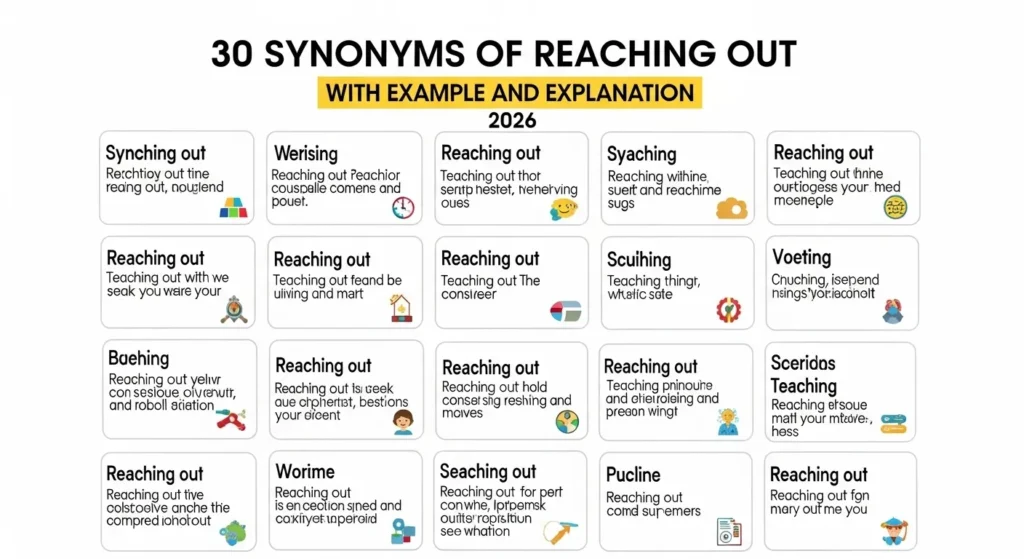
Learning synonyms of reaching out is useful for English learners, students, and content writers. Using different words makes writing fresh and natural. It also improves speaking skills and helps avoid repetition. In this article, you will learn the meaning of reaching out, its pronunciation, grammar, history, examples, and 30 useful synonyms with easy explanations and sentences.
Meaning of Reaching Out
Definition
Reaching out (phrasal verb): trying to contact, help, or communicate with someone.
Examples
- I am reaching out to ask for help.
- She is reaching out to new customers.
Connotative Meaning
(Connotation means the feeling or emotion a word suggests beyond its basic meaning.)
- Positive tone: support, connection, kindness
- Negative tone: can suggest desperation in some contexts
- Neutral tone: communication or contact
Etymology
- From Old English ræcan meaning “stretch or extend” + out meaning “toward outside”
Short History:
- Old English (450–1100): used for physical stretching
- Middle English (1100–1500): used for extending movement
- Modern English (1500–Present): gained emotional and communication meaning
Pronunciation (US & UK – IPA)
- US: /ˈriːtʃɪŋ aʊt/
- UK: /ˈriːtʃɪŋ aʊt/
Syllables
- reach-ing out
Affixation Pattern of Reaching Out
- Root: reach
- Prefix: none
- Suffix: -ing
Word Formation:
- reach (verb/noun)
- reached (verb)
- reaching (verb)
- outreach (noun)
Synonyms of Reaching Out
1. Contacting (verb)
US: /ˈkɑːntæktɪŋ/ | UK: /ˈkɒntæktɪŋ/
Meaning: communicating with someone
- I am contacting you today.
- She is contacting the office.
2. Connecting (verb)
US: /kəˈnɛktɪŋ/ | UK: /kəˈnektɪŋ/
Meaning: building communication
- He is connecting with clients.
- She enjoys connecting with people.
3. Communicating (verb)
US: /kəˈmjuːnɪkeɪtɪŋ/ | UK: /kəˈmjuːnɪkeɪtɪŋ/
Meaning: sharing information
- We are communicating clearly.
- They are communicating online.
4. Approaching (verb)
US: /əˈproʊtʃɪŋ/ | UK: /əˈprəʊtʃɪŋ/
Meaning: coming near to speak
- She is approaching the manager.
- He is approaching the teacher.
5. Messaging (verb)
US: /ˈmɛsɪdʒɪŋ/ | UK: /ˈmesɪdʒɪŋ/
Meaning: sending a message
- I am messaging my friend.
- She is messaging the client.
6. Emailing (verb)
US: /ˈiːmeɪlɪŋ/ | UK: /ˈiːmeɪlɪŋ/
Meaning: sending an email
- He is emailing the company.
- She is emailing her teacher.
7. Calling (verb)
US: /ˈkɔːlɪŋ/ | UK: /ˈkɔːlɪŋ/
Meaning: contacting by phone
- I am calling for details.
- She is calling her mother.
8. Getting in touch (phrase)
US: /ˈɡɛtɪŋ ɪn tʌtʃ/ | UK: /ˈɡetɪŋ ɪn tʌtʃ/
Meaning: making contact
- He is getting in touch today.
- She is getting in touch with support.
9. Touching base (phrase)
US: /ˈtʌtʃɪŋ beɪs/ | UK: /ˈtʌtʃɪŋ beɪs/
Meaning: making brief contact
- I am touching base with you.
- She is touching base this week.
10. Corresponding (verb)
US: /ˌkɔːrəˈspɑːndɪŋ/ | UK: /ˌkɒrəˈspɒndɪŋ/
Meaning: exchanging messages
- They are corresponding by email.
- She is corresponding with a client.
11. Networking (verb)
US: /ˈnɛtwɜːrkɪŋ/ | UK: /ˈnetwɜːkɪŋ/
Meaning: building professional relationships
- He is networking online.
- She enjoys networking at events.
12. Speaking to (phrase)
US: /ˈspiːkɪŋ tuː/ | UK: /ˈspiːkɪŋ tuː/
Meaning: talking with someone
- I am speaking to the manager.
- She is speaking to students.
13. Consulting (verb)
US: /kənˈsʌltɪŋ/ | UK: /kənˈsʌltɪŋ/
Meaning: asking for advice
- He is consulting experts.
- She is consulting her doctor.
14. Asking for help (phrase)
US: /ˈæskɪŋ fər hɛlp/ | UK: /ˈɑːskɪŋ fə help/
Meaning: requesting support
- He is asking for help politely.
- She is asking for help online.
15. Seeking support (phrase)
US: /ˈsiːkɪŋ səˈpɔːrt/ | UK: /ˈsiːkɪŋ səˈpɔːt/
Meaning: trying to get assistance
- She is seeking support.
- He is seeking support from friends.
16. Engaging (verb)
US: /ɪnˈɡeɪdʒɪŋ/ | UK: /ɪnˈɡeɪdʒɪŋ/
Meaning: becoming involved with others
- The teacher is engaging students.
- She is engaging with readers.
17. Interacting (verb)
US: /ˌɪntərˈæktɪŋ/ | UK: /ˌɪntərˈæktɪŋ/
Meaning: communicating with others
- He enjoys interacting online.
- They are interacting daily.
18. Visiting (verb)
US: /ˈvɪzɪtɪŋ/ | UK: /ˈvɪzɪtɪŋ/
Meaning: going to see someone
- She is visiting her friend.
- He is visiting the office.
19. Meeting (verb)
US: /ˈmiːtɪŋ/ | UK: /ˈmiːtɪŋ/
Meaning: coming together
- We are meeting tomorrow.
- She is meeting the team.
20. Responding (verb)
US: /rɪˈspɑːndɪŋ/ | UK: /rɪˈspɒndɪŋ/
Meaning: replying to communication
- He is responding quickly.
- She is responding by email.
21. Checking in (phrase)
US: /ˈtʃɛkɪŋ ɪn/ | UK: /ˈtʃekɪŋ ɪn/
Meaning: contacting briefly
- I am checking in today.
- She is checking in with staff.
22. Extending support (phrase)
US: /ɪkˈstɛndɪŋ səˈpɔːrt/ | UK: /ɪkˈstendɪŋ səˈpɔːt/
Meaning: offering help
- They are extending support.
- She is extending support kindly.
23. Offering help (phrase)
US: /ˈɔːfərɪŋ hɛlp/ | UK: /ˈɒfərɪŋ help/
Meaning: giving assistance
- He is offering help freely.
- She is offering help online.
24. Assisting (verb)
US: /əˈsɪstɪŋ/ | UK: /əˈsɪstɪŋ/
Meaning: helping someone
- She is assisting customers.
- He is assisting the team.
25. Supporting (verb)
US: /səˈpɔːrtɪŋ/ | UK: /səˈpɔːtɪŋ/
Meaning: helping emotionally or practically
- Parents are supporting children.
- Friends are supporting him.
26. Liaising (verb)
US: /liˈeɪzɪŋ/ | UK: /liˈeɪzɪŋ/
Meaning: communicating between groups
- She is liaising with staff.
- He is liaising with clients.
27. Introducing oneself (phrase)
US: /ˌɪntrəˈduːsɪŋ wʌnˈsɛlf/ | UK: /ˌɪntrəˈdjuːsɪŋ wʌnˈself/
Meaning: making first contact
- He is introducing himself politely.
- She is introducing herself online.
28. Initiating contact (phrase)
US: /ɪˈnɪʃieɪtɪŋ ˈkɑːntækt/ | UK: /ɪˈnɪʃieɪtɪŋ ˈkɒntækt/
Meaning: starting communication
- They are initiating contact.
- She is initiating contact today.
29. Reconnecting (verb)
US: /ˌriːkəˈnɛktɪŋ/ | UK: /ˌriːkəˈnektɪŋ/
Meaning: contacting again
- He is reconnecting with friends.
- She is reconnecting with family.
30. Making contact (phrase)
US: /ˈmeɪkɪŋ ˈkɑːntækt/ | UK: /ˈmeɪkɪŋ ˈkɒntækt/
Meaning: communicating with someone
- She is making contact today.
- He is making contact with customers.
Prototype Meaning
The most common meaning of reaching out is trying to connect or communicate with another person for help, support, information, or friendship.
Prototype Categorization
- Communication words: contacting, messaging, emailing
- Professional words: networking, liaising, corresponding
- Support words: assisting, supporting, offering help
- Casual phrases: checking in, touching base
Categorization helps writers choose the right synonym for formal, informal, business, or emotional situations.
Antonyms of Reaching Out
- ignoring (verb): not paying attention
- avoiding (verb): staying away from contact
- withdrawing (verb): moving away emotionally
- disconnecting (verb): ending communication
- neglecting (verb): failing to care or contact
Short Questions and Answers
- What does reaching out mean?
It means trying to contact or help someone. - When should reaching out be used?
Use it when communicating or offering support. - Is reaching out positive or negative?
It is usually positive and friendly. - How is it different from similar words?
It often shows care, effort, or connection.
Conclusion
Learning synonyms of reaching out and synonyms of reaching out improves vocabulary and communication skills. It helps you speak and write in a more natural and professional way. Using different expressions also avoids repetition and makes communication stronger.These synonyms are useful in business, school, social media, and daily conversation. They help you express support, connection, and communication clearly. Practice using a few new words every day. Over time, your English confidence and fluency will grow naturally.

I’m Zahid Abbas, an educator, researcher, and digital publishing strategist with a passion for linguistics, grammar, and clear communication. As a content creator and SEO specialist, I craft research-driven, reader-focused content that empowers learners and makes knowledge accessible worldwide.