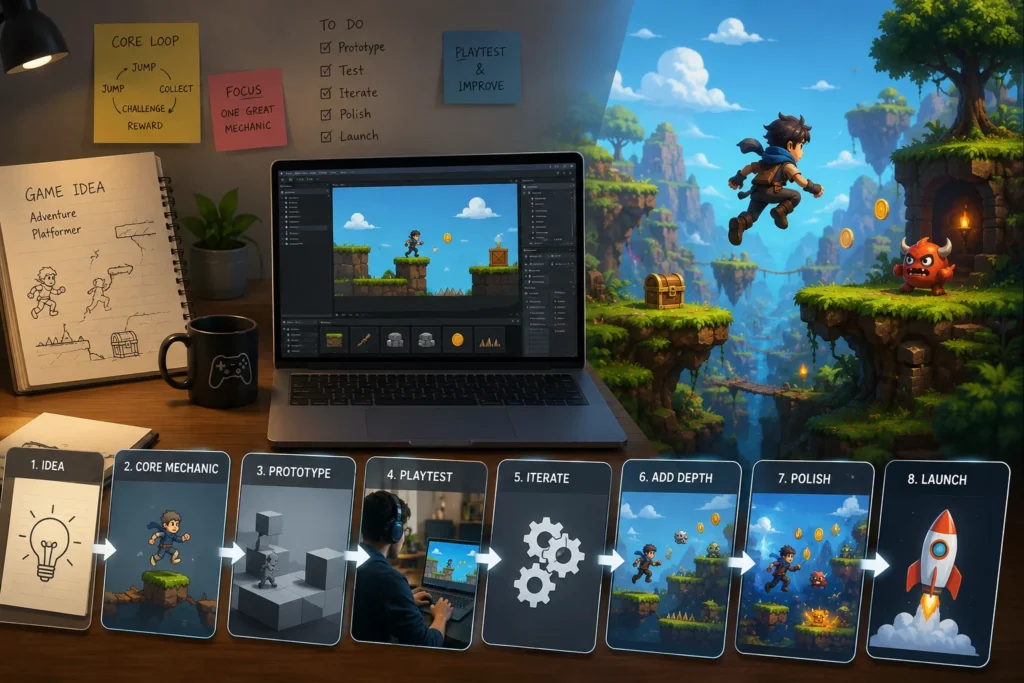

Every successful game started as a thought in someone’s head, just an idea with no form yet. The distance between that initial thought and something fully playable used to be enormous, measured in months and requiring specialized technical knowledge most people didn’t have. That distance has shrunk dramatically, but understanding the actual steps to cross it is still crucial, since having an idea and knowing how to develop it are two very different things.
Why Most Ideas Never Make It Past the Initial Thought
A huge number of creative game ideas die before they even get started, not because they were weak concepts, but because the gap between “I have an idea” and “I have a playable game” felt too wide to cross. People would imagine a game, start thinking about building it, and stop when they realized how much technical knowledge seemed required. That barrier was very real, and it quietly killed more good ideas than bad execution ever did.
What’s changed is that the technical barrier no longer needs to stop an idea from becoming real. But the creative process still requires a clear path, a series of steps that turn an abstract concept into something concrete and playable.
Step One: Get Specific About Your Core Idea
Before building anything, narrow down your vague concept into something genuinely specific. “A survival game” is still too broad. “A game where you manage limited resources while defending against waves of enemies” is getting closer. Get specific enough that someone could describe what a player actually does in the first thirty seconds of playing.
This clarity matters because every design decision that follows will depend on it. Without a clear target, you’ll make choices that pull in different directions, creating a game that feels unfocused instead of intentional. Spend time getting this right, because the clarity you build here saves far more time than it costs.
Step Two: Identify Your Core Mechanic and Test It Immediately
Strip your idea down to the single most important action a player will repeat. Everything else is secondary to this core loop. Once you know what that core action is, resist the urge to plan everything else first. Instead, describe that core mechanic and see it become playable almost immediately using an AI game maker.
This step is where ideas move from theory to reality. A rough, barely polished version of your core mechanic teaches you more than weeks of planning ever could. Does it actually feel good to do this action repeatedly? Is there something unsatisfying about it? Does it need adjustment before you build anything else around it? These are the questions only a playable version can answer honestly.
Step Three: Build a Rough Version Without Worrying About Polish
Your first playable version doesn’t need to look good, sound good, or be perfectly balanced. It just needs to function well enough that you and someone else can actually play it and feel what the core experience is like. This rough version is called a prototype, and it’s the foundation everything else builds on.
The temptation to make this version look polished is strong, but it’s almost always a mistake at this stage. Every minute spent on visuals or audio is a minute not spent testing whether the core mechanic is genuinely fun. Polish can wait. Functionality and feel matter now.
Step Four: Test With Someone Who Doesn’t Know Your Idea
This is where your perspective as the creator becomes a liability rather than an asset. You know too much about what you intended, which blinds you to how someone coming in fresh actually experiences the game. Hand your rough prototype to someone unfamiliar with it and watch them play without explaining anything.
Pay attention to where they hesitate, what confuses them, and where they lose interest. These moments are gold, because they point directly to gaps between what you thought would happen and what actually does. Take notes, don’t defend, and resist the urge to explain or clarify. The experience itself should make sense without you needing to talk through it.
Step Five: Adjust Based on What You Actually Observed
After watching someone play, you’ll have real information about what’s working and what’s not. Rather than changing everything at once, make small, deliberate adjustments aimed at the specific issues you observed. Change one thing, test again, then move to the next adjustment.
This iterative process is genuinely how a rough concept becomes a refined game. Each round of testing and adjustment sharpens what you’re building, moving it closer to feeling intentional and polished.
Step Six: Add Depth, But Carefully
Once your core mechanic is genuinely solid, you can start adding layers of complexity. Maybe progression systems, unlockables, multiple difficulty levels, or additional mechanics that interact with the core. But add these deliberately, testing each one before moving to the next, rather than piling everything on at once.
Build a Ride ‘n’ Pull a Stunt is a good example of this approach, a game built around a clear, satisfying core mechanic with additional depth layered in thoughtfully, creating something that feels complex without being overwhelming.
Step Seven: Polish, But Not Before You’re Ready
Only after your core game is genuinely solid and engaging should you invest real time in visual polish, audio, effects, and overall presentation. A beautiful, broken game is worse than a rough, genuinely fun game. But a rough, fun game with good presentation is far better than either.
Polish is the final step that makes something feel finished and professional. It matters, but only after you’ve confirmed the underlying experience is worth polishing in the first place.
Step Eight: Keep Testing, Even After Launch
The process doesn’t stop once a game is playable. Real players will interact with it in ways you didn’t anticipate, revealing opportunities for improvement you couldn’t have seen from the design alone. Keep gathering feedback, keep iterating, and keep refining based on what actual players tell you through their behavior and their words.
What Makes This Process Actually Work
The key to turning ideas into fully playable games is breaking the process into small, manageable steps where each one produces something real and testable. Don’t try to build the entire vision at once. Build the core, test it, adjust it, then build the next layer. This approach works because you’re constantly validating that you’re moving in the right direction, rather than disappearing for months and emerging with something that misses the mark.
Final Thoughts
Turning a creative idea into a fully playable game is no longer an impossible distance that only trained developers can cross. The technical barrier that used to stop ideas from becoming real has been removed. What remains is the discipline to work through the process deliberately, testing honestly at each stage, and refining based on real feedback rather than assumption. That process takes time and patience, but it’s time genuinely well spent, since it ensures the game you eventually finish is one worth playing.