The word colonel means a high-ranking officer in the army. Imagine a soldier giving orders to a group of troops during a mission. The person leading them is often a colonel.
This word is commonly used in military, history, news, and movies. It represents authority, leadership, and responsibility. However, since colonel is a specific rank, it does not have many exact synonyms. Instead, we use related words that describe similar roles or positions.
Learning synonyms and related terms helps English learners expand vocabulary and understand context better. It also helps writers avoid repetition and use more accurate language.
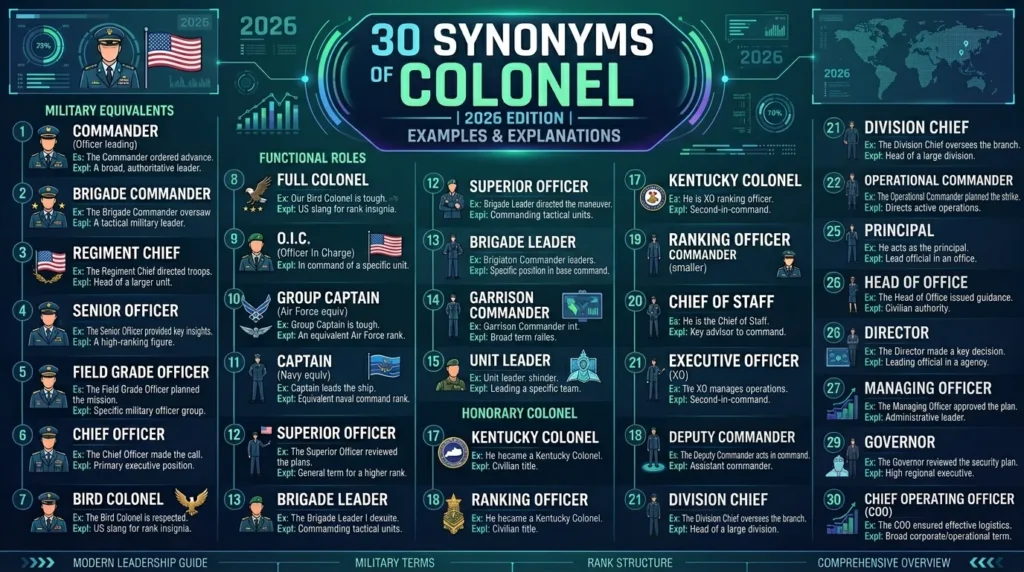
In this article, you will learn the meaning of colonel, its pronunciation, history, grammar, and 30 useful related synonyms with examples and categories.
Meaning of Colonel
Definition
Colonel (noun): a senior military officer who commands a regiment or large unit.
Examples
- The colonel gave orders to the soldiers.
- She was promoted to colonel after years of service.
Connotative Meaning
(Connotation means the feeling or emotion a word suggests beyond its basic meaning.)
- Positive tone: leadership, authority, respect
- Negative tone: strictness, control, power pressure
- Neutral tone: a formal military rank
Etymology
- From Italian colonnello meaning “commander of a column of soldiers”
- Entered English through French influence
Short History:
- Old English (450–1100): no such rank term
- Middle English (1100–1500): early military titles developed
- Modern English (1500–Present): “colonel” became a fixed rank
Pronunciation (US & UK – IPA)
- US: /ˈkɝːnəl/
- UK: /ˈkɜːnəl/
Syllables
- ker-nel
Affixation Pattern of Colonel
- Root: colonel
- Prefix: none
- Suffix: none
Word Formation:
- colonel (noun)
- colonels (plural noun)
- colonelcy (noun)
- colonelship (noun)
Synonyms of Colonel
1. Commander (noun)
US: /kəˈmændər/ | UK: /kəˈmɑːndə/
Meaning: a person in charge of a unit
Examples:
- The commander led the mission.
- He spoke like a strong commander.
2. Officer (noun)
US: /ˈɔːfɪsər/ | UK: /ˈɒfɪsə/
Meaning: a person with authority in the military
Examples:
- The officer gave instructions.
- She became an army officer.
3. Senior Officer (noun)
US: /ˈsiːniər ˈɔːfɪsər/ | UK: /ˈsiːniə ˈɒfɪsə/
Meaning: a high-ranking officer
Examples:
- A senior officer inspected the troops.
- He spoke to a senior officer.
4. Field Officer (noun)
US: /ˈfiːld ˈɔːfɪsər/ | UK: /ˈfiːld ˈɒfɪsə/
Meaning: officer rank including major, lieutenant colonel, and colonel
Examples:
- The field officer led the group.
- He trained as a field officer.
5. Regimental Commander (noun)
US: /ˌrɛdʒɪˈmɛntl kəˈmændər/ | UK: /ˌredʒɪˈmentl kəˈmɑːndə/
Meaning: leader of a regiment
Examples:
- The regimental commander addressed the soldiers.
- He served as regimental commander.
6. Military Leader (noun)
US: /ˈmɪlɪˌtɛri ˈliːdər/ | UK: /ˈmɪlɪtəri ˈliːdə/
Meaning: a person who leads in the military
Examples:
- A strong military leader inspires troops.
- She became a respected military leader.
7. Unit Commander (noun)
US: /ˈjuːnɪt kəˈmændər/ | UK: /ˈjuːnɪt kəˈmɑːndə/
Meaning: leader of a unit
Examples:
- The unit commander gave orders.
- He was a skilled unit commander.
8. Chief Officer (noun)
US: /tʃiːf ˈɔːfɪsər/ | UK: /tʃiːf ˈɒfɪsə/
Meaning: top officer in a group
Examples:
- The chief officer managed operations.
- She acted as chief officer.
9. Leader (noun)
US: /ˈliːdər/ | UK: /ˈliːdə/
Meaning: a person who leads others
Examples:
- He is a natural leader.
- The leader guided the team.
10. Captain (noun)
US: /ˈkæptən/ | UK: /ˈkæptɪn/
Meaning: a military officer rank below major
Examples:
- The captain spoke clearly.
- She worked as a captain.
11. Major (noun)
US: /ˈmeɪdʒər/ | UK: /ˈmeɪdʒə/
Meaning: rank below lieutenant colonel
Examples:
- The major planned the mission.
- He served as a major.
12. Lieutenant Colonel (noun)
US: /lɛfˈtɛnənt ˈkɝːnəl/ | UK: /lefˈtenənt ˈkɜːnəl/
Meaning: rank just below colonel
Examples:
- The lieutenant colonel spoke first.
- She became a lieutenant colonel.
13. Brigadier (noun)
US: /ˌbrɪɡəˈdɪr/ | UK: /ˌbrɪɡəˈdɪə/
Meaning: rank above colonel in some armies
Examples:
- The brigadier gave commands.
- He was promoted to brigadier.
14. General (noun)
US: /ˈdʒɛnərəl/ | UK: /ˈdʒenərəl/
Meaning: high-ranking army officer
Examples:
- The general led the army.
- She respected the general.
15. Supervisor (noun)
US: /ˈsuːpərˌvaɪzər/ | UK: /ˈsuːpəvaɪzə/
Meaning: person who oversees work
Examples:
- The supervisor checked the task.
- He worked as a supervisor.
16. Director (noun)
US: /dəˈrɛktər/ | UK: /daɪˈrektə/
Meaning: person in charge of operations
Examples:
- The director made decisions.
- She became a director.
17. Chief (noun)
US: /tʃiːf/ | UK: /tʃiːf/
Meaning: leader of a group
Examples:
- The chief led the team.
- He acted as the chief.
18. Head (noun)
US: /hɛd/ | UK: /hed/
Meaning: person in charge
Examples:
- She is the head of the department.
- The head gave instructions.
19. Authority (noun)
US: /əˈθɔːrɪti/ | UK: /ɔːˈθɒrɪti/
Meaning: person with power
Examples:
- He is an authority in defense.
- She spoke with authority.
20. Administrator (noun)
US: /ədˈmɪnɪstreɪtər/ | UK: /ədˈmɪnɪstreɪtə/
Meaning: person who manages systems
Examples:
- The administrator handled records.
- He worked as an administrator.
21. Manager (noun)
US: /ˈmænɪdʒər/ | UK: /ˈmænɪdʒə/
Meaning: person controlling operations
Examples:
- The manager gave directions.
- She became a manager.
22. Overseer (noun)
US: /ˈoʊvərˌsiːər/ | UK: /ˈəʊvəsiːə/
Meaning: one who supervises
Examples:
- The overseer checked work.
- He acted as an overseer.
23. Controller (noun)
US: /kənˈtroʊlər/ | UK: /kənˈtrəʊlə/
Meaning: person who directs activities
Examples:
- The controller managed tasks.
- She worked as a controller.
24. Strategist (noun)
US: /ˈstrætədʒɪst/ | UK: /ˈstrætədʒɪst/
Meaning: person who plans strategies
Examples:
- The strategist planned the attack.
- He is a smart strategist.
25. Tactician (noun)
US: /tækˈtɪʃən/ | UK: /tækˈtɪʃən/
Meaning: expert in planning actions
Examples:
- The tactician made quick plans.
- She acted like a tactician.
26. Commander-in-chief (noun)
US: /kəˈmændər ɪn tʃiːf/ | UK: /kəˈmɑːndə ɪn tʃiːf/
Meaning: highest leader of armed forces
Examples:
- The commander-in-chief gave orders.
- He met the commander-in-chief.
27. War Leader (noun)
US: /wɔːr ˈliːdər/ | UK: /wɔː ˈliːdə/
Meaning: leader during war
Examples:
- The war leader guided troops.
- She became a strong war leader.
28. Defense Chief (noun)
US: /dɪˈfɛns tʃiːf/ | UK: /dɪˈfens tʃiːf/
Meaning: top defense officer
Examples:
- The defense chief spoke publicly.
- He worked as defense chief.
29. Operations Head (noun)
US: /ˌɑːpəˈreɪʃənz hɛd/ | UK: /ˌɒpəˈreɪʃənz hed/
Meaning: leader of operations
Examples:
- The operations head planned tasks.
- She acted as operations head.
30. Commanding Officer (noun)
US: /kəˈmændɪŋ ˈɔːfɪsər/ | UK: /kəˈmɑːndɪŋ ˈɒfɪsə/
Meaning: officer in charge of a unit
Examples:
- The commanding officer gave orders.
- He is the commanding officer.
Prototype Meaning
The most common meaning of colonel is a senior military officer who commands a large group of soldiers. People usually imagine a disciplined leader giving orders and managing troops.
Prototype Categorization
- Military ranks: major, brigadier, general
- Leadership roles: commander, leader, chief
- Management roles: manager, director, supervisor
- Strategic roles: strategist, tactician
Categorization helps writers choose the right word based on context and level of authority.
Antonyms of Colonel
- Civilian (noun): a person not in the military
- Private (noun): lowest military rank
- Subordinate (noun): person under authority
- Follower (noun): person who follows orders
- Junior (adjective): lower in rank
Short Questions and Answers
What does colonel mean?
- It means a high-ranking army officer.
When should colonel be used?
- Use it when talking about military rank and leadership.
Is colonel positive or negative?
- It is mostly positive because it shows authority and respect.
How is it different from similar words?
- “Colonel” is a specific rank, while “leader” or “officer” are general terms.
Conclusion
Learning synonyms of colonel and synonyms of colonel improves vocabulary and understanding of leadership language. It helps English learners describe authority, rank, and responsibility more clearly.Using different related terms also avoids repetition and makes writing more precise. These words are useful in history, news, academic writing, and professional communication. Practice learning new vocabulary daily to build strong English skills. Over time, this will improve your confidence in speaking and writing.

I’m Zahid Abbas, an educator, researcher, and digital publishing strategist with a passion for linguistics, grammar, and clear communication. As a content creator and SEO specialist, I craft research-driven, reader-focused content that empowers learners and makes knowledge accessible worldwide.