The word contemptuous means showing strong dislike, disrespect, or feelings of superiority toward someone or something. Imagine a student laughing rudely at another student’s idea during a discussion. That mocking attitude can be described as contemptuous.
People use this word in conversations, books, news, and professional writing to describe negative attitudes and disrespectful behavior. It is a powerful emotional word often connected with criticism, pride, or rejection.
Learning synonyms of contemptuous helps English learners improve vocabulary and express emotions more clearly. It also helps writers avoid repetition and choose more accurate words for different situations. In this article, you will learn the meaning of contemptuous, its pronunciation, history, grammar, and 30 useful synonyms with examples.
You will also explore semantic categories, antonyms, and simple questions to strengthen your English communication skills.
Meaning of Contemptuous
Definition
Contemptuous (adjective): showing dislike, disrespect, or the feeling that someone is unimportant or inferior.
Examples
- She gave him a contemptuous look.
- His contemptuous tone upset the team.
Connotative Meaning
(Connotation means the feeling or emotion a word suggests beyond its basic meaning.)
- Positive tone: rarely positive; may suggest confidence in some contexts
- Negative tone: disrespectful, insulting, arrogant
- Neutral tone: showing strong disapproval
Etymology
- From Latin contemptus meaning “scorn” or “despise”
- Entered English through Old French and Latin roots
Short History:
- Old English (450–1100): words for scorn and pride existed
- Middle English (1100–1500): contempt-related terms entered English
- Modern English (1500–Present): “contemptuous” became common in formal writing and speech
Pronunciation (US & UK – IPA)
- US: /kənˈtɛmptʃuəs/
- UK: /kənˈtemptjuəs/
Syllables
- con-temp-tu-ous
Affixation Pattern of Contemptuous
- Root: contempt
- Prefix: none
- Suffix: -uous
Word Formation:
- contempt (noun)
- contemptuous (adjective)
- contemptuously (adverb)
- contemptuousness (noun)
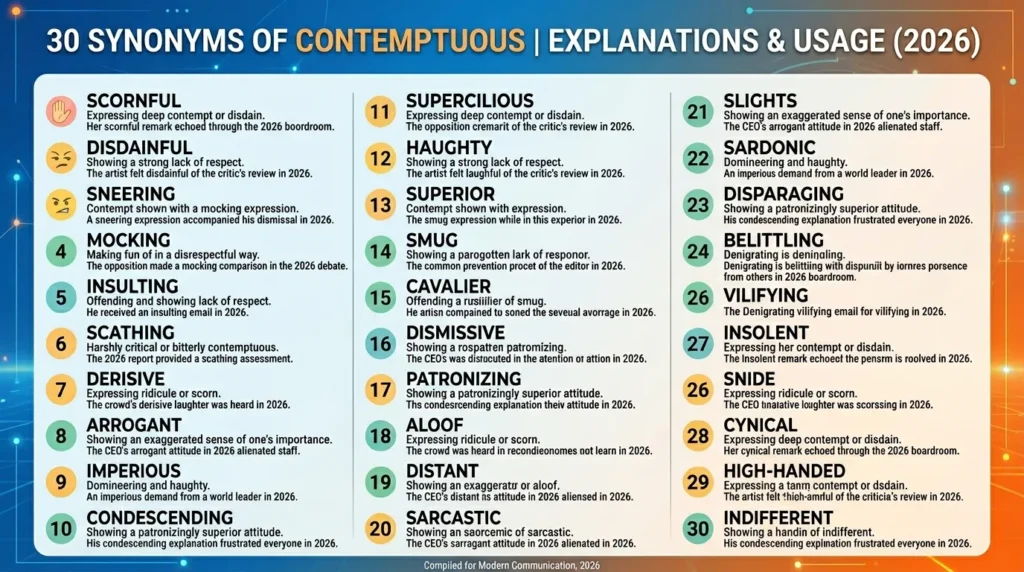
Synonyms of Contemptuous
1. Scornful (adjective)
US: /ˈskɔːrnfl/ | UK: /ˈskɔːnfəl/
Meaning: showing strong disrespect or mockery
Examples:
- She gave a scornful smile.
- His scornful words hurt everyone.
2. Disdainful (adjective)
US: /dɪsˈdeɪnfl/ | UK: /dɪsˈdeɪnfəl/
Meaning: showing that someone feels superior
Examples:
- He sounded disdainful during the debate.
- She gave a disdainful look.
3. Derisive (adjective)
US: /dɪˈraɪsɪv/ | UK: /dɪˈraɪsɪv/
Meaning: mocking and insulting
Examples:
- The crowd made derisive comments.
- He laughed in a derisive way.
4. Mocking (adjective)
US: /ˈmɑːkɪŋ/ | UK: /ˈmɒkɪŋ/
Meaning: making fun of someone
Examples:
- She used a mocking tone.
- His mocking behavior seemed rude.
5. Sneering (adjective)
US: /ˈsnɪrɪŋ/ | UK: /ˈsnɪərɪŋ/
Meaning: showing disrespect through facial expression or speech
Examples:
- He gave a sneering smile.
- Her sneering voice upset him.
6. Arrogant (adjective)
US: /ˈærəɡənt/ | UK: /ˈærəɡənt/
Meaning: behaving as if better than others
Examples:
- The manager sounded arrogant.
- She disliked his arrogant attitude.
7. Haughty (adjective)
US: /ˈhɔːti/ | UK: /ˈhɔːti/
Meaning: proudly unfriendly and superior
Examples:
- The queen looked haughty.
- He spoke in a haughty tone.
8. Proud (adjective)
US: /praʊd/ | UK: /praʊd/
Meaning: having too much self-respect
Examples:
- He sounded overly proud.
- Her proud behavior annoyed others.
9. Dismissive (adjective)
US: /dɪsˈmɪsɪv/ | UK: /dɪsˈmɪsɪv/
Meaning: showing that something is unimportant
Examples:
- She was dismissive of the idea.
- His dismissive attitude upset the group.
10. Insulting (adjective)
US: /ɪnˈsʌltɪŋ/ | UK: /ɪnˈsʌltɪŋ/
Meaning: rude and offensive
Examples:
- His comments were insulting.
- She used an insulting tone.
11. Patronizing (adjective)
US: /ˈpeɪtrənaɪzɪŋ/ | UK: /ˈpætrənaɪzɪŋ/
Meaning: treating others as less intelligent
Examples:
- He gave a patronizing smile.
- Her patronizing tone felt rude.
12. Superior (adjective)
US: /suːˈpɪriər/ | UK: /suːˈpɪəriə/
Meaning: feeling higher or better than others
Examples:
- She acted superior to everyone.
- His superior attitude caused problems.
13. Condescending (adjective)
US: /ˌkɑːndɪˈsɛndɪŋ/ | UK: /ˌkɒndɪˈsendɪŋ/
Meaning: talking down to others
Examples:
- The teacher sounded condescending.
- His condescending words offended her.
14. Sarcastic (adjective)
US: /sɑːrˈkæstɪk/ | UK: /sɑːˈkæstɪk/
Meaning: using irony to mock
Examples:
- She made a sarcastic remark.
- His sarcastic tone was obvious.
15. Cynical (adjective)
US: /ˈsɪnɪkəl/ | UK: /ˈsɪnɪkəl/
Meaning: believing people are selfish or dishonest
Examples:
- He gave a cynical response.
- Her cynical attitude seemed cold.
16. Cold (adjective)
US: /koʊld/ | UK: /kəʊld/
Meaning: emotionally unfriendly
Examples:
- She gave him a cold stare.
- His cold response felt contemptuous.
17. Rude (adjective)
US: /ruːd/ | UK: /ruːd/
Meaning: not polite
Examples:
- His behavior was rude.
- She made a rude comment.
18. Offensive (adjective)
US: /əˈfɛnsɪv/ | UK: /əˈfensɪv/
Meaning: causing hurt or anger
Examples:
- The joke was offensive.
- He used offensive language.
19. Bitter (adjective)
US: /ˈbɪtər/ | UK: /ˈbɪtə/
Meaning: angry and resentful
Examples:
- She sounded bitter after losing.
- His bitter words shocked everyone.
20. Hostile (adjective)
US: /ˈhɑːstaɪl/ | UK: /ˈhɒstaɪl/
Meaning: unfriendly and aggressive
Examples:
- The crowd became hostile.
- He gave a hostile reply.
21. Snobbish (adjective)
US: /ˈsnɑːbɪʃ/ | UK: /ˈsnɒbɪʃ/
Meaning: believing oneself socially better
Examples:
- She seemed snobbish at the party.
- His snobbish attitude annoyed people.
22. Disrespectful (adjective)
US: /ˌdɪsrɪˈspɛktfl/ | UK: /ˌdɪsrɪˈspektfəl/
Meaning: showing lack of respect
Examples:
- The students were disrespectful.
- His words sounded disrespectful.
23. Insolent (adjective)
US: /ˈɪnsələnt/ | UK: /ˈɪnsələnt/
Meaning: boldly rude
Examples:
- The worker gave an insolent reply.
- Her insolent behavior caused trouble.
24. Smug (adjective)
US: /smʌɡ/ | UK: /smʌɡ/
Meaning: too pleased with oneself
Examples:
- He wore a smug smile.
- Her smug attitude upset others.
25. Belittling (adjective)
US: /bɪˈlɪtlɪŋ/ | UK: /bɪˈlɪtlɪŋ/
Meaning: making others feel unimportant
Examples:
- His belittling comments hurt her.
- She used a belittling tone.
26. Scathing (adjective)
US: /ˈskeɪðɪŋ/ | UK: /ˈskeɪðɪŋ/
Meaning: strongly critical and harsh
Examples:
- The article gave a scathing review.
- He made a scathing remark.
27. Harsh (adjective)
US: /hɑːrʃ/ | UK: /hɑːʃ/
Meaning: very severe or cruel
Examples:
- The judge sounded harsh.
- Her harsh criticism felt contemptuous.
28. Mean (adjective)
US: /miːn/ | UK: /miːn/
Meaning: unkind or cruel
Examples:
- He made a mean joke.
- Her words were mean.
29. Scorned (adjective)
US: /skɔːrnd/ | UK: /skɔːnd/
Meaning: treated with contempt
Examples:
- He felt scorned by society.
- The idea was scorned publicly.
30. Rejecting (adjective)
US: /rɪˈdʒɛktɪŋ/ | UK: /rɪˈdʒektɪŋ/
Meaning: refusing or dismissing strongly
Examples:
- She gave a rejecting look.
- His rejecting attitude seemed cold.
Prototype Meaning
The most common meaning of contemptuous is showing disrespect or believing someone is less important. People usually imagine a rude facial expression, mocking tone, or arrogant attitude when hearing this word.
Prototype Categorization
- Mocking attitudes: sarcastic, sneering, derisive
- Pride and superiority: arrogant, haughty, smug
- Disrespectful behavior: rude, insulting, offensive
- Cold rejection: dismissive, hostile, condescending
Categorization helps writers choose the best synonym based on emotional tone and context.
Antonyms of Contemptuous
Antonyms
- Respectful (adjective): showing respect
- Kind (adjective): caring and gentle
- Polite (adjective): showing good manners
- Admiring (adjective): showing approval or respect
- Humble (adjective): not proud or arrogant
Short Questions and Answers
What does contemptuous mean?
- It means showing strong disrespect or dislike.
When should contemptuous be used?
- Use it when describing rude, mocking, or arrogant attitudes.
Is contemptuous positive or negative?
- It is mostly negative because it expresses disrespect.
How is it different from similar words?
- “Contemptuous” shows stronger disrespect than words like “rude” or “cold.”
Conclusion
Learning synonyms of contemptuous and synonyms of contemptuous improves vocabulary and emotional expression. It helps English learners describe negative attitudes, pride, criticism, and disrespect more accurately in speaking and writing. Using different synonyms also avoids repetition and makes communication stronger and more natural.These words are useful in conversations, storytelling, essays, and professional writing. Understanding emotional vocabulary also improves reading comprehension and confidence in English communication. Practice learning and using new words every day. Small daily habits can help build stronger vocabulary and fluency over time.

I’m Zahid Abbas, an educator, researcher, and digital publishing strategist with a passion for linguistics, grammar, and clear communication. As a content creator and SEO specialist, I craft research-driven, reader-focused content that empowers learners and makes knowledge accessible worldwide.