The word empathetic is often used when talking about understanding another person’s feelings. Imagine your friend is sad after losing something important. Instead of ignoring their feelings, you listen, understand, and offer support. In this situation, you are being empathetic.
This word is common in daily conversations, workplaces, schools, counseling, healthcare, and relationships because people value emotional understanding.
Learning synonyms of empathetic is useful for English learners, writers, students, and content creators. Using different words helps improve vocabulary, makes writing more interesting, and prevents repetition.
In this article, you will learn the meaning of empathetic, its examples, pronunciation, history, grammar, semantic categories, antonyms, and 30 powerful synonyms with meanings and example sentences.
Meaning of Empathetic
Empathetic (Adjective):
Having the ability to understand and share another person’s feelings or emotions.
Examples
- She was empathetic when her friend talked about personal problems.
- An empathetic teacher understands the struggles of students.
Connotative Meaning
- Positive tone: Caring, understanding, supportive, compassionate.
- Negative tone: Rarely negative, but may suggest being overly emotional in some contexts.
- Neutral tone: Describes understanding another person’s emotions without judgment.
Etymology
- Origin: Greek
- Source word: empatheia
- Original meaning: “Passion,” “feeling,” or “emotional understanding”
Short History of the Keyword
- Old English (450–1100): The word did not exist in English.
- Middle English (1100–1500): No direct form was used.
- Modern English (1500–Present): The concept developed through psychology and philosophy; empathetic became common in the early 20th century.
Pronunciation (US & UK – IPA)
- US: /ˌem.pəˈθet̬.ɪk/
- UK: /ˌem.pəˈθet.ɪk/
Syllables
em-pa-thet-ic
Affixation Pattern of Empathetic
Root: path (feeling)
Prefix: em- (in, into)
Suffix: -ic (relating to)
Word Formation of Empathetic
- Empathy (Noun)
- Empathetically (Adverb)
- Empatheticness (Noun)
- Empathize (Verb)
- Empathized (Verb)
- Empathizing (Verb)
- Empathizer (Noun)
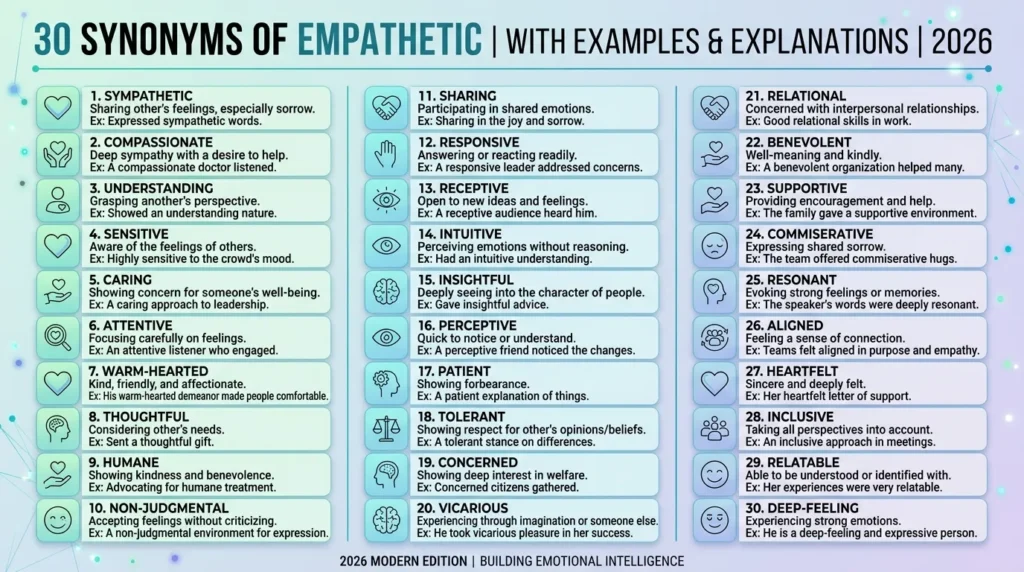
30 Synonyms of Empathetic
1. Compassionate (Adjective)
US: /kəmˈpæʃənət/ | UK: /kəmˈpæʃənət/
Meaning: Showing deep concern for others’ suffering.
Examples:
- She gave a compassionate response.
- Compassionate nurses comfort patients.
2. Understanding (Adjective)
US: /ˌʌndərˈstændɪŋ/ | UK: /ˌʌndəˈstændɪŋ/
Meaning: Able to understand another person’s feelings.
Examples:
- My parents are very understanding.
- He was understanding during the difficult time.
3. Sympathetic (Adjective)
US: /ˌsɪmpəˈθetɪk/ | UK: /ˌsɪmpəˈθetɪk/
Meaning: Showing concern and pity for someone.
Examples:
- She was sympathetic to his problems.
- The manager gave a sympathetic reply.
4. Caring (Adjective)
US: /ˈkerɪŋ/ | UK: /ˈkeərɪŋ/
Meaning: Showing kindness and concern.
Examples:
- He is a caring father.
- Caring people help others.
5. Kindhearted (Adjective)
US: /ˌkaɪndˈhɑːrtɪd/ | UK: /ˌkaɪndˈhɑːtɪd/
Meaning: Having a gentle and generous nature.
Examples:
- She is kindhearted toward everyone.
- A kindhearted neighbor helped us.
6. Considerate (Adjective)
US: /kənˈsɪdərət/ | UK: /kənˈsɪdərət/
Meaning: Thoughtful of other people’s needs.
Examples:
- He is considerate of others.
- Considerate employees work well together.
7. Sensitive (Adjective)
US: /ˈsensətɪv/ | UK: /ˈsensɪtɪv/
Meaning: Aware of and responsive to emotions.
Examples:
- She is sensitive to others’ feelings.
- Sensitive leaders build trust.
8. Warmhearted (Adjective)
US: /ˌwɔːrmˈhɑːrtɪd/ | UK: /ˌwɔːmˈhɑːtɪd/
Meaning: Friendly and affectionate.
Examples:
- He received a warmhearted welcome.
- Warmhearted people are easy to trust.
9. Tenderhearted (Adjective)
US: /ˌtendərˈhɑːrtɪd/ | UK: /ˌtendəˈhɑːtɪd/
Meaning: Easily moved by emotions.
Examples:
- She is tenderhearted with children.
- His tenderhearted nature impressed everyone.
10. Benevolent (Adjective)
US: /bəˈnevələnt/ | UK: /bəˈnevələnt/
Meaning: Well-meaning and kind.
Examples:
- A benevolent leader helps people.
- The organization is benevolent.
11. Humane (Adjective)
US: /hjuːˈmeɪn/ | UK: /hjuːˈmeɪn/
Meaning: Showing compassion and kindness.
Examples:
- Humane treatment is important.
- The policy was humane.
12. Merciful (Adjective)
US: /ˈmɜːrsɪfəl/ | UK: /ˈmɜːsɪfəl/
Meaning: Showing forgiveness and kindness.
Examples:
- The judge was merciful.
- She made a merciful decision.
13. Thoughtful (Adjective)
US: /ˈθɔːtfəl/ | UK: /ˈθɔːtfəl/
Meaning: Paying attention to others’ feelings.
Examples:
- That was a thoughtful gesture.
- Thoughtful friends are valuable.
14. Supportive (Adjective)
US: /səˈpɔːrtɪv/ | UK: /səˈpɔːtɪv/
Meaning: Providing help and encouragement.
Examples:
- She is supportive of her team.
- Supportive families create confidence.
15. Gentle (Adjective)
US: /ˈdʒentl/ | UK: /ˈdʒentl/
Meaning: Kind and mild in behavior.
Examples:
- He has a gentle nature.
- Gentle words helped her relax.
16. Charitable (Adjective)
US: /ˈtʃærətəbəl/ | UK: /ˈtʃærɪtəbəl/
Meaning: Generous and caring toward others.
Examples:
- She supports charitable causes.
- Charitable people often volunteer.
17. Altruistic (Adjective)
US: /ˌæltruˈɪstɪk/ | UK: /ˌæltruˈɪstɪk/
Meaning: Caring about others more than oneself.
Examples:
- His altruistic actions inspired many.
- Altruistic people help freely.
18. Warm (Adjective)
US: /wɔːrm/ | UK: /wɔːm/
Meaning: Friendly and affectionate.
Examples:
- She gave a warm smile.
- Warm people make others comfortable.
19. Loving (Adjective)
US: /ˈlʌvɪŋ/ | UK: /ˈlʌvɪŋ/
Meaning: Showing deep affection and care.
Examples:
- He is a loving parent.
- Loving words encouraged her.
20. Affectionate (Adjective)
US: /əˈfekʃənət/ | UK: /əˈfekʃənət/
Meaning: Openly expressing care and love.
Examples:
- She is affectionate toward her family.
- The child received affectionate attention.
21. Kindly (Adjective)
US: /ˈkaɪndli/ | UK: /ˈkaɪndli/
Meaning: Friendly and considerate.
Examples:
- He spoke in a kindly manner.
- A kindly neighbor helped us.
22. Bighearted (Adjective)
US: /ˌbɪɡˈhɑːrtɪd/ | UK: /ˌbɪɡˈhɑːtɪd/
Meaning: Generous and understanding.
Examples:
- She is a bighearted person.
- His bighearted actions earned respect.
23. Softhearted (Adjective)
US: /ˌsɔːftˈhɑːrtɪd/ | UK: /ˌsɒftˈhɑːtɪd/
Meaning: Easily affected by others’ feelings.
Examples:
- She is softhearted toward animals.
- A softhearted teacher listened carefully.
24. Cordial (Adjective)
US: /ˈkɔːrdʒəl/ | UK: /ˈkɔːdiəl/
Meaning: Warm and friendly.
Examples:
- They had a cordial conversation.
- The host was cordial and welcoming.
25. Friendly (Adjective)
US: /ˈfrendli/ | UK: /ˈfrendli/
Meaning: Kind and pleasant toward others.
Examples:
- She is friendly to everyone.
- Friendly staff improve customer service.
26. Nurturing (Adjective)
US: /ˈnɜːrtʃərɪŋ/ | UK: /ˈnɜːtʃərɪŋ/
Meaning: Supporting growth and well-being.
Examples:
- She has a nurturing personality.
- Nurturing teachers encourage learning.
27. Reassuring (Adjective)
US: /ˌriːəˈʃʊrɪŋ/ | UK: /ˌriːəˈʃɔːrɪŋ/
Meaning: Giving comfort and confidence.
Examples:
- His reassuring words helped.
- She gave a reassuring smile.
28. Patient (Adjective)
US: /ˈpeɪʃənt/ | UK: /ˈpeɪʃənt/
Meaning: Calm and tolerant with others.
Examples:
- She is patient with children.
- Patient listeners are appreciated.
29. Attentive (Adjective)
US: /əˈtentɪv/ | UK: /əˈtentɪv/
Meaning: Carefully listening and observing.
Examples:
- He was attentive during the discussion.
- Attentive teachers notice problems.
30. Perceptive (Adjective)
US: /pərˈseptɪv/ | UK: /pəˈseptɪv/
Meaning: Quick to understand feelings and situations.
Examples:
- She is perceptive about emotions.
- A perceptive counselor understands clients.
Prototype Meaning
The most typical meaning of empathetic is the ability to understand how another person feels and emotionally connect with their experience. People often imagine someone listening carefully, showing kindness, and responding with genuine concern.
Prototype Categorization
- Emotional Understanding: understanding, sympathetic, perceptive, sensitive
- Kindness and Care: caring, compassionate, kindhearted, thoughtful
- Support and Encouragement: supportive, reassuring, nurturing, patient
- Warm Personal Qualities: warmhearted, affectionate, loving, friendly
- Generosity and Goodwill: benevolent, charitable, altruistic, bighearted
- Gentle Behavior: gentle, humane, merciful, tenderhearted
Antonyms of Empathetic
- Insensitive (Adjective): Not aware of others’ feelings.
- Uncaring (Adjective): Showing little concern for others.
- Cold (Adjective): Emotionally distant.
- Heartless (Adjective): Lacking compassion.
- Cruel (Adjective): Intentionally causing pain.
- Callous (Adjective): Emotionally hardened and unfeeling.
- Indifferent (Adjective): Showing no interest or concern.
- Unsympathetic (Adjective): Not understanding another person’s difficulties.
- Selfish (Adjective): Concerned mainly with oneself.
- Apathetic (Adjective): Showing little emotion or interest.
Short Questions and Answers
- What does empathetic mean?It means understanding and sharing another person’s feelings.
- When should empathetic be used?Use it when describing people who understand emotions and respond with care.
- Is empathetic positive or negative?It is generally positive because it suggests kindness and emotional understanding.
- How is it different from similar words?Empathetic means understanding another person’s feelings from their perspective, while sympathetic often means feeling concern for them.
Conclusion
Learning the Synonyms of Empathetic and Synonyms of Empathetic can greatly improve your English vocabulary. These words help you express emotions more accurately in speaking and writing. They also make your communication richer and more engaging by avoiding repeated use of the same word. Understanding different shades of meaning allows writers and speakers to choose the most appropriate word for every situation. As you practice using empathetic and its related synonyms, your confidence in English will grow. Make vocabulary learning a daily habit, and try using a new synonym each day in conversations, writing exercises, or reading activities. Small steps can lead to strong language skills over time.

I’m Zahid Abbas, an educator, researcher, and digital publishing strategist with a passion for linguistics, grammar, and clear communication. As a content creator and SEO specialist, I craft research-driven, reader-focused content that empowers learners and makes knowledge accessible worldwide.