
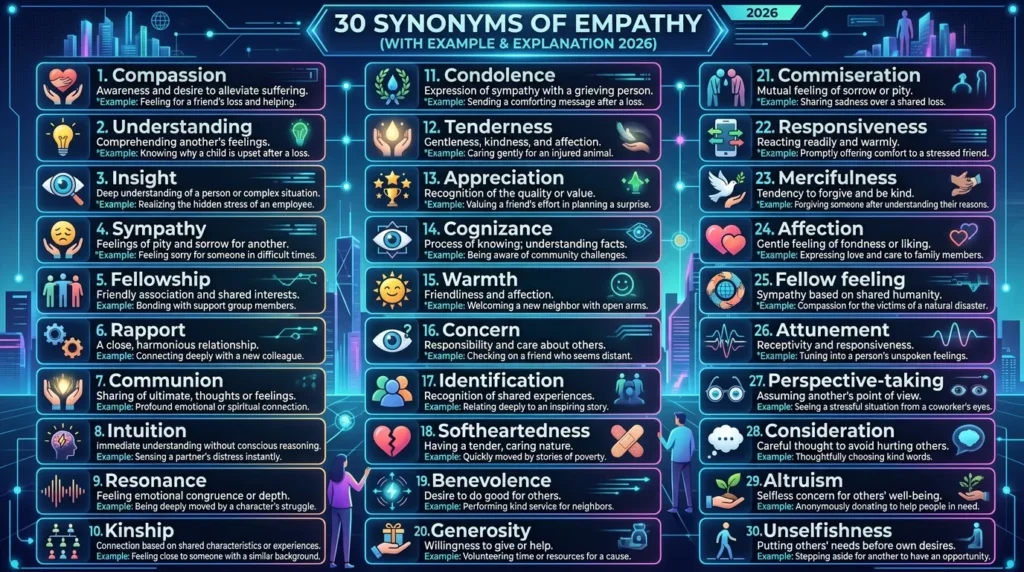
The word empathy means understanding and sharing another person’s feelings. Imagine your friend feels sad after failing a test. You listen carefully, understand the pain, and try to comfort them. That is empathy.
People use this word often in daily conversations, psychology, education, healthcare, and workplaces. Empathy helps people build stronger relationships and communicate with kindness. However, repeating the same word too often can make writing simple and repetitive.
Learning synonyms of empathy helps English learners improve vocabulary and express emotions more clearly. It also helps writers create deeper and more natural communication. In this article, you will learn the meaning of empathy, its pronunciation, history, grammar, and 30 useful synonyms with examples. You will also explore semantic categories, antonyms, and common questions to strengthen your English speaking and writing skills.
Meaning of Empathy
Definition
Empathy (noun): the ability to understand and share another person’s feelings or emotions.
Examples
- The teacher showed great empathy toward the students.
- Good leaders often practice empathy.
Connotative Meaning
(Connotation means the feeling or emotion a word suggests beyond its basic meaning.)
- Positive tone: kindness, understanding, compassion
- Negative tone: emotional burden or oversensitivity in some situations
- Neutral tone: emotional awareness of others
Etymology
- From Greek empatheia meaning “passion” or “physical affection”
- Entered English through German psychological studies in the 19th century
Short History:
- Old English (450–1100): no direct use of empathy
- Middle English (1100–1500): emotional understanding described through other words
- Modern English (1500–Present): empathy became common in psychology and communication studies
Pronunciation (US & UK – IPA)
- US: /ˈempəθi/
- UK: /ˈempəθi/
Syllables
- em-pa-thy
Affixation Pattern of Empathy
- Root: path
- Prefix: em-
- Suffix: -y
Word Formation:
- empathize (verb)
- empathetic (adjective)
- empathically (adverb)
- empathy (noun)
30 Synonyms of Empathy
1. Compassion (noun)
US: /kəmˈpæʃən/ | UK: /kəmˈpæʃən/
Meaning: deep concern for another person’s suffering
Examples:
- She showed compassion to the low income people.
- Doctors need compassion for patients.
2. Sympathy (noun)
US: /ˈsɪmpəθi/ | UK: /ˈsɪmpəθi/
Meaning: feeling sadness for another person
Examples:
- He expressed sympathy after the loss.
- Her words showed great sympathy.
3. Understanding (noun)
US: /ˌʌndərˈstændɪŋ/ | UK: /ˌʌndəˈstændɪŋ/
Meaning: the ability to know someone’s feelings
Examples:
- Parents need understanding.
- She listened with understanding.
4. Kindness (noun)
US: /ˈkaɪndnəs/ | UK: /ˈkaɪndnəs/
Meaning: caring and gentle behavior
Examples:
- His kindness helped everyone.
- Small acts of kindness matter.
5. Care (noun)
US: /ker/ | UK: /keə/
Meaning: attention and concern for others
Examples:
- Nurses provide excellent care.
- She spoke with care.
6. Sensitivity (noun)
US: /ˌsensəˈtɪvəti/ | UK: /ˌsensəˈtɪvəti/
Meaning: awareness of emotions and feelings
Examples:
- Teachers need emotional sensitivity.
- His sensitivity impressed others.
7. Concern (noun)
US: /kənˈsɜːrn/ | UK: /kənˈsɜːn/
Meaning: worry and care about someone
Examples:
- She showed concern for her friend.
- His face reflected concern.
8. Humanity (noun)
US: /hjuːˈmænəti/ | UK: /hjuːˈmænɪti/
Meaning: kindness toward other people
Examples:
- The volunteer acted with humanity.
- We should treat others with humanity.
9. Mercy (noun)
US: /ˈmɜːrsi/ | UK: /ˈmɜːsi/
Meaning: kindness shown to someone suffering
Examples:
- The judge showed mercy.
- They asked for mercy.
10. Warmth (noun)
US: /wɔːrmθ/ | UK: /wɔːmθ/
Meaning: friendly emotional kindness
Examples:
- She greeted us with warmth.
- His voice carried warmth.
11. Affection (noun)
US: /əˈfekʃən/ | UK: /əˈfekʃən/
Meaning: gentle feelings of love and care
Examples:
- Parents show affection to children.
- Her smile reflected affection.
12. Benevolence (noun)
US: /bəˈnevələns/ | UK: /bəˈnevələns/
Meaning: desire to do good for others
Examples:
- The leader acted with benevolence.
- Her benevolence inspired people.
13. Charity (noun)
US: /ˈtʃerəti/ | UK: /ˈtʃærəti/
Meaning: kindness shown through help or giving
Examples:
- They donated money to charity.
- His actions reflected charity.
14. Support (noun)
US: /səˈpɔːrt/ | UK: /səˈpɔːt/
Meaning: help and encouragement
Examples:
- Friends offered emotional support.
- Families need support during hard times.
15. Tenderness (noun)
US: /ˈtendərnəs/ | UK: /ˈtendənəs/
Meaning: gentle and loving care
Examples:
- She treated the child with tenderness.
- His voice showed tenderness.
16. Thoughtfulness (noun)
US: /ˈθɔːtfəlnəs/ | UK: /ˈθɔːtfəlnəs/
Meaning: careful attention to others’ needs
Examples:
- Her gift showed thoughtfulness.
- He acted with thoughtfulness.
17. Fellow Feeling (noun)
US: /ˈfeloʊ ˈfiːlɪŋ/ | UK: /ˈfeləʊ ˈfiːlɪŋ/
Meaning: shared emotional understanding
Examples:
- Workers developed fellow feeling.
- The team shared fellow feeling.
18. Rapport (noun)
US: /ræˈpɔːr/ | UK: /ræˈpɔː/
Meaning: close and understanding relationship
Examples:
- The counselor built good rapport.
- Strong rapport improves teamwork.
19. Emotional Insight (noun)
US: /ɪˈmoʊʃənl ˈɪnsaɪt/ | UK: /ɪˈməʊʃənl ˈɪnsaɪt/
Meaning: understanding emotions deeply
Examples:
- Therapists need emotional insight.
- Her emotional insight helped others.
20. Pity (noun)
US: /ˈpɪti/ | UK: /ˈpɪti/
Meaning: sadness for someone’s suffering
Examples:
- He felt pity for the animal.
- She looked at him with pity.
21. Solidarity (noun)
US: /ˌsɑːləˈdærəti/ | UK: /ˌsɒlɪˈdærɪti/
Meaning: unity and shared support
Examples:
- Workers showed solidarity.
- Communities need solidarity.
22. Gentleness (noun)
US: /ˈdʒentlnəs/ | UK: /ˈdʒentlnəs/
Meaning: soft and caring behavior
Examples:
- Her gentleness calmed the child.
- He treated animals with gentleness.
23. Helpfulness (noun)
US: /ˈhelpfəlnəs/ | UK: /ˈhelpfəlnəs/
Meaning: willingness to help others
Examples:
- Her helpfulness impressed everyone.
- Students appreciated his helpfulness.
24. Goodwill (noun)
US: /ˌɡʊdˈwɪl/ | UK: /ˌɡʊdˈwɪl/
Meaning: friendly and kind feelings
Examples:
- The event created goodwill.
- We should spread goodwill.
25. Consideration (noun)
US: /kənˌsɪdəˈreɪʃən/ | UK: /kənˌsɪdəˈreɪʃən/
Meaning: careful thought for others
Examples:
- Thank you for your consideration.
- She acted with great consideration.
26. Friendliness (noun)
US: /ˈfrendlɪnəs/ | UK: /ˈfrendlɪnəs/
Meaning: warm and pleasant behavior
Examples:
- His friendliness made people comfortable.
- The staff showed friendliness.
27. Altruism (noun)
US: /ˈæltruɪzəm/ | UK: /ˈæltruɪzəm/
Meaning: caring for others without selfishness
Examples:
- Volunteers often show altruism.
- Her altruism inspired the team.
28. Devotion (noun)
US: /dɪˈvoʊʃən/ | UK: /dɪˈvəʊʃən/
Meaning: strong care and loyalty
Examples:
- His devotion to family was clear.
- Nurses work with devotion.
29. Emotional Connection (noun)
US: /ɪˈmoʊʃənl kəˈnekʃən/ | UK: /ɪˈməʊʃənl kəˈnekʃən/
Meaning: shared emotional understanding
Examples:
- Good friendships need emotional connection.
- They formed a strong emotional connection.
30. Understandingness (noun)
US: /ˌʌndərˈstændɪŋnəs/ | UK: /ˌʌndəˈstændɪŋnəs/
Meaning: quality of being understanding
Examples:
- Her understandingness helped the group.
- Teachers need understandingness.
Prototype Meaning
The most common meaning of empathy is understanding another person’s feelings and emotionally connecting with them. People usually imagine listening carefully, caring deeply, and supporting someone during difficult times.
Prototype Categorization
- Emotional care: compassion, sympathy, tenderness
- Support and kindness: support, kindness, goodwill
- Understanding and awareness: sensitivity, understanding, emotional insight
- Connection and unity: rapport, solidarity, emotional connection
Categorization helps writers choose the best synonym depending on tone, emotion, and situation.
Antonyms of Empathy
Antonyms
- Apathy (noun): lack of care or feeling
- Cruelty (noun): causing pain without concern
- Indifference (noun): lack of interest or sympathy
- Coldness (noun): emotional distance
- Selfishness (noun): caring only about oneself
Short Questions and Answers
What does empathy mean?
- Empathy means understanding and sharing another person’s feelings.
When should empathy be used?
- Use it when discussing emotions, relationships, kindness, or communication.
Is empathy positive or negative?
- Empathy is usually positive because it shows care and understanding.
How is it different from similar words?
- Empathy means feeling with someone, while sympathy means feeling sorry for someone.
Conclusion
Learning synonyms of empathy and synonyms of empathy improves emotional vocabulary and communication skills. These words help English learners express care, understanding, and kindness more clearly in speaking and writing. Using different synonyms also avoids repetition and makes communication more meaningful.Empathy-related vocabulary is useful in conversations, education, workplaces, healthcare, and relationships. These words help people describe emotions and human connection with greater accuracy. Practice learning and using new vocabulary every day. Small improvements in emotional language can make your English stronger, richer, and more confident over time.

I’m Zahid Abbas, an educator, researcher, and digital publishing strategist with a passion for linguistics, grammar, and clear communication. As a content creator and SEO specialist, I craft research-driven, reader-focused content that empowers learners and makes knowledge accessible worldwide.

