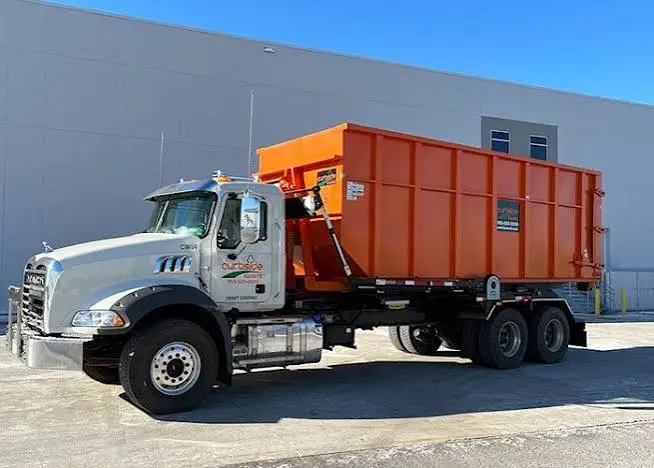

Construction sites depend on open production space. Crews need room to frame, cut, stage materials, move equipment, perform demolition, and complete inspections without stepping around yesterday’s waste. When debris begins occupying the same space needed for production, the cost is not limited to appearance. Workers spend more time moving around obstacles, material staging becomes less efficient, and the next trade may inherit a work area that is not ready.
For contractors, the useful way to think about a roll-off dumpster is not simply as a container for waste. It is part of the site-flow plan. Its location, loading route, capacity, and service timing can either support production or create another constraint. The strongest strategy is to design debris movement around the same questions used for labor, equipment, and material logistics: where work is happening, what needs to move next, and which areas must remain open.
Plan the Dumpster Around Production Flow
Before delivery, contractors should map the active work zones and identify where the largest waste streams will originate. Framing areas may produce lumber cutoffs and sheathing scraps. Interior tear-out can generate drywall, fixtures, flooring, and cabinetry. Roofing creates bulky tear-off material, while concrete or masonry work produces much denser debris.
That difference matters because “close to the work” is not always the same as “good for the work.” A dumpster placed beside a demolition area may shorten carrying distance but block a loader route, material drop zone, or future concrete delivery. A slightly farther location can be more efficient if crews can reach it by a clear, direct path without crossing other operations.
Working with Waste Removal USA can help contractors coordinate roll-off placement and service timing around active construction schedules. The location should be evaluated against four practical questions:
- Can crews reach it without crossing high-conflict work zones?
- Can equipment or carts approach it efficiently if needed?
- Will the container interfere with future deliveries or staging?
- Can the service truck still reach it once the site becomes busier?
This simple test turns placement into a production decision rather than a delivery-day convenience.
The same logic applies to debris routes. Contractors should define how waste will move from each major work area to the dumpster before the site becomes crowded. Those routes should stay clear of pallets, cords, tools, stored materials, and temporary parking. If debris has to be carried around changing obstacles every day, crews are more likely to create temporary piles near the work area.
A clear route also reduces double handling. Waste that goes directly from the work zone to the dumpster is handled once. Waste that is first stacked in a hallway, driveway, or staging area must be handled again later. On a long project, that repeated movement can consume substantial labor without adding any value to the finished work.
Use Cleanup to Protect Staging and Trade Transitions
Production areas compete for space with material staging. Lumber, drywall, pipe, roofing, cabinets, flooring, fixtures, and packaged equipment all need somewhere to go before installation. If demolition debris or scrap occupies those same areas, incoming materials may be unloaded farther from the work or moved repeatedly as the site changes.
That is why cleanup should be tied to the construction schedule. Instead of treating waste removal as a general housekeeping task, contractors can use cleanup checkpoints at the end of high-debris phases or before major deliveries. A checkpoint may occur after demolition, before framing, before rough inspections, before drywall, or before finish materials arrive.
A useful decision rule is simple: if the next phase needs the space currently occupied by debris, cleanup should happen before the handoff.
This is especially important on projects with staggered trades. Framers, electricians, plumbers, roofers, drywall crews, and finish contractors may work on different schedules, but the site should not become a chain of inherited debris. Each phase should leave the next crew with enough clear space to begin work immediately.
Responsibility also needs to be explicit. Some contractors require each trade to manage its own waste. Others use laborers or a dedicated cleanup crew. Either system can work, but unclear responsibility usually means debris remains in place until someone is forced to deal with it. Site orientation should cover where approved debris goes, which materials need separate handling, and which areas must remain clear at all times.
Contractors should also keep new materials physically separate from outgoing waste. A roll-off dumpster helps create that distinction, but only if the surrounding area does not become an informal overflow zone. Packaging, broken pallets, scraps, and demolition material should continue moving toward disposal rather than spreading into staging areas.
Match Capacity and Service to the Waste Stream
A roll-off dumpster can support production only while it has usable capacity. Once it reaches its practical limit, debris begins backing up into the site and the benefit disappears.
Contractors should monitor both volume and material type. Lightweight but bulky waste such as packaging, insulation, cabinets, or siding may consume space quickly. Dense materials such as concrete, brick, stone, tile, plaster, or asphalt can create weight concerns before a container looks full. That means visual appearance alone is not always a reliable measure of remaining capacity.
Projects involving roadwork debris removal make this especially clear. Dense pavement or concrete debris, equipment traffic, traffic-control zones, and limited service windows may all affect where material can be staged and when a container can be replaced. In those conditions, waste removal has to be planned around production sequencing rather than handled after the work area is already congested.
The better practice is to schedule service before a full container forces crews to create overflow piles. Contractors can review fill levels during daily site walks and compare them with the next scheduled high-waste activity. If demolition begins tomorrow and the dumpster is already near its practical limit, servicing it first may protect an entire day of production.
Service access should be protected in the same way as a material-delivery lane. Crew trucks, trailers, lifts, pallets, temporary fencing, and equipment can gradually block the route needed for pickup. A container that cannot be serviced becomes a stationary obstacle at exactly the point when the site most needs more capacity.
Before a scheduled swap or pickup, the superintendent or site lead should confirm that the approach is open and that nothing has been staged where the service vehicle needs to operate.
Keep Production Areas Clear With Small, Regular Resets
Large debris gets attention because it is obvious, but small waste can disrupt production just as effectively. Nails, screws, wire, wood cutoffs, broken tile, drywall pieces, plastic straps, and packaging can spread across floors, driveways, and equipment paths.
Roll-off dumpsters do not replace daily housekeeping. Contractors still need a system for collecting smaller debris before it reaches the main container. Buckets, scrap bins, brooms, magnetic sweepers, or bags can help crews control loose material at the source.
A practical rhythm is to combine short daily cleanup with larger phase-based resets. Daily cleanup protects walkways and active work areas. Phase resets clear staging zones, remove accumulated debris, check dumpster capacity, and prepare the site for the next operation.
This approach also reveals when the original dumpster plan is no longer working. Construction sites change. A location that was ideal during demolition may interfere with exterior work, paving, landscaping, or finish deliveries later. Contractors should be willing to relocate the container or change service timing when the site flow changes.
The key limitation is that convenience for one crew should not create inefficiency for the rest of the project. The best dumpster location is not necessarily the shortest walk from one production area. It is the location that reduces total handling while preserving equipment movement, staging, deliveries, and service access.
Contractors use roll-off dumpsters most effectively when they treat them as part of the production system rather than as passive waste storage. The container should give debris a direct path out of active work areas while protecting the space needed for crews, equipment, and incoming materials.
The practical implication is straightforward: plan placement around site flow, define debris routes, assign cleanup responsibility, schedule resets before trade handoffs, and service the container before waste backs up into production areas. When those decisions are tied to the construction schedule, the dumpster helps preserve usable work space instead of simply holding what the project has already discarded.
Also Read
- Synonyms for Via 30 Powerful Words to Explore 2026
- Synonyms of Complacent,30 Best word for 2026
- What Is a Synonym for Also? 15 Useful Alternatives