The word gossip means talking about other people’s personal lives, secrets, or rumors that may not even be true. Imagine two friends whispering behind a book during recess and giggling about who got sent to the principal’s office. That kind of secret chitchat is what we call gossip.
We use synonyms for gossip when talking about playground rumors, playground secrets, idle news, or lighthearted chatter with friends. Learning new ways to say gossip helps make their story writing vivid, or interesting. English learners and content writers need synonyms for gossip too.
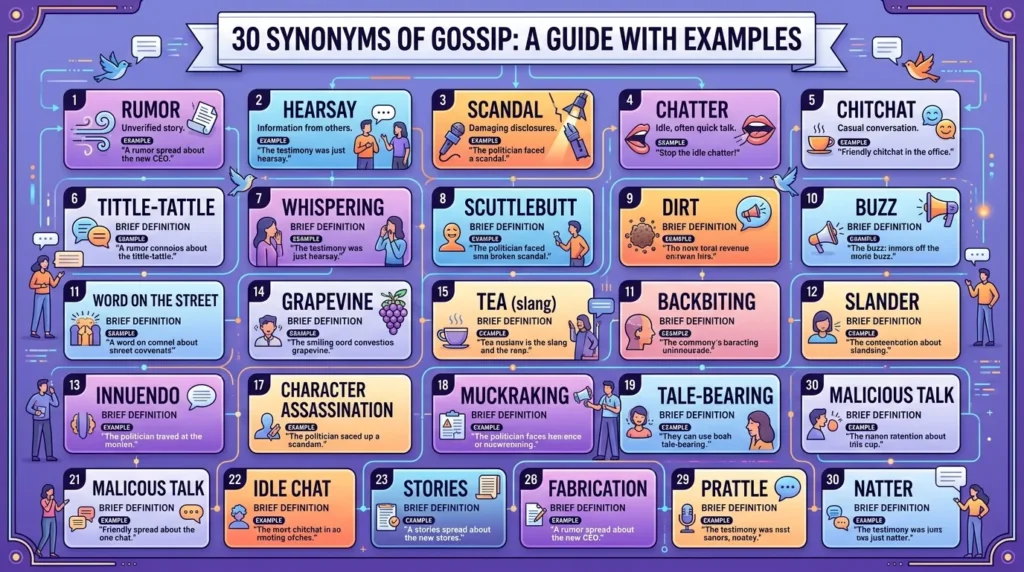
This guide gives you 30 simple synonyms for gossip. Along with easy sentences, word origins, pronunciation guides, and clear categories.
Meaning of Gossip
Definition
Gossip (Noun / Verb): Casual conversation or rumors about other people’s private lives.
Examples
- Be careful not to spread gossip on the school playground.
- They sat on the bench to gossip about the upcoming talent show.
Connotative Meaning
- Positive tone: Can mean friendly bonding, playful chitchat, or social news among close friends.
- Negative tone: Can mean hurtful rumors, mean whispering, backbiting, or spreading lies.
- Neutral tone: Simply describes casual, informal conversation.
Etymology
- Source language: Came from Old English long ago.
- Old English: Godsibb (a combination of god and sibb, meaning a godparent or close relative/friend).
- Modern English: Shifted over time to mean close friend talk, and then casual talk about others!
Pronunciation
- US: /ˈɡɑːsɪp/
- UK: /ˈɡɒsɪp/
Syllables
gos-sip (2 parts)
Affixation Pattern of Gossip
- Root: Gossip (means friendly chatter or rumor)
- Word Formation:
- Noun: Gossip / Gossiper / Gossipry
- Adjective: Gossipy
- Verb: Gossip
Synonyms for Gossip
1. Rumor (Noun) — US: /ˈruːmər/ | UK: /ˈruːmə/
Meaning: A story or report passed around without proof that it is true.
Examples:
A rumor spread that we might get extra recess today.
Do not believe every rumor you hear on the bus.
2. Chatter (Noun / Verb) — US: /ˈtʃætər/ | UK: /ˈtʃætə/
Meaning: Fast, continuous, informal talking about silly or light things.
Examples:
The room was full of happy student chatter.
The kids began to chatter about their weekend plans.
3. Tattling (Noun / Verb) — US: /ˈtætlɪŋ/ | UK: /ˈtætlɪŋ/
Meaning: Telling adults about someone else’s secrets or bad choices.
Examples:
Tattling on your classmates can hurt feelings.
He was tattling to the teacher about the missing pencil.
4. Whispering (Noun / Verb) — US: /ˈwɪspərɪŋ/ | UK: /ˈwɪspərɪŋ/
Meaning: Speaking very quietly so other people cannot hear.
Examples:
There was quiet whispering in the back row of the library.
They were whispering secrets behind their hands.
5. Chitchat (Noun / Verb) — US: /ˈtʃɪtˌtʃæt/ | UK: /ˈtʃɪtˌtʃæt/
Meaning: Light, friendly, and informal conversation.
Examples:
We enjoyed some friendly chitchat while waiting for the bus.
They liked to chitchat before class started.
6. Babble (Noun / Verb) — US: /ˈbæbl/ | UK: /ˈbæbl/
Meaning: Talking quickly in a way that is confusing or silly.
Examples:
Her excited babble filled the entire hallway.
Don’t babble all at once when answering the teacher!
7. Prattle (Noun / Verb) — US: /ˈprætl/ | UK: /ˈprætl/
Meaning: Talking at length in a foolish or simple way.
Examples:
The constant prattle made it hard to concentrate on reading.
She listened to her little brother prattle about his toys.
8. Talebearing (Noun) — US: /ˈteɪlˌbɛrɪŋ/ | UK: /ˈteɪlˌbeərɪŋ/
Meaning: Carrying private stories or secrets from one person to another.
Examples:
Avoid talebearing if you want to keep strong friendships.
Her talebearing caused a misunderstanding in the group.
9. Small talk (Noun) — US: /smɔːl tɔːk/ | UK: /smɔːl tɔːk/
Meaning: Polite conversation about everyday things like weather or hobbies.
Examples:
They made small talk while waiting in the lunch line.
Small talk helps people feel welcome at a new school.
10. News (Noun) — US: /nuːz/ | UK: /njuːz/
Meaning: Information about recent events or happenings.
Examples:
Did you hear the exciting news about the class field trip?
She shared the good news with all her friends.
11. Hearsay (Noun) — US: /ˈhɪrseɪ/ | UK: /ˈhɪəseɪ/
Meaning: Information heard from other people that might not be true.
Examples:
That story is just hearsay, so don’t worry about it.
You shouldn’t repeat hearsay without knowing the facts.
12. Tattle (Noun / Verb) — US: /ˈtætl/ | UK: /ˈtætl/
Meaning: Reporting minor bad behavior to get someone into trouble.
Examples:
Try to solve the problem before you tattle.
His tattle upset his younger sister.
13. Blather (Noun / Verb) — US: /ˈblæðər/ | UK: /ˈblæðə/
Meaning: Talk that is long-winded, silly, or meaningless.
Examples:
Ignore all that noisy blather in the lunchroom.
He began to blather about his favorite video game.
14. Word of mouth (Noun Phrase) — US: /wɜːrd əv maʊθ/ | UK: /wɜːd əv maʊθ/
Meaning: News passed orally from one person to another.
Examples:
We learned about the dog park by word of mouth.
The game became popular through simple word of mouth.
15. Gab (Noun / Verb) — US: /ɡæb/ | UK: /ɡæb/
Meaning: To talk continuously in a chatterbox way.
Examples:
The two best friends love to gab during lunchtime.
She has a real gift for gab during class presentations.
16. Backbiting (Noun) — US: /ˈbækˌbaɪtɪŋ/ | UK: /ˈbækˌbaɪtɪŋ/
Meaning: Saying mean things about a person who is not present.
Examples:
Kind children stay away from backbiting.
Her backbiting hurt her teammate’s feelings.
17. Grapevine (Noun) — US: /ˈɡreɪpvaɪn/ | UK: /ˈɡreɪpvaɪn/
Meaning: An informal network for passing along secret news or rumors.
Examples:
I heard through the grapevine that we have a sub tomorrow.
The grapevine moves very fast in our school!
18. Clack (Noun / Verb) — US: /klæk/ | UK: /klæk/
Meaning: Rapid, noisy talking that sounds like clattering.
Examples:
The constant clack of voices made the library noisy.
They clacked about their favorite TV shows.
19. Whispers (Noun Plural) — US: /ˈwɪspərz/ | UK: /ˈwɪspəz/
Meaning: Rumors or secret talk circulating quietly.
Examples:
Whispers about a surprise test filled the hallway.
Quiet whispers echoed in the auditorium.
20. Scandal (Noun) — US: /ˈskændl/ | UK: /ˈskændl/
Meaning: Talk about shocking or improper actions.
Examples:
The missing trophy created a big scandal at school.
They discussed the silly scandal with big eyes.
21. Jabber (Noun / Verb) — US: /ˈdʒæbər/ | UK: /ˈdʒæbə/
Meaning: Fast, excited talking that is hard to understand.
Examples:
The monkeys began to jabber in the trees.
His excited jabber made everyone smile.
22. Dish (Noun / Verb) — US: /dɪʃ/ | UK: /dɪʃ/
Meaning: Slang for sharing juicy gossip or secret news.
Examples:
Come sit down so we can dish about the party!
She gave us the latest dish on the school play.
23. Dirt (Noun) — US: /dɜːrt/ | UK: /dɜːt/
Meaning: Informal word for embarrassing secrets or rumors.
Examples:
It is not nice to look for dirt on your classmates.
He refused to share any negative dirt about his friend.
24. Report (Noun) — US: /rɪˈpɔːrt/ | UK: /rɪˈpɔːt/
Meaning: An official or unofficial account of an event.
Examples:
According to report, the school carnival is next week.
She gave a clear report of what happened on the field.
25. Talk (Noun) — US: /tɔːk/ | UK: /tɔːk/
Meaning: General conversation or rumors floating around.
Examples:
There is lots of talk about the new playground slide.
Her success became the main talk of the town.
26. Yack (Noun / Verb) — US: /jæk/ | UK: /jæk/
Meaning: Informal word for talking continuously and loudly.
Examples:
They like to yack on the phone after doing homework.
Stop yacking and pay attention to the directions!
27. Buzz (Noun) — US: /bʌz/ | UK: /bʌz/
Meaning: Excited rumors and talk circulating among a group.
Examples:
There is a big buzz about the science exhibition.
The buzz in the hall meant something fun was happening.
28. Blether (Noun / Verb) — US: /ˈblɛðər/ | UK: /ˈbleðə/
Meaning: Long, rambling, and cheerful talk about minor things.
Examples:
They shared a nice blether over warm cocoa.
He loves to blether about his favorite superhero.
29. Idle talk (Noun Phrase) — US: /ˈaɪdl tɔːk/ | UK: /ˈaɪdl tɔːk/
Meaning: Conversations that are silly, pointless, or not serious.
Examples:
Don’t waste time on idle talk when your work is due.
Their conversation was just friendly idle talk.
30. Tittle-tattle (Noun) — US: /ˈtɪtl ˈtætl/ | UK: /ˈtɪtl ˈtætl/
Meaning: Petty or silly gossip and rumors.
Examples:
Forget that silly tittle-tattle and focus on your test!
The book was full of funny tittle-tattle about historical figures.
Also read more about https://synonymhubb.com/synonyms-for-convince/
Prototype Meaning
When children hear gossip, they picture two classmates giggling behind their hands on the playground, leaning in to whisper a secret rumor like “Did you hear who got the main role in the play?”
Prototype Categorization
- Everyday Friendly Chatter: Chitchat, Small talk, Chatter, Gab, Yack, News.
- Rumors & Unproven Stories: Rumor, Grapevine, Hearsay, Buzz, Word of mouth, Whispers, Report, Talk.
- Schoolyard Secrets & Telling: Tattling, Tattle, Talebearing, Whispering, Dirt, Dish, Scandal, Backbiting.
- Silly & Fast Talking: Babble, Prattle, Blather, Jabber, Clack, Blether, Idle talk, Tittle-tattle.
Antonyms of Gossip
- Truth
- Fact
- Silence
- Quiet
- Reality
- Secret (kept safe)
Short Questions and Answers
- What does gossip mean?
- It means talking about other people’s lives, secrets, or unproven rumors.
- When should I use gossip?
- Use it when writing stories about playground secrets, rumor networks, or casual conversations between friends.
- Is gossip a noun or a verb?
- It can be both! You can listen to gossip (noun) or gossip with friends (verb).
- How is gossip different from rumor?
- Gossip is the act of talking about people’s private lives, while a rumor is a specific story or statement that hasn’t been proven true yet.
Conclusion
Synonyms for gossip can help you talk about rumors and information shared about other people. Words such as rumor, hearsay, chatter, talk, and tittle-tattle can make your English more varied and natural. Each word has a slightly different meaning and tone. Choosing the right synonym is important. For English learners, synonyms for gossip can improve speaking, writing, reading, and everyday communication. They can also help you avoid repeating the word gossip too often. Try using synonyms for gossip in simple sentences about school, friends, news, or daily life. With regular practice, you can build a stronger vocabulary. Express your ideas more clearly, and speak English with greater confidence.

I’m Zahid Abbas, an educator, researcher, and digital publishing strategist with a passion for linguistics, grammar, and clear communication. As a content creator and SEO specialist, I craft research-driven, reader-focused content that empowers learners and makes knowledge accessible worldwide.