The word others refers to additional people, different items, or rest of the things in a group. Imagine standing in line with your classmates at the school library. The teacher hands the first three students exciting storybooks, and then hands more books to the rest of the children. Those extra people or different items in the group are what we call others.
We use synonyms for others every day to talk about. Sharing toys, talking about people around us, or picking different items from a menu. Learning new ways to say others and synonyms for others helps students make their writing more specific, or descriptive. English learners and content writers need synonyms for others too.
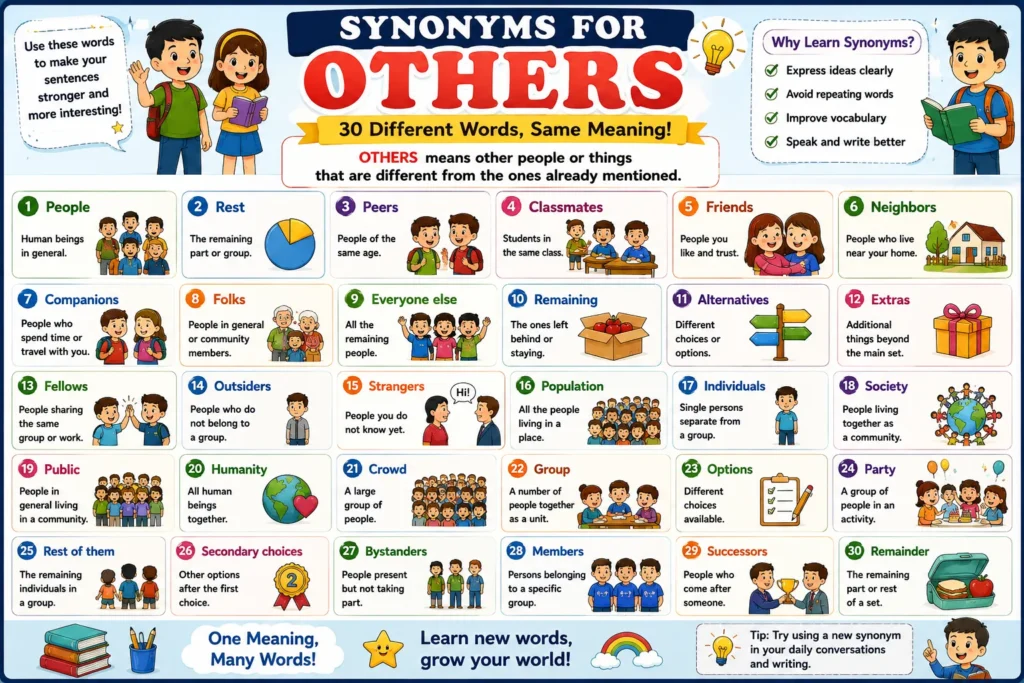
This guide gives you 30 simple synonyms for others. Along with easy sentences, word origins, pronunciation guides, and clear categories designed just for young learners.
Meaning of Others
Definition
Others (Pronoun/Noun): Different people, extra things, or the remaining members of a group.
Examples
- Be kind and respectful to others.
- Some kids played soccer, while others drew with chalk.
Connotative Meaning
- Positive tone: Shows teamwork, sharing, kindness, and community spirit.
- Negative tone: Points to feeling left out, excluded, or distant from a group.
- Neutral tone: Describes extra items, options, or rest of the group.
Etymology
- Source language: Came from Old English ōþer (meaning second, different, or remaining).
- Proto-Germanic: Derived from antharas (meaning other or second).
- Middle English (1100–1500): Formed the plural noun form othres to refer to additional persons or things.
- Modern English (1500–Present): Used as a standard word to refer to different or remaining people and items!
Pronunciation
- US: /ˈʌðərz/
- UK: /ˈʌðəz/
Syllables
oth-ers (2 parts)
Affixation Pattern of Others
- Root: Other
- Prefix: None
- Suffix: -s (makes a plural noun/pronoun)
- Word Formation:
- Noun/Pronoun: Other, Others
- Adjective: Other
- Adverb: Otherwise
Also read more about https://synonymhubb.com/synonyms-for-convince/
Synonyms for Others
1. People (Noun) — US: /ˈpiːpl/ | UK: /ˈpiːpl/
Meaning: Human beings in general or as a group.
Examples:
Many people visited the park on Saturday.
She enjoys helping people in need.
2. Rest (Noun) — US: /rɛst/ | UK: /rest/
Meaning: The remaining part or group of things or people.
Examples:
Two puppies slept while the rest played.
He finished his work before the rest of the class.
3. Peers (Noun) — US: /pɪrz/ | UK: /pɪəz/
Meaning: People who are of the same age or school grade.
Examples:
She shares her toys with her peers.
Work closely with your peers on the art project.
4. Classmates (Noun) — US: /ˈklæsˌmeɪts/ | UK: /ˈklɑːsmeɪts/
Meaning: Other students who study in the same classroom.
Examples:
His classmates cheered when he scored a goal.
They sat with their classmates during lunch.
5. Friends (Noun) — US: /frɛndz/ | UK: /frendz/
Meaning: People whom you know, like, and trust.
Examples:
Playing games with friends is always fun.
She invited all her friends to the birthday party.
6. Neighbors (Noun) — US: /ˈneɪbərz/ | UK: /ˈneɪbəz/
Meaning: People who live near your home or environment.
Examples:
Our neighbors waved at us from their garden.
The neighbors helped clean up the street.
7. Companions (Noun) — US: /kəmˈpænjənz/ | UK: /kəmˈpænjənz/
Meaning: People who spend time or travel with you.
Examples:
The travel companions shared snacks on the bus.
Dogs make loyal companions for families.
8. Folks (Noun) — US: /foʊks/ | UK: /fəʊks/
Meaning: People in general or members of a community.
Examples:
The town folks gathered for the holiday parade.
Friendly folks welcomed the new family to town.
9. Everyone else (Pronoun Phrase) — US: /ˈɛvriˌwʌn ɛls/ | UK: /ˈevriwʌn els/
Meaning: All the remaining people in a setting.
Examples:
While she read a book, everyone else went outside.
He arrived early before everyone else showed up.
10. Remaining (Adjective/Noun) — US: /rɪˈmeɪnɪŋ/ | UK: /rɪˈmeɪnɪŋ/
Meaning: The ones left behind or staying after others leave.
Examples:
The remaining students helped clear the desks.
Save the remaining apples for tomorrow.
11. Alternatives (Noun) — US: /ɔːlˈtɜːrnətɪvz/ | UK: /ɔːlˈtɜːnətɪvz/
Meaning: Different choices or options available.
Examples:
If it rains, we have indoor alternatives.
They looked at several alternatives for the school trip.
12. Extras (Noun) — US: /ˈɛkstrəz/ | UK: /ˈekstrəz/
Meaning: Additional things or items beyond the main set.
Examples:
The teacher kept extras of pencils in her drawer.
They ordered two extras for their friends.
13. Fellows (Noun) — US: /ˈfɛloʊz/ | UK: /ˈfeləʊz/
Meaning: People sharing the same position, group, or activity.
Examples:
He treated his fellows with kindness and respect.
She shared storybooks with her fellows.
14. Outsiders (Noun) — US: /ˌaʊtˈsaɪdərzo/ | UK: /ˌaʊtˈsaɪdəz/
Meaning: People who do not belong to a specific group.
Examples:
The club welcomed outsiders to join their games.
Friendly rules make outsiders feel included.
15. Strangers (Noun) — US: /ˈstreɪndʒərz/ | UK: /ˈstreɪndʒəz/
Meaning: People whom you do not know yet.
Examples:
Never accept rides from strangers.
The warm smile turned strangers into friends.
16. Population (Noun) — US: /ˌpɑːpjuˈleɪʃən/ | UK: /ˌpɒpjuˈleɪʃn/
Meaning: All the people living in a particular place.
Examples:
The town population attended the fair.
The bird population grows in the spring.
17. Individuals (Noun) — US: /ˌɪndəˈvɪdʒuəlz/ | UK: /ˌɪndɪˈvɪdʒuəlz/
Meaning: Single persons separate from a group.
Examples:
All individuals must follow the safety rules.
Different individuals have different creative ideas.
18. Society (Noun) — US: /səˈsaɪəti/ | UK: /səˈsaɪəti/
Meaning: People living together as a community.
Examples:
Helping society makes the world a better place.
Good manners are important in society.
19. Public (Noun) — US: /ˈpʌblɪk/ | UK: /ˈpʌblɪk/
Meaning: People in general living in a community.
Examples:
The park is open to the general public.
The library serves the public every day.
20. Humanity (Noun) — US: /hjʊˈmænəti/ | UK: /hjuːˈmænəti/
Meaning: All human beings together as a whole.
Examples:
Inventions bring great progress to humanity.
Kindness is a gift to all humanity.
21. Crowd (Noun) — US: /kraʊd/ | UK: /kraʊd/
Meaning: A large group of people gathered together.
Examples:
The cheerful crowd cheered for the runners.
She found her brother in the busy crowd.
22. Group (Noun) — US: /ɡruːp/ | UK: /ɡruːp/
Meaning: A number of people or items gathered together.
Examples:
Our group finished the science project first.
A small group waited near the library door.
23. Options (Noun) — US: /ˈɑːpʃənz/ | UK: /ˈɒpʃnz/
Meaning: Different choices or items that can be chosen.
Examples:
The lunch menu offered healthy options.
Explore all your options before picking a book.
24. Companions / Party (Noun) — US: /ˈpɑːrti/ | UK: /ˈpɑːti/
Meaning: A group of people taking part in an activity together.
Examples:
The hiking party reached the mountain top.
Our picnic party enjoyed the sunny weather.
25. Rest of them (Pronoun Phrase) — US: /rɛst ʌv ðɛm/ | UK: /rest ɒv ðəm/
Meaning: The remaining individuals in a group.
Examples:
She stayed inside while the rest of them played tag.
The rest of them arrived on the second bus.
26. Secondary choices (Noun Phrase) — US: /ˈsɛkənˌdɛri tʃɔɪsəz/ | UK: /ˈsekəndri tʃɔɪsɪz/
Meaning: Other items or options available after the first choice.
Examples:
Blue and yellow were her secondary choices.
Keep backup plans as secondary choices.
27. Neighbors / Bystanders (Noun) — US: /ˈbaɪˌstændərz/ | UK: /ˈbaɪstændəz/
Meaning: People who are present at an event but not taking part.
Examples:
Helpless bystanders called for quick assistance.
The bystanders clapped for the street performers.
28. Members (Noun) — US: /ˈmɛmbərz/ | UK: /ˈmembəz/
Meaning: Persons belonging to a specific group or club.
Examples:
All team members wore red jerseys.
The club members met after school.
29. Successors (Noun) — US: /səkˈsɛsərz/ | UK: /səkˈsesəz/
Meaning: People who come after someone else in a job or role.
Examples:
The new student leaders were good successors.
They trained their successors carefully.
30. Remainder (Noun) — US: /rɪˈmeɪndər/ | UK: /rɪˈmeɪndə/
Meaning: The remaining part or rest of a set of items or people.
Examples:
The remainder of the cake was shared at dinner.
The remainder of the class joined the music room.
Prototype Meaning
When children hear others, they picture people around them. Like classmates working on group projects, or friends playing together on the playground.
Prototype Categorization
- Friends & Classmates: Peers, Classmates, Friends, Companions, Fellows, Members.
- General People & Community: People, Folks, Individuals, Public, Society, Humanity, Neighbors, Crowd, Group.
- The Remaining Part: Rest, Everyone else, Remaining, Rest of them, Remainder.
- Different Items & Options: Alternatives, Extras, Options, Secondary choices.
Antonyms for Others
- Self
- Myself
- Oneself
- Same
- Individual
- Alone
Short Questions and Answers
- What does others mean?
- It means different people, remaining members of a group, or extra items.
- When should I use others?
- Use it when writing about sharing, working in groups, or referring to rest of the people.
- Is others a good or bad word?
- It is a neutral and helpful word that promotes cooperation, sharing, and community.
- How is it different from similar words?
- Others covers general extra people or things, peers means people of your exact age, and classmates refers only to students in your class.
Conclusion
Synonyms for others can help you use English in a clearer and more natural way. Words such as another, different, extra, several, various, classmates, peers, and the rest can help you express your ideas. Synonyms for others are useful in school writing, daily conversations, and reading. For learners, practicing a few synonyms for others each day is a great way to build vocabulary. Try making your own short sentences with these words. With regular practice, you will learn when to use each synonym. Also become more confident in speaking and writing.

I’m Zahid Abbas, an educator, researcher, and digital publishing strategist with a passion for linguistics, grammar, and clear communication. As a content creator and SEO specialist, I craft research-driven, reader-focused content that empowers learners and makes knowledge accessible worldwide.