The word aggressive means behaving in a strong, forceful, or sometimes angry way. Imagine a football player running quickly toward the goal without fear. People may describe that player as aggressive because of the strong and determined attitude.
This word is common in daily English, sports, business, psychology, and communication. Sometimes it describes confidence and bold action. In other situations, it may describe anger or hostility. Because the meaning changes by context, learning synonyms of aggressive is very useful.
English learners and writers can improve vocabulary by using different words instead of repeating the same term. In this article, you will learn the meaning of aggressive, its pronunciation, history, grammar, emotional tone, and 30 useful synonyms with examples. You will also explore categories, antonyms, and simple questions to build stronger English speaking and writing skills.
Meaning of Aggressive
Definition
Aggressive (adjective): behaving in a strong, forceful, competitive, or hostile way.
Examples
- The dog became aggressive near strangers.
- She uses an aggressive strategy in business.
Connotative Meaning
- Positive tone: confident, bold, determined
- Negative tone: hostile, angry, violent
- Neutral tone: forceful or highly active
Etymology
- From Latin aggressus meaning “to attack” or “move toward”
- Entered English through French and Latin influence
Short History:
- Old English (450–1100): no direct form of aggressive existed
- Middle English (1100–1500): related words described attack or force
- Modern English (1500–Present): aggressive became common in military, business, and psychology language
Pronunciation (US & UK – IPA)
- US: /əˈɡrɛsɪv/
- UK: /əˈɡresɪv/
Syllables
- ag-gres-sive
Affixation Pattern of Aggressive
- Root: aggress
- Prefix: ad- (toward)
- Suffix: -ive
Word Formation:
- aggression (noun)
- aggressor (noun)
- aggressively (adverb)
- aggressive (adjective)
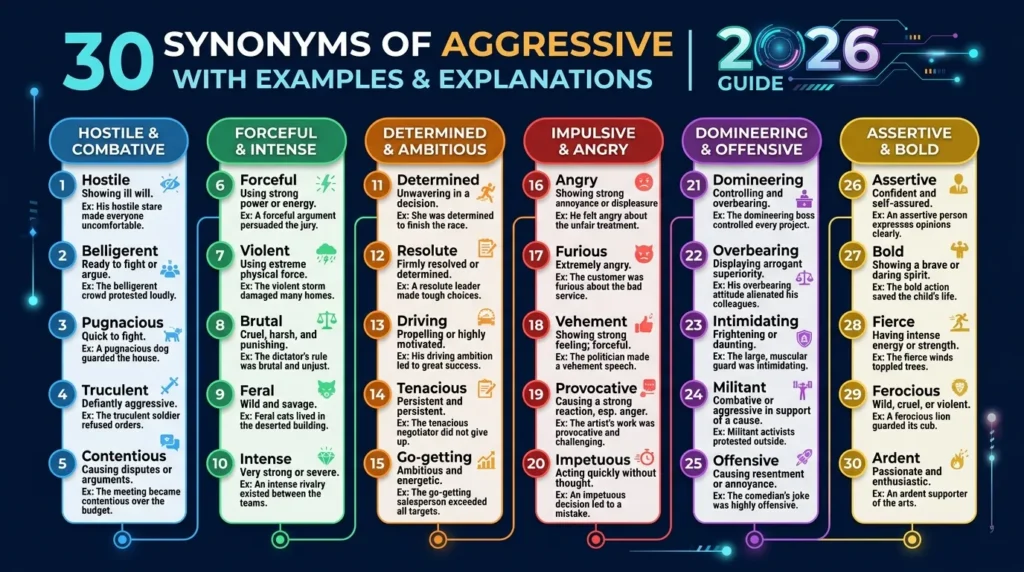
30 Synonyms of Aggressive
1. Hostile (adjective)
US: /ˈhɑːstaɪl/ | UK: /ˈhɒstaɪl/
Meaning: showing anger or opposition
Examples:
- The crowd became hostile.
- He gave a hostile reply.
2. Forceful (adjective)
US: /ˈfɔːrsfəl/ | UK: /ˈfɔːsfəl/
Meaning: strong and powerful in action
Examples:
- She made a forceful argument.
- His speech sounded forceful.
3. Fierce (adjective)
US: /fɪrs/ | UK: /fɪəs/
Meaning: strong, violent, or intense
Examples:
- The lion looked fierce.
- Competition became fierce.
4. Violent (adjective)
US: /ˈvaɪələnt/ | UK: /ˈvaɪələnt/
Meaning: involving physical force or harm
Examples:
- The protest turned violent.
- He showed violent behavior.
5. Assertive (adjective)
US: /əˈsɜːrtɪv/ | UK: /əˈsɜːtɪv/
Meaning: confident and direct
Examples:
- She is an assertive leader.
- He spoke in an assertive tone.
6. Pushy (adjective)
US: /ˈpʊʃi/ | UK: /ˈpʊʃi/
Meaning: too demanding or forceful
Examples:
- The salesman was pushy.
- She became pushy during negotiations.
7. Combative (adjective)
US: /kəmˈbætɪv/ | UK: /ˈkɒmbətɪv/
Meaning: ready to argue or fight
Examples:
- He sounded combative in meetings.
- The player became combative.
8. Belligerent (adjective)
US: /bəˈlɪdʒərənt/ | UK: /bəˈlɪdʒərənt/
Meaning: aggressive and unfriendly
Examples:
- The man became belligerent.
- Her tone sounded belligerent.
9. Dominant (adjective)
US: /ˈdɑːmənənt/ | UK: /ˈdɒmɪnənt/
Meaning: controlling or powerful
Examples:
- The team was dominant.
- She has a dominant personality.
10. Intense (adjective)
US: /ɪnˈtɛns/ | UK: /ɪnˈtens/
Meaning: extremely strong or serious
Examples:
- He has an intense attitude.
- The match became intense.
11. Bold (adjective)
US: /boʊld/ | UK: /bəʊld/
Meaning: brave and confident
Examples:
- She made a bold decision.
- His plan was bold.
12. Powerful (adjective)
US: /ˈpaʊərfəl/ | UK: /ˈpaʊəfəl/
Meaning: having strength or influence
Examples:
- He gave a powerful speech.
- The army remained powerful.
13. Energetic (adjective)
US: /ˌɛnərˈdʒɛtɪk/ | UK: /ˌenəˈdʒetɪk/
Meaning: full of energy and action
Examples:
- She is an energetic worker.
- The team played energetic football.
14. Dynamic (adjective)
US: /daɪˈnæmɪk/ | UK: /daɪˈnæmɪk/
Meaning: active and powerful
Examples:
- He is a dynamic speaker.
- The company needs dynamic leaders.
15. Competitive (adjective)
US: /kəmˈpɛtətɪv/ | UK: /kəmˈpetətɪv/
Meaning: wanting to win
Examples:
- She is highly competitive.
- The market became competitive.
16. Ambitious (adjective)
US: /æmˈbɪʃəs/ | UK: /æmˈbɪʃəs/
Meaning: strongly wanting success
Examples:
- He is an ambitious student.
- Their goals are ambitious.
17. Threatening (adjective)
US: /ˈθrɛtnɪŋ/ | UK: /ˈθretənɪŋ/
Meaning: suggesting danger or harm
Examples:
- The dog looked threatening.
- He used a threatening voice.
18. Offensive (adjective)
US: /əˈfɛnsɪv/ | UK: /əˈfensɪv/
Meaning: attacking or insulting
Examples:
- The team used an offensive strategy.
- His words sounded offensive.
19. Militant (adjective)
US: /ˈmɪlɪtənt/ | UK: /ˈmɪlɪtənt/
Meaning: strongly active in conflict or causes
Examples:
- The group became militant.
- He has militant opinions.
20. Savage (adjective)
US: /ˈsævɪdʒ/ | UK: /ˈsævɪdʒ/
Meaning: extremely violent or cruel
Examples:
- The attack was savage.
- The animal looked savage.
21. Harsh (adjective)
US: /hɑːrʃ/ | UK: /hɑːʃ/
Meaning: severe or rough
Examples:
- The coach was harsh.
- She gave harsh criticism.
22. Ruthless (adjective)
US: /ˈruːθləs/ | UK: /ˈruːθləs/
Meaning: without pity or kindness
Examples:
- The dictator was ruthless.
- She made a ruthless decision.
23. Attacking (adjective)
US: /əˈtækɪŋ/ | UK: /əˈtækɪŋ/
Meaning: acting against someone strongly
Examples:
- The army stayed attacking.
- His comments sounded attacking.
24. Provocative (adjective)
US: /prəˈvɑːkətɪv/ | UK: /prəˈvɒkətɪv/
Meaning: causing strong reactions
Examples:
- She made a provocative statement.
- The article was provocative.
25. Spirited (adjective)
US: /ˈspɪrɪtɪd/ | UK: /ˈspɪrɪtɪd/
Meaning: full of energy and confidence
Examples:
- The team gave a spirited performance.
- She is a spirited student.
26. Zealous (adjective)
US: /ˈzɛləs/ | UK: /ˈzeləs/
Meaning: showing strong enthusiasm
Examples:
- He is a zealous worker.
- The fans became zealous.
27. Overbearing (adjective)
US: /ˌoʊvərˈberɪŋ/ | UK: /ˌəʊvəˈbeərɪŋ/
Meaning: too controlling and forceful
Examples:
- The manager seemed overbearing.
- Her attitude became overbearing.
28. Confrontational (adjective)
US: /ˌkɑːnfrənˈteɪʃənl/ | UK: /ˌkɒnfrʌnˈteɪʃənl/
Meaning: likely to argue or fight
Examples:
- He has a confrontational style.
- The debate became confrontational.
29. Determined (adjective)
US: /dɪˈtɜːrmɪnd/ | UK: /dɪˈtɜːmɪnd/
Meaning: strongly decided to succeed
Examples:
- She is determined to win.
- He remained determined.
30. Relentless (adjective)
US: /rɪˈlɛntləs/ | UK: /rɪˈlentləs/
Meaning: never stopping or giving up
Examples:
- The rain was relentless.
- She made relentless efforts.
Prototype Meaning
The most common meaning of aggressive is acting in a strong, forceful, or attacking way. People usually imagine an angry person, a competitive athlete, or a powerful business strategy when hearing this word.
Prototype Categorization
- Angry and hostile behavior: hostile, violent, belligerent
- Confidence and leadership: assertive, bold, determined
- Competition and ambition: competitive, ambitious, relentless
- Control and dominance: dominant, overbearing, forceful
Antonyms of Aggressive
- Calm (adjective): peaceful and relaxed
- Gentle (adjective): soft and kind
- Friendly (adjective): kind and pleasant
- Passive (adjective): not forceful or active
- Peaceful (adjective): without conflict or violence
Short Questions and Answers
What does aggressive mean?
- It means behaving in a strong, forceful, or sometimes hostile way.
When should aggressive be used?
- Use it when describing strong behavior, competition, anger, or determination.
Is aggressive positive or negative?
- It can be positive for confidence and ambition or negative for anger and violence.
How is it different from similar words?
- “Aggressive” often suggests force or attack, while “assertive” usually suggests confident but respectful behavior.
Conclusion
Learning synonyms of aggressive and synonyms of aggressive improves vocabulary and communication skills. It helps English learners describe emotions, personalities, business behavior, sports attitudes, and social situations more clearly. Using different synonyms also avoids repetition and makes writing stronger and more natural. These words help writers express confidence, power, determination, anger, or hostility with better accuracy. Daily vocabulary practice builds stronger speaking and writing skills over time. The more words you learn, the more confidently and effectively you can communicate in English.

I’m Zahid Abbas, an educator, researcher, and digital publishing strategist with a passion for linguistics, grammar, and clear communication. As a content creator and SEO specialist, I craft research-driven, reader-focused content that empowers learners and makes knowledge accessible worldwide.