The word black describes the darkest color, the absence of light, or something very dark in appearance. Imagine walking outside at night when the sky is completely black and full of stars. You may also see black clothes, black cars, or black coffee in everyday life.
People use the word black in art, fashion, nature, emotions, and daily conversations. It is one of the most common color words in English. However, repeating the same word many times can make writing less interesting.
Learning synonyms of black helps English learners improve vocabulary and express ideas more clearly. It also helps writers create vivid descriptions and avoid repetition. In this article, you will learn the meaning of black, its pronunciation, history, grammar, and 30 useful synonyms with meanings and examples. You will also explore categories, antonyms, and simple questions to strengthen your English skills.
Meaning of Black
Definition
Black (adjective/noun): the darkest color, like coal or night, with little or no light.
Examples
- She wore a black dress to the party.
- The sky turned black before the storm.
Connotative Meaning
(Connotation means the feeling or emotion a word suggests beyond its basic meaning.)
- Positive tone: elegant, powerful, formal
- Negative tone: dark, sad, frightening
- Neutral tone: a basic color or shade
Etymology
- From Old English blæc meaning “dark” or “without light”
- Related to Germanic language roots describing darkness
Short History:
- Old English (450–1100): used for darkness and dark objects
- Middle English (1100–1500): became common in clothing and literature
- Modern English (1500–Present): widely used in art, fashion, and symbolic meanings
Pronunciation (US & UK – IPA)
- US: /blæk/
- UK: /blæk/
Syllables
- black
Affixation Pattern of Black
- Root: black
- Prefix: none
- Suffix: none
Word Formation:
- black (adjective/noun)
- blacken (verb)
- blackness (noun)
- blackish (adjective)
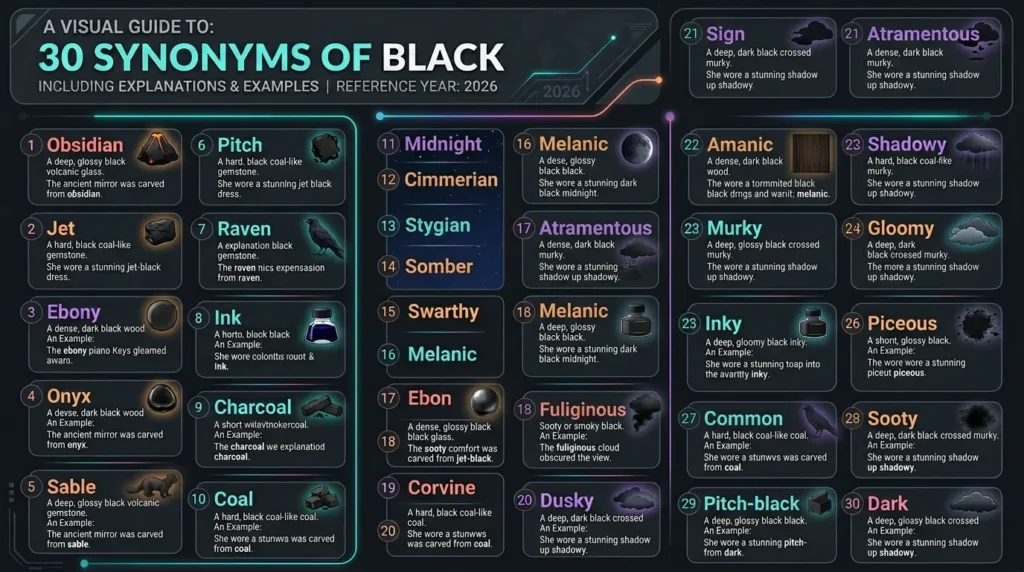
30 Synonyms of Black
1. Dark (adjective)
US: /dɑːrk/ | UK: /dɑːk/
Meaning: having very little light
Examples:
- The room looked dark at night.
- She painted the wall dark gray.
2. Ebony (adjective/noun)
US: /ˈebəni/ | UK: /ˈebəni/
Meaning: deep shiny black color
Examples:
- She had ebony hair.
- The table was made of ebony wood.
3. Jet-black (adjective)
US: /ˌdʒet ˈblæk/ | UK: /ˌdʒet ˈblæk/
Meaning: completely black
Examples:
- He owned a jet-black car.
- Her cat had jet-black fur.
4. Coal-black (adjective)
US: /ˌkoʊl ˈblæk/ | UK: /ˌkəʊl ˈblæk/
Meaning: black like coal
Examples:
- Smoke made the walls coal-black.
- The cave looked coal-black.
5. Pitch-black (adjective)
US: /ˌpɪtʃ ˈblæk/ | UK: /ˌpɪtʃ ˈblæk/
Meaning: extremely dark
Examples:
- The tunnel was pitch-black.
- We walked through the pitch-black forest.
6. Inky (adjective)
US: /ˈɪŋki/ | UK: /ˈɪŋki/
Meaning: dark like ink
Examples:
- The night sky looked inky.
- He spilled inky liquid on the table.
7. Sooty (adjective)
US: /ˈsʊti/ | UK: /ˈsʊti/
Meaning: covered with black soot
Examples:
- The chimney became sooty.
- Her hands looked sooty.
8. Charcoal (adjective/noun)
US: /ˈtʃɑːrkoʊl/ | UK: /ˈtʃɑːkəʊl/
Meaning: dark grayish-black color
Examples:
- He wore a charcoal suit.
- The artist used charcoal pencils.
9. Raven (adjective/noun)
US: /ˈreɪvən/ | UK: /ˈreɪvən/
Meaning: shiny black like a raven bird
Examples:
- She had raven hair.
- The bird’s feathers were raven black.
10. Midnight (adjective/noun)
US: /ˈmɪdnaɪt/ | UK: /ˈmɪdnaɪt/
Meaning: dark like the night sky
Examples:
- He chose a midnight blue jacket.
- The lake looked midnight black.
11. Dusky (adjective)
US: /ˈdʌski/ | UK: /ˈdʌski/
Meaning: somewhat dark in color
Examples:
- The sky turned dusky.
- She admired the dusky clouds.
12. Murky (adjective)
US: /ˈmɜːrki/ | UK: /ˈmɜːki/
Meaning: dark and unclear
Examples:
- The water looked murky.
- The room felt murky and cold.
13. Shadowy (adjective)
US: /ˈʃædoʊi/ | UK: /ˈʃædəʊi/
Meaning: full of shadows or darkness
Examples:
- A shadowy figure appeared.
- The forest looked shadowy.
14. Gloomy (adjective)
US: /ˈɡluːmi/ | UK: /ˈɡluːmi/
Meaning: dark and depressing
Examples:
- The weather was gloomy.
- The house looked gloomy.
15. Dim (adjective)
US: /dɪm/ | UK: /dɪm/
Meaning: not bright
Examples:
- The lights were dim.
- We sat in a dim room.
16. Obsidian (noun/adjective)
US: /əbˈsɪdiən/ | UK: /əbˈsɪdiən/
Meaning: shiny volcanic black stone color
Examples:
- The necklace looked obsidian black.
- She bought an obsidian statue.
17. Smoky (adjective)
US: /ˈsmoʊki/ | UK: /ˈsməʊki/
Meaning: dark like smoke
Examples:
- The glass had a smoky color.
- Her makeup looked smoky.
18. Night-black (adjective)
US: /ˌnaɪt ˈblæk/ | UK: /ˌnaɪt ˈblæk/
Meaning: black like nighttime
Examples:
- The horse was night-black.
- Clouds became night-black.
19. Stygian (adjective)
US: /ˈstɪdʒiən/ | UK: /ˈstɪdʒiən/
Meaning: extremely dark
Examples:
- The cave was Stygian.
- A Stygian darkness filled the hall.
20. Clouded (adjective)
US: /ˈklaʊdɪd/ | UK: /ˈklaʊdɪd/
Meaning: darkened or unclear
Examples:
- The sky looked clouded.
- His face became clouded with worry.
21. Blackish (adjective)
US: /ˈblækɪʃ/ | UK: /ˈblækɪʃ/
Meaning: somewhat black
Examples:
- The water looked blackish.
- Smoke left a blackish stain.
22. Ashen (adjective)
US: /ˈæʃən/ | UK: /ˈæʃən/
Meaning: pale gray-black like ash
Examples:
- The fire left an ashen surface.
- The sky appeared ashen.
23. Slate (noun/adjective)
US: /sleɪt/ | UK: /sleɪt/
Meaning: dark gray color
Examples:
- She painted the wall slate gray.
- The roof had slate tiles.
24. Onyx (noun/adjective)
US: /ˈɑːnɪks/ | UK: /ˈɒnɪks/
Meaning: deep black gemstone color
Examples:
- He wore an onyx ring.
- Her dress was onyx black.
25. Sable (noun/adjective)
US: /ˈseɪbəl/ | UK: /ˈseɪbəl/
Meaning: rich dark black color
Examples:
- The coat was sable black.
- She admired the sable fur.
26. Tar-black (adjective)
US: /ˌtɑːr ˈblæk/ | UK: /ˌtɑː ˈblæk/
Meaning: black like tar
Examples:
- The road looked tar-black after rain.
- Smoke turned the wall tar-black.
27. Cimmerian (adjective)
US: /sɪˈmɪriən/ | UK: /sɪˈmɪəriən/
Meaning: deeply dark or gloomy
Examples:
- The forest felt Cimmerian.
- A Cimmerian night surrounded them.
28. Darkened (adjective)
US: /ˈdɑːrkənd/ | UK: /ˈdɑːkənd/
Meaning: made darker
Examples:
- The room became darkened.
- Clouds darkened the sky.
29. Tenebrous (adjective)
US: /ˈtenəbrəs/ | UK: /ˈtenɪbrəs/
Meaning: dark and shadowy
Examples:
- The castle looked tenebrous.
- A tenebrous path appeared.
30. Opaque (adjective)
US: /oʊˈpeɪk/ | UK: /əʊˈpeɪk/
Meaning: not allowing light through
Examples:
- The glass was opaque black.
- He used opaque paint.
Prototype Meaning
The most common meaning of black is the darkest color, connected with night, shadows, coal, or darkness. People usually imagine black clothing, dark skies, or deep shadows when hearing this word.
Prototype Categorization
- Pure dark shades: jet-black, coal-black, pitch-black
- Natural dark colors: ebony, raven, onyx
- Shadow and darkness: murky, shadowy, tenebrous
- Gray-black tones: charcoal, slate, ashen
Categorization helps writers choose the best synonym depending on style, emotion, and description.
Antonyms of Black
Antonyms
- White (adjective): the lightest color
- Bright (adjective): full of light
- Pale (adjective): light in color
- Clear (adjective): transparent or easy to see through
- Radiant (adjective): shining brightly
Short Questions and Answers
What does black mean?
- It means the darkest color with little or no light.
When should black be used?
- Use it when describing dark colors, objects, emotions, or nighttime.
Is black positive or negative?
- It can be both positive and negative depending on context.
How is it different from similar words?
- “Black” describes a complete dark color, while words like “dark” may describe low light generally.
Conclusion
Learning synonyms of black and synonyms of black improves vocabulary and descriptive writing skills. These words help English learners express shades, emotions, and imagery more clearly. Using different synonyms also avoids repetition and makes writing richer and more creative.Understanding color vocabulary strengthens communication in storytelling, art, fashion, and daily conversation. It also builds confidence in speaking and writing English naturally. Practice using new words every day. Small vocabulary habits can greatly improve your English fluency over time.

I’m Zahid Abbas, an educator, researcher, and digital publishing strategist with a passion for linguistics, grammar, and clear communication. As a content creator and SEO specialist, I craft research-driven, reader-focused content that empowers learners and makes knowledge accessible worldwide.