The word cold means having little heat or warmth. Imagine walking outside on a winter morning without a jacket. The wind touches your face, and your hands feel cold. People also use this word to describe emotions, behavior, weather, food, and illnesses.The word cold is very common in English because it appears in daily conversations, stories, news, and school writing. However, using the same word many times can make writing repetitive and less interesting.
Learning synonyms of cold helps English learners improve vocabulary and express ideas more clearly. It also helps writers choose better words for different emotions, temperatures, and situations. In this article, you will learn the meaning of cold, its pronunciation, history, grammar, and 30 useful synonyms with examples.
You will also explore semantic categories, antonyms, and common usage questions.
Meaning of Cold
Definition
Cold (adjective/noun): having low temperature or showing little warmth or emotion.
Examples
- The water feels cold today.
- He gave me a cold reply.
Connotative Meaning
(Connotation means the feeling or emotion a word suggests beyond its basic meaning.)
- Positive tone: fresh, calm, cool
- Negative tone: unfriendly, harsh, emotionless
- Neutral tone: low temperature or lack of heat
Etymology
- From Old English cald meaning “cool” or “without warmth”
- Related to Germanic language roots
Short History:
- Old English (450–1100): used for weather and temperature
- Middle English (1100–1500): expanded to emotional meanings
- Modern English (1500–Present): widely used for weather, illness, food, and emotions
Pronunciation (US & UK – IPA)
- US: /koʊld/
- UK: /kəʊld/
Syllables
- cold
Affixation Pattern of Cold
- Root: cold
- Prefix: none
- Suffix: none
Word Formation:
- cold (adjective/noun)
- coldness (noun)
- coldly (adverb)
- colder (adjective comparative)
- coldest (adjective superlative)
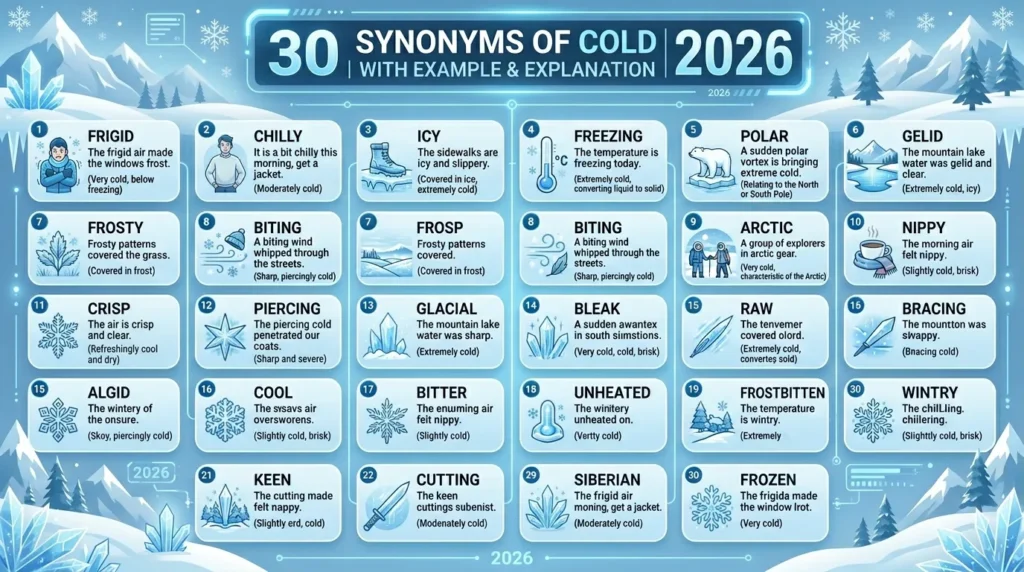
Synonyms of Cold
1. Chilly (adjective)
US: /ˈtʃɪli/ | UK: /ˈtʃɪli/
Meaning: slightly cold in a pleasant or uncomfortable way
Examples:
- The evening feels chilly.
- She wore a coat in the chilly wind.
2. Cool (adjective)
US: /kuːl/ | UK: /kuːl/
Meaning: slightly cold but comfortable
Examples:
- The room stayed cool all day.
- I like cool weather.
3. Freezing (adjective)
US: /ˈfriːzɪŋ/ | UK: /ˈfriːzɪŋ/
Meaning: extremely cold
Examples:
- It is freezing outside.
- My hands became freezing cold.
4. Frosty (adjective)
US: /ˈfrɔːsti/ | UK: /ˈfrɒsti/
Meaning: very cold with frost
Examples:
- The morning was frosty.
- We walked through the frosty field.
5. Icy (adjective)
US: /ˈaɪsi/ | UK: /ˈaɪsi/
Meaning: extremely cold or covered with ice
Examples:
- The road looked icy.
- She gave him an icy stare.
6. Frigid (adjective)
US: /ˈfrɪdʒɪd/ | UK: /ˈfrɪdʒɪd/
Meaning: very cold or emotionally distant
Examples:
- The air felt frigid.
- His voice sounded frigid.
7. Wintry (adjective)
US: /ˈwɪntri/ | UK: /ˈwɪntri/
Meaning: related to winter weather
Examples:
- A wintry wind blew outside.
- The sky looked dark and wintry.
8. Arctic (adjective)
US: /ˈɑːrktɪk/ | UK: /ˈɑːktɪk/
Meaning: extremely cold like the Arctic region
Examples:
- The wind was Arctic.
- They survived Arctic temperatures.
9. Bitter (adjective)
US: /ˈbɪtər/ | UK: /ˈbɪtə/
Meaning: painfully cold
Examples:
- A bitter wind blew all night.
- The weather became bitter.
10. Nippy (adjective)
US: /ˈnɪpi/ | UK: /ˈnɪpi/
Meaning: pleasantly cold
Examples:
- It was a nippy morning.
- The air felt fresh and nippy.
11. Gelid (adjective)
US: /ˈdʒelɪd/ | UK: /ˈdʒelɪd/
Meaning: extremely cold
Examples:
- The lake water was gelid.
- A gelid breeze entered the room.
12. Polar (adjective)
US: /ˈpoʊlər/ | UK: /ˈpəʊlə/
Meaning: very cold like polar regions
Examples:
- They faced polar conditions.
- The night air felt polar.
13. Snowy (adjective)
US: /ˈsnoʊi/ | UK: /ˈsnəʊi/
Meaning: covered with snow or very cold
Examples:
- The streets were snowy.
- We enjoyed the snowy weather.
14. Raw (adjective)
US: /rɔː/ | UK: /rɔː/
Meaning: unpleasantly cold and wet
Examples:
- The day felt raw and windy.
- A raw wind hit the town.
15. Crisp (adjective)
US: /krɪsp/ | UK: /krɪsp/
Meaning: pleasantly cool and fresh
Examples:
- The morning air was crisp.
- We walked in the crisp autumn weather.
16. Glacial (adjective)
US: /ˈɡleɪʃəl/ | UK: /ˈɡleɪsiəl/
Meaning: extremely cold or unfriendly
Examples:
- She gave a glacial response.
- The mountain air felt glacial.
17. Unfriendly (adjective)
US: /ʌnˈfrɛndli/ | UK: /ʌnˈfrendli/
Meaning: not warm or welcoming
Examples:
- His attitude seemed unfriendly.
- The receptionist sounded unfriendly.
18. Distant (adjective)
US: /ˈdɪstənt/ | UK: /ˈdɪstənt/
Meaning: emotionally far or cold
Examples:
- She became emotionally distant.
- His reply felt distant.
19. Reserved (adjective)
US: /rɪˈzɜːrvd/ | UK: /rɪˈzɜːvd/
Meaning: quiet and emotionally controlled
Examples:
- He remained reserved at the party.
- Her manner seemed reserved.
20. Aloof (adjective)
US: /əˈluːf/ | UK: /əˈluːf/
Meaning: emotionally distant and not friendly
Examples:
- She acted aloof during the meeting.
- His behavior looked aloof.
21. Detached (adjective)
US: /dɪˈtætʃt/ | UK: /dɪˈtætʃt/
Meaning: emotionally separate or uninvolved
Examples:
- He sounded emotionally detached.
- Her tone felt detached.
22. Heartless (adjective)
US: /ˈhɑːrtləs/ | UK: /ˈhɑːtləs/
Meaning: showing no sympathy
Examples:
- The comment was heartless.
- He seemed heartless.
23. Emotionless (adjective)
US: /ɪˈmoʊʃənləs/ | UK: /ɪˈməʊʃənləs/
Meaning: showing no emotion
Examples:
- Her face stayed emotionless.
- He gave an emotionless answer.
24. Chilled (adjective)
US: /tʃɪld/ | UK: /tʃɪld/
Meaning: made cold
Examples:
- We drank chilled juice.
- The food stayed chilled.
25. Refrigerated (adjective)
US: /rɪˈfrɪdʒəreɪtɪd/ | UK: /rɪˈfrɪdʒəreɪtɪd/
Meaning: kept cold in a refrigerator
Examples:
- The milk remained refrigerated.
- Keep the medicine refrigerated.
26. Coldhearted (adjective)
US: /ˌkoʊldˈhɑːrtɪd/ | UK: /ˌkəʊldˈhɑːtɪd/
Meaning: lacking kindness or sympathy
Examples:
- The villain was coldhearted.
- Her response seemed coldhearted.
27. Bleak (adjective)
US: /bliːk/ | UK: /bliːk/
Meaning: cold, empty, and depressing
Examples:
- The weather looked bleak.
- They walked through a bleak town.
28. Hard (adjective)
US: /hɑːrd/ | UK: /hɑːd/
Meaning: severe or emotionally cold
Examples:
- He gave a hard answer.
- The winter felt hard this year.
29. Coolheaded (adjective)
US: /ˌkuːlˈhedɪd/ | UK: /ˌkuːlˈhedɪd/
Meaning: calm and unemotional
Examples:
- She stayed coolheaded during danger.
- A coolheaded leader solved the problem.
30. Temperate (adjective)
US: /ˈtɛmpərət/ | UK: /ˈtempərət/
Meaning: mildly cool, not very hot or cold
Examples:
- The region has a temperate climate.
- Spring weather feels temperate.
Prototype Meaning
The most typical meaning of cold is having little or no warmth. People usually imagine winter weather, ice, snow, cold drinks, or someone behaving without emotion or kindness.
Prototype Categorization
- Weather and temperature: chilly, freezing, frosty, icy
- Extreme cold: Arctic, polar, glacial, frigid
- Emotional coldness: aloof, detached, heartless
- Pleasant coolness: crisp, cool, temperate
Categorization helps writers choose the best synonym depending on weather, emotions, or tone.
Antonyms of Cold
Antonyms
- Warm (adjective): having comfortable heat
- Hot (adjective): having high temperature
- Friendly (adjective): kind and welcoming
- Passionate (adjective): full of strong feeling
- Heated (adjective): very warm or emotional
Short Questions and Answers
What does cold mean?
- It means having little warmth or showing little emotion.
When should cold be used?
- Use it for weather, food, emotions, illnesses, or temperature.
Is cold positive or negative?
- It can be positive, negative, or neutral depending on context.
How is it different from similar words?
- “Cold” is general, while words like “freezing” or “icy” describe stronger coldness.
Conclusion
Learning synonyms of cold and synonyms of cold improves vocabulary and communication skills. It helps English learners describe weather, emotions, food, and situations more clearly. Using different synonyms also avoids repetition and makes writing more natural and interesting.These words are useful in daily conversations, storytelling, academic writing, and professional communication. They help writers express different levels of temperature and emotion with accuracy. Practice learning and using new vocabulary every day. Small daily habits can build stronger English confidence and fluency over time.

I’m Zahid Abbas, an educator, researcher, and digital publishing strategist with a passion for linguistics, grammar, and clear communication. As a content creator and SEO specialist, I craft research-driven, reader-focused content that empowers learners and makes knowledge accessible worldwide.