The word significant means important, meaningful, or large enough to be noticed. Imagine a student receiving a scholarship after years of hard work. That achievement is significant because it changes the student’s future in a meaningful way.
People use this word often in education, business, science, news, and daily conversations. It helps describe things that matter or have strong effects. However, repeating the same word again and again can make speaking and writing less interesting.
Learning synonyms of significant helps English learners improve vocabulary and communicate more clearly. It also helps writers choose better words for formal and creative writing. In this article, you will learn the meaning of significant, its pronunciation, history, grammar, and 30 useful synonyms with examples.
You will also explore semantic categories, antonyms, and simple questions to strengthen your English skills.
Meaning of Significant
Definition
Significant (adjective): important, meaningful, or having a noticeable effect.
Examples
- The company made a significant profit this year.
- Her support played a significant role in the project.
Connotative Meaning
(Connotation means the feeling or emotion a word suggests beyond its basic meaning.)
- Positive tone: valuable, meaningful, important
- Negative tone: serious, major, concerning
- Neutral tone: noticeable or meaningful
Etymology
- From Latin significare meaning “to indicate” or “to mean”
- Entered English through Old French and Latin influence
Short History:
- Old English (450–1100): similar ideas expressed through words meaning important or meaningful
- Middle English (1100–1500): forms related to “signify” appeared
- Modern English (1500–Present): “significant” became common in academic and daily language
Pronunciation (US & UK – IPA)
- US: /sɪɡˈnɪfɪkənt/
- UK: /sɪɡˈnɪfɪkənt/
Syllables
- sig-nif-i-cant
Affixation Pattern of Significant
- Root: signify
- Prefix: none
- Suffix: -ant
Word Formation:
- signify (verb)
- significance (noun)
- significant (adjective)
- significantly (adverb)
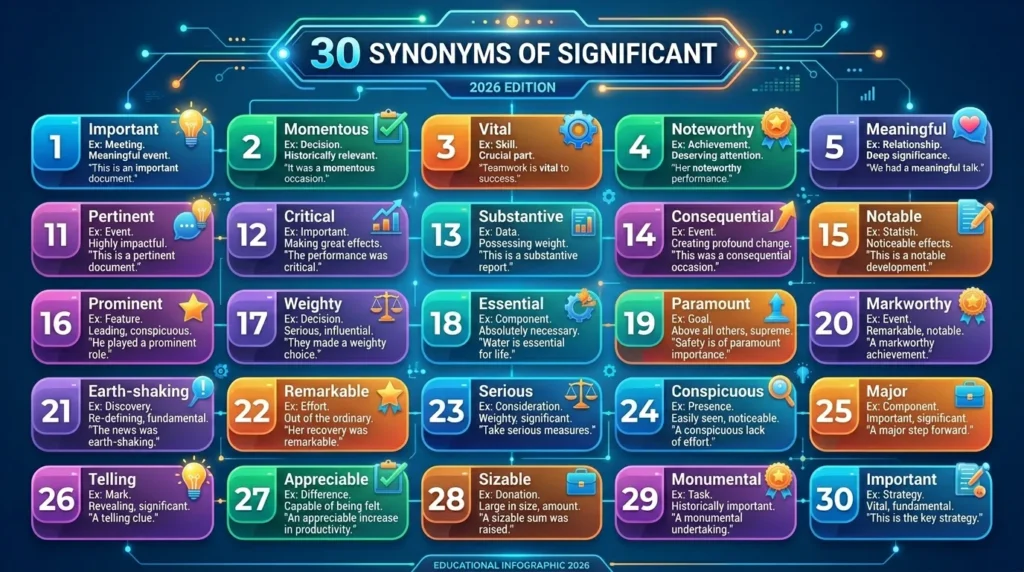
Synonyms of Significant
1. Important (adjective)
US: /ɪmˈpɔːrtnt/ | UK: /ɪmˈpɔːtənt/
Meaning: having great value or influence
Examples:
- Education is important for success.
- She made an important decision.
2. Meaningful (adjective)
US: /ˈmiːnɪŋfəl/ | UK: /ˈmiːnɪŋfəl/
Meaning: having deep value or purpose
Examples:
- They had a meaningful conversation.
- The gift was very meaningful.
3. Major (adjective)
US: /ˈmeɪdʒər/ | UK: /ˈmeɪdʒə/
Meaning: very important or serious
Examples:
- The city faced a major problem.
- She achieved a major victory.
4. Notable (adjective)
US: /ˈnoʊtəbl/ | UK: /ˈnəʊtəbl/
Meaning: worthy of attention
Examples:
- There was a notable improvement.
- He made a notable contribution.
5. Remarkable (adjective)
US: /rɪˈmɑːrkəbl/ | UK: /rɪˈmɑːkəbl/
Meaning: unusual and impressive
Examples:
- She showed remarkable courage.
- The athlete made a remarkable recovery.
6. Valuable (adjective)
US: /ˈvæljuəbl/ | UK: /ˈvæljuəbl/
Meaning: very useful or important
Examples:
- Your advice is valuable.
- Time is a valuable resource.
7. Serious (adjective)
US: /ˈsɪriəs/ | UK: /ˈsɪəriəs/
Meaning: important and needing attention
Examples:
- The country faced a serious issue.
- He had a serious injury.
8. Influential (adjective)
US: /ˌɪnfluˈenʃəl/ | UK: /ˌɪnfluˈenʃəl/
Meaning: having strong influence
Examples:
- She is an influential leader.
- The book became highly influential.
9. Consequential (adjective)
US: /ˌkɑːnsɪˈkwenʃəl/ | UK: /ˌkɒnsɪˈkwenʃəl/
Meaning: producing important results
Examples:
- It was a consequential decision.
- The meeting proved consequential.
10. Critical (adjective)
US: /ˈkrɪtɪkəl/ | UK: /ˈkrɪtɪkəl/
Meaning: extremely important
Examples:
- Water is critical for life.
- They discussed a critical matter.
11. Essential (adjective)
US: /ɪˈsenʃəl/ | UK: /ɪˈsenʃəl/
Meaning: completely necessary
Examples:
- Sleep is essential for health.
- Teamwork is essential here.
12. Vital (adjective)
US: /ˈvaɪtl/ | UK: /ˈvaɪtl/
Meaning: absolutely necessary or important
Examples:
- Communication is vital in business.
- Food and water are vital.
13. Substantial (adjective)
US: /səbˈstænʃəl/ | UK: /səbˈstænʃəl/
Meaning: large or important in amount
Examples:
- They made a substantial profit.
- She gave substantial support.
14. Considerable (adjective)
US: /kənˈsɪdərəbl/ | UK: /kənˈsɪdərəbl/
Meaning: large or important enough to notice
Examples:
- The project needs considerable effort.
- He showed considerable skill.
15. Profound (adjective)
US: /prəˈfaʊnd/ | UK: /prəˈfaʊnd/
Meaning: very deep or meaningful
Examples:
- The speech had a profound effect.
- She felt profound sadness.
16. Historic (adjective)
US: /hɪˈstɔːrɪk/ | UK: /hɪˈstɒrɪk/
Meaning: important in history
Examples:
- It was a historic event.
- The agreement was historic.
17. Memorable (adjective)
US: /ˈmemərəbl/ | UK: /ˈmemərəbl/
Meaning: worth remembering
Examples:
- We had a memorable trip.
- Her speech was memorable.
18. Weighty (adjective)
US: /ˈweɪti/ | UK: /ˈweɪti/
Meaning: very serious or important
Examples:
- They discussed weighty matters.
- His words carried a weighty meaning.
19. Powerful (adjective)
US: /ˈpaʊərfəl/ | UK: /ˈpaʊəfəl/
Meaning: having strong effect or influence
Examples:
- The movie had a powerful message.
- She gave a powerful speech.
20. Impressive (adjective)
US: /ɪmˈpresɪv/ | UK: /ɪmˈpresɪv/
Meaning: causing admiration
Examples:
- He made an impressive presentation.
- The building is very impressive.
21. Symbolic (adjective)
US: /sɪmˈbɑːlɪk/ | UK: /sɪmˈbɒlɪk/
Meaning: representing a deeper meaning
Examples:
- The gift was symbolic.
- They held a symbolic ceremony.
22. Relevant (adjective)
US: /ˈreləvənt/ | UK: /ˈreləvənt/
Meaning: closely connected to the subject
Examples:
- Please provide relevant details.
- The article is still relevant.
23. Meaning-packed (adjective)
US: /ˈmiːnɪŋ pækt/ | UK: /ˈmiːnɪŋ pækt/
Meaning: full of meaning or importance
Examples:
- It was a meaning-packed speech.
- The poem felt meaning-packed.
24. Monumental (adjective)
US: /ˌmɑːnjuˈmentl/ | UK: /ˌmɒnjuˈmentl/
Meaning: extremely important or large
Examples:
- They made a monumental discovery.
- The task was monumental.
25. Decisive (adjective)
US: /dɪˈsaɪsɪv/ | UK: /dɪˈsaɪsɪv/
Meaning: having important effects on results
Examples:
- She played a decisive role.
- It was a decisive moment.
26. Prominent (adjective)
US: /ˈprɑːmɪnənt/ | UK: /ˈprɒmɪnənt/
Meaning: important and well known
Examples:
- He is a prominent scientist.
- The building stands in a prominent place.
27. Outstanding (adjective)
US: /aʊtˈstændɪŋ/ | UK: /aʊtˈstændɪŋ/
Meaning: extremely good or important
Examples:
- She gave an outstanding performance.
- The student achieved outstanding results.
28. Striking (adjective)
US: /ˈstraɪkɪŋ/ | UK: /ˈstraɪkɪŋ/
Meaning: attracting attention strongly
Examples:
- There was a striking difference.
- Her idea was striking.
29. Meaning-bearing (adjective)
US: /ˈmiːnɪŋ ˌberɪŋ/ | UK: /ˈmiːnɪŋ ˌbeərɪŋ/
Meaning: carrying important meaning
Examples:
- The symbol is meaning-bearing.
- His actions were meaning-bearing.
30. Eventful (adjective)
US: /ɪˈventfəl/ | UK: /ɪˈventfəl/
Meaning: full of important events
Examples:
- We had an eventful week.
- It was an eventful year.
Prototype Meaning
The most common meaning of significant is something important enough to matter or create a noticeable effect. People usually imagine major events, valuable achievements, or meaningful actions that influence people or situations.
Prototype Categorization
- Importance and value: important, valuable, vital
- Strong effect: powerful, influential, profound
- Noticeable and memorable: notable, remarkable, striking
- Necessary and serious: essential, critical, serious
Categorization helps writers choose the best synonym depending on emotion, context, and writing style.
Antonyms of Significant
Antonyms
- Insignificant (adjective): not important
- Minor (adjective): small in importance
- Trivial (adjective): not meaningful
- Unimportant (adjective): lacking value or influence
- Meaningless (adjective): without clear meaning or value
Short Questions and Answers
What does significant mean?
- It means important, meaningful, or noticeable.
When should significant be used?
- Use it when describing something important or meaningful.
Is significant positive or negative?
- It is usually positive, but it can also describe serious problems.
How is it different from similar words?
- “Significant” focuses on importance or meaning, while “big” mainly describes size.
Conclusion
Learning synonyms of significant and synonyms of significant improves vocabulary and communication skills. It helps English learners describe importance, value, and influence more clearly in speaking and writing. Using different synonyms also avoids repetition and makes language richer and more natural.These words are useful in academic writing, business communication, storytelling, and daily conversations. They help writers express ideas with greater precision and emotional strength. Practice using new vocabulary every day to build confidence and fluency. Small daily efforts can greatly improve your English over time.

I’m Zahid Abbas, an educator, researcher, and digital publishing strategist with a passion for linguistics, grammar, and clear communication. As a content creator and SEO specialist, I craft research-driven, reader-focused content that empowers learners and makes knowledge accessible worldwide.