The word disappointed means feeling sad or unhappy because something did not happen as expected. Imagine studying hard for an exam and then getting lower marks than you hoped for. You may feel disappointed after seeing the result.
People use this word often in daily conversations, books, workplaces, and social situations. It helps describe emotions connected to failure, unmet expectations, or sadness. However, repeating the same word many times can make writing dull and repetitive.
Learning synonyms of disappointed helps English learners improve vocabulary and express feelings more clearly. It also helps writers create stronger and more emotional sentences. In this article, you will learn the meaning of disappointed, its pronunciation, history, grammar, and 30 useful synonyms with examples. You will also explore semantic categories, antonyms, and simple questions to improve your English communication skills.
Meaning of Disappointed
Definition
Disappointed (adjective): feeling unhappy because something was not as good as expected.
Examples
- She felt disappointed with her test result.
- We were disappointed by the canceled trip.
Connotative Meaning
- Positive tone: can encourage learning or improvement
- Negative tone: sadness, frustration, regret
- Neutral tone: emotional reaction to unmet expectations
Etymology
- From Old French desappointer meaning “remove from an appointment”
- Later developed into the meaning of failed expectations
Short History:
- Old English (450–1100): no direct use of disappointed
- Middle English (1100–1500): French influence added similar forms
- Modern English (1500–Present): “disappointed” became common for emotional dissatisfaction
Pronunciation (US & UK – IPA)
- US: /ˌdɪsəˈpɔɪntɪd/
- UK: /ˌdɪsəˈpɔɪntɪd/
Syllables
- dis-ap-point-ed
Affixation Pattern of Disappointed
- Root: appoint
- Prefix: dis-
- Suffix: -ed
Word Formation:
- disappoint (verb)
- disappointed (adjective)
- disappointment (noun)
- disappointing (adjective)
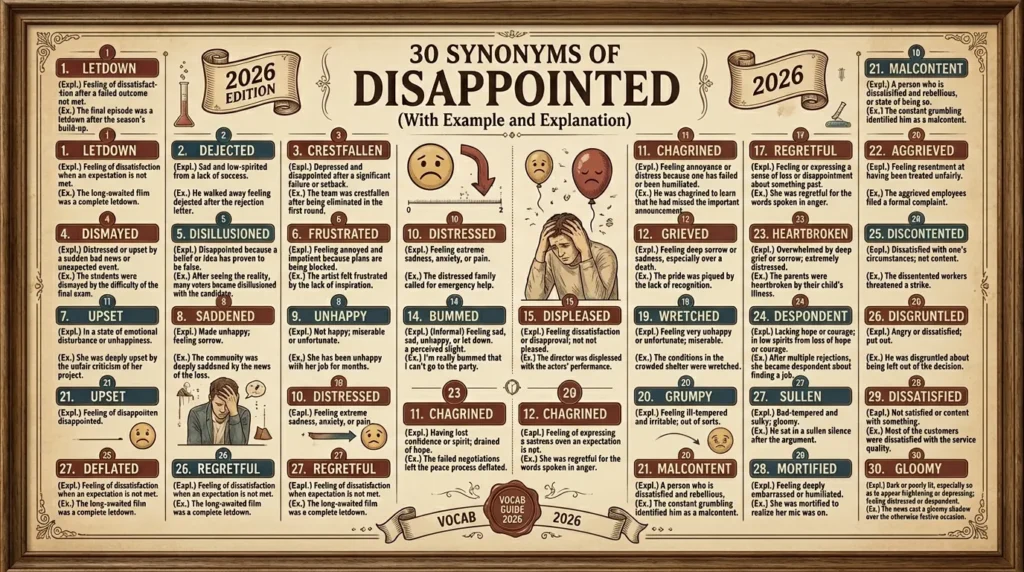
30 Synonyms of Disappointed
1. Upset (adjective)
US: /ʌpˈsɛt/ | UK: /ʌpˈset/
Meaning: feeling unhappy or disturbed
Examples:
- She felt upset after the meeting.
- He looked upset all day.
2. Sad (adjective)
US: /sæd/ | UK: /sæd/
Meaning: feeling unhappy
Examples:
- I felt sad after the news.
- She became sad quickly.
3. Discouraged (adjective)
US: /dɪsˈkɜːrɪdʒd/ | UK: /dɪsˈkʌrɪdʒd/
Meaning: losing confidence or hope
Examples:
- He felt discouraged after failing.
- She sounded discouraged.
4. Dissatisfied (adjective)
US: /dɪsˈsætɪsfaɪd/ | UK: /dɪsˈsætɪsfaɪd/
Meaning: not pleased with something
Examples:
- Customers were dissatisfied.
- She felt dissatisfied with the service.
5. Let Down (adjective)
US: /lɛt daʊn/ | UK: /let daʊn/
Meaning: feeling disappointed by someone or something
Examples:
- I felt let down by the result.
- They were let down again.
6. Frustrated (adjective)
US: /ˈfrʌstreɪtɪd/ | UK: /frʌˈstreɪtɪd/
Meaning: upset because things failed
Examples:
- She became frustrated at work.
- He looked frustrated.
7. Heartbroken (adjective)
US: /ˈhɑːrtˌbroʊkən/ | UK: /ˈhɑːtbəʊkən/
Meaning: extremely sad
Examples:
- She felt heartbroken after the breakup.
- He sounded heartbroken.
8. Unhappy (adjective)
US: /ʌnˈhæpi/ | UK: /ʌnˈhæpi/
Meaning: not happy
Examples:
- The team felt unhappy with the result.
- She looked unhappy today.
9. Regretful (adjective)
US: /rɪˈɡrɛtfəl/ | UK: /rɪˈɡretfəl/
Meaning: feeling sorry about something
Examples:
- He felt regretful after the decision.
- She became regretful later.
10. Miserable (adjective)
US: /ˈmɪzərəbəl/ | UK: /ˈmɪzərəbəl/
Meaning: very unhappy
Examples:
- He felt miserable after losing.
- The rainy day made her miserable.
11. Disheartened (adjective)
US: /dɪsˈhɑːrtənd/ | UK: /dɪsˈhɑːtənd/
Meaning: losing hope or confidence
Examples:
- She felt disheartened by criticism.
- He became disheartened quickly.
12. Crestfallen (adjective)
US: /ˈkrɛstˌfɔːlən/ | UK: /ˈkrestˌfɔːlən/
Meaning: visibly sad and disappointed
Examples:
- The child looked crestfallen.
- He appeared crestfallen after the game.
13. Dejected (adjective)
US: /dɪˈdʒɛktɪd/ | UK: /dɪˈdʒektɪd/
Meaning: feeling low and unhappy
Examples:
- She felt dejected after failing.
- He sat quietly, looking dejected.
14. Gloomy (adjective)
US: /ˈɡluːmi/ | UK: /ˈɡluːmi/
Meaning: feeling sad and hopeless
Examples:
- He felt gloomy all evening.
- The news made her gloomy.
15. Downcast (adjective)
US: /ˈdaʊnkæst/ | UK: /ˈdaʊnkɑːst/
Meaning: visibly sad
Examples:
- She looked downcast after the test.
- He remained downcast.
16. Blue (adjective)
US: /bluː/ | UK: /bluː/
Meaning: feeling sad or depressed
Examples:
- I felt blue yesterday.
- She sounded blue on the phone.
17. Defeated (adjective)
US: /dɪˈfiːtɪd/ | UK: /dɪˈfiːtɪd/
Meaning: feeling beaten or hopeless
Examples:
- He looked defeated after losing.
- She felt emotionally defeated.
18. Troubled (adjective)
US: /ˈtrʌbəld/ | UK: /ˈtrʌbəld/
Meaning: emotionally worried or upset
Examples:
- She felt troubled by the news.
- He looked deeply troubled.
19. Sorrowful (adjective)
US: /ˈsɑːroʊfəl/ | UK: /ˈsɒrəʊfəl/
Meaning: full of sadness
Examples:
- She gave a sorrowful smile.
- He sounded sorrowful.
20. Melancholy (adjective)
US: /ˈmɛlənˌkɑːli/ | UK: /ˈmelənkəli/
Meaning: deeply sad in a thoughtful way
Examples:
- The song made him melancholy.
- She felt melancholy after leaving.
21. Hopeless (adjective)
US: /ˈhoʊpləs/ | UK: /ˈhəʊpləs/
Meaning: feeling no hope
Examples:
- He felt hopeless after many failures.
- She became hopeless.
22. Bitter (adjective)
US: /ˈbɪtər/ | UK: /ˈbɪtə/
Meaning: angry and disappointed
Examples:
- He felt bitter about the loss.
- She gave a bitter reply.
23. Angry (adjective)
US: /ˈæŋɡri/ | UK: /ˈæŋɡri/
Meaning: feeling strong displeasure
Examples:
- She became angry after the mistake.
- He sounded angry and disappointed.
24. Hurt (adjective)
US: /hɜːrt/ | UK: /hɜːt/
Meaning: emotionally pained
Examples:
- She felt hurt by his words.
- He looked deeply hurt.
25. Pained (adjective)
US: /peɪnd/ | UK: /peɪnd/
Meaning: emotionally suffering
Examples:
- She gave a pained expression.
- He sounded pained.
26. Unsatisfied (adjective)
US: /ʌnˈsætɪsfaɪd/ | UK: /ʌnˈsætɪsfaɪd/
Meaning: not fully pleased
Examples:
- Customers felt unsatisfied.
- He remained unsatisfied.
27. Low (adjective)
US: /loʊ/ | UK: /ləʊ/
Meaning: emotionally weak or sad
Examples:
- She felt low after the exam.
- He looked emotionally low.
28. Crushed (adjective)
US: /krʌʃt/ | UK: /krʌʃt/
Meaning: emotionally destroyed
Examples:
- She felt crushed after the rejection.
- He looked completely crushed.
29. Demoralized (adjective)
US: /dɪˈmɔːrəlaɪzd/ | UK: /dɪˈmɒrəlaɪzd/
Meaning: losing confidence and spirit
Examples:
- Workers felt demoralized.
- He became demoralized after criticism.
30. Glum (adjective)
US: /ɡlʌm/ | UK: /ɡlʌm/
Meaning: looking sad and quiet
Examples:
- She looked glum all morning.
- He sat there feeling glum.
Prototype Meaning
The most common meaning of disappointed is feeling sad because reality did not match expectations. People often imagine failure, rejection, canceled plans, or unmet hopes when hearing this word.
Prototype Categorization
- Mild sadness: upset, unhappy, blue
- Strong emotional pain: heartbroken, crushed, sorrowful
- Loss of hope: discouraged, hopeless, demoralized
- Anger mixed with disappointment: bitter, frustrated, angry
Antonyms of Disappointed
- Happy (adjective): feeling pleasure or joy
- Satisfied (adjective): pleased with results
- Delighted (adjective): very pleased and excited
- Hopeful (adjective): feeling positive about the future
- Content (adjective): peaceful and satisfied
Short Questions and Answers
What does disappointed mean?
- It means feeling unhappy because something did not happen as expected.
When should disappointed be used?
- Use it when talking about unmet expectations, failure, or sadness.
Is disappointed positive or negative?
- It is usually negative because it describes sadness or dissatisfaction.
How is it different from similar words?
- “Disappointed” focuses on failed expectations, while “sad” is a more general emotional feeling.
Conclusion
Learning synonyms of disappointed and synonyms of disappointed improves vocabulary and emotional expression. It helps English learners describe feelings more clearly in conversations and writing. Using different synonyms also avoids repetition and makes communication stronger and more natural. These words are useful in storytelling, daily speech, essays, and professional writing. They help describe sadness, frustration, regret, and emotional pain with greater accuracy. Daily vocabulary practice builds confidence and fluency over time. The more words you learn, the more effectively you can express your thoughts and emotions in English.

I’m Zahid Abbas, an educator, researcher, and digital publishing strategist with a passion for linguistics, grammar, and clear communication. As a content creator and SEO specialist, I craft research-driven, reader-focused content that empowers learners and makes knowledge accessible worldwide.