Loneliness means a sad feeling of being alone or without friends or companionship. Think about a boy who just moved to a new city, sitting alone at lunch while everyone else laughs and talks in small groups nearby. He feels a quiet loneliness settle in, even in a room full of people. This word describes a deep, often heavy feeling that can affect anyone, no matter their age or situation. People use synonyms for loneliness a lot in stories, songs, and everyday conversations about emotions and connection. Learning new words like this helps English learners speak and write with more variety. Synonyms for loneliness also helps writers avoid using the same word again and again. This article explains the meaning of loneliness, its history, and how to say it. It also shares 30 words that mean almost the same thing.
Meaning of Loneliness
Definition
Loneliness (Noun): A sad feeling of being alone or without friends or companionship.
Examples
- Her loneliness grew after her best friend moved away.
- He wrote a song about the loneliness of long-distance travel.
Connotative Meaning
- Positive tone:
- The word is rarely positive, but writers may use it to show quiet thinking, self-growth.
- Negative tone:
- This word most often feels heavy and sad, showing a longing for connection.
- Neutral tone:
- In psychology , the word can describe a common human experience in a simple, factual way.
Etymology
- This word comes from “lonely,” which came from “lone,” a shortened form of “alone.”
- “Alone” came from the Old English phrase “eall ana,” meaning “all by oneself.”
- The suffix “-ness” was added to “lonely” to form the noun “loneliness.”
Short History
- Old English (450–1100):
- The phrase “eall ana” described being completely by oneself, joining “eall” (all) and “ana” (one).
- Middle English (1100–1500):
- The phrase shortened in casual speech to “lone,” and later “lonely” formed by adding “-ly.”
- Modern English (1500–Present):
- Modern English (1500–Present):
- Loneliness developed as a noun and became a common word for the feeling of being alone.
Pronunciation (US & UK – IPA)
- US: /ˈloʊnlinəs/
- UK: /ˈləʊnlinəs/
Syllables
lone-li-ness (3 syllables)
Affixation Pattern of Loneliness
- Root: lone (from “alone,” originally “all” + “one”)
- Prefix: none
- Suffix: -ly (forms “lonely”) + -ness (forms the noun)
Explore related topics https://synonymhubb.com/synonyms-for-trusting/
Word Formation:
Alone (adverb/adjective), lone (adjective), lonely (adjective), and loneliness (noun) all come from this root.
Synonyms for Loneliness
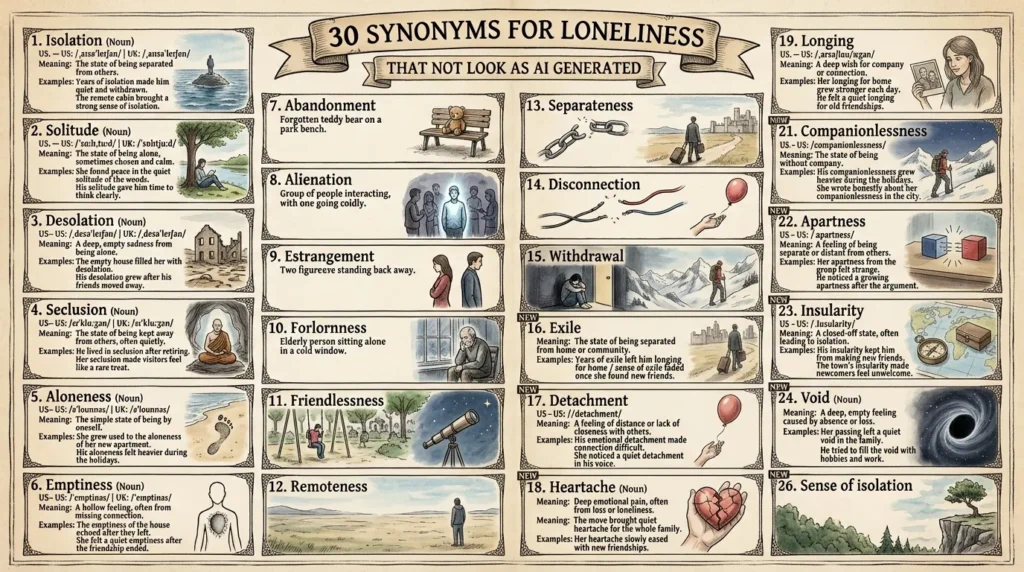
1. Isolation (Noun) — US: /ˌaɪsəˈleɪʃən/ | UK: /ˌaɪsəˈleɪʃən/
Meaning: The state of being separated from others.
Examples:
- Years of isolation made him quiet and withdrawn.
- The remote cabin brought a strong sense of isolation.
2. Solitude (Noun) — US: /ˈsɑːlɪˌtuːd/ | UK: /ˈsɒlɪtjuːd/
Meaning: The state of being alone, sometimes chosen and calm.
Examples:
- She found peace in the quiet solitude of the woods.
- His solitude gave him time to think clearly.
3. Desolation (Noun) — US: /ˌdɛsəˈleɪʃən/ | UK: /ˌdɛsəˈleɪʃən/
Meaning: A deep, empty sadness from being alone.
Examples:
- The empty house filled her with desolation.
- His desolation grew after his friends moved away.
4. Seclusion (Noun) — US: /sɪˈkluːʒən/ | UK: /sɪˈkluːʒən/
Meaning: The state of being kept away from others, often quietly.
Examples:
- He lived in seclusion after retiring.
- Her seclusion made visitors feel like a rare treat.
5. Aloneness (Noun) — US: /əˈloʊnnəs/ | UK: /əˈləʊnnəs/
Meaning: The simple state of being by oneself.
Examples:
- She grew used to the aloneness of her new apartment.
- His aloneness felt heavier during the holidays.
6. Emptiness (Noun) — US: /ˈɛmptinəs/ | UK: /ˈɛmptinəs/
Meaning: A hollow feeling, often from missing connection.
Examples:
- The emptiness of the house echoed after they left.
- She felt a quiet emptiness after the friendship ended.
7. Abandonment (Noun) — US: /əˈbændənmənt/ | UK: /əˈbændənmənt/
Meaning: The feeling of being left alone by others.
Examples:
- His sense of abandonment lingered for years.
- The stray dog showed clear signs of abandonment.
8. Alienation (Noun) — US: /ˌeɪljəˈneɪʃən/ | UK: /ˌeɪliəˈneɪʃən/
Meaning: The feeling of being distant or disconnected from others.
Examples:
- Her alienation grew after the big move.
- He felt a deep alienation at his new school.
9. Estrangement (Noun) — US: /ɪˈstreɪndʒmənt/ | UK: /ɪˈstreɪndʒmənt/
Meaning: A state of being distant, especially from family or close friends.
Examples:
- Years of estrangement kept them from speaking.
- Their estrangement slowly healed over time.
10. Forlornness (Noun) — US: /fərˈlɔːrnnəs/ | UK: /fəˈlɔːnnəs/
Meaning: A sad, hopeless feeling of being left alone.
Examples:
- The old cottage stood in quiet forlornness.
- Her forlornness showed in every letter she wrote.
11. Friendlessness (Noun) — US: /ˈfrɛndləsnəs/ | UK: /ˈfrɛndləsnəs/
Meaning: The state of having no friends.
Examples:
- His friendlessness at the new school worried his parents.
- She wrote about the friendlessness of her early years.
12. Remoteness (Noun) — US: /rɪˈmoʊtnəs/ | UK: /rɪˈməʊtnəs/
Meaning: A distant feeling, either physically or emotionally.
Examples:
- The remoteness of the village added to her loneliness.
- His emotional remoteness made friendships hard to build.
13. Separateness (Noun) — US: /ˈsɛpərətnəs/ | UK: /ˈsɛprətnəs/
Meaning: The state of feeling apart or disconnected from others.
Examples:
- Her separateness from the group grew over time.
- He felt a strange separateness during the party.
14. Disconnection (Noun) — US: /ˌdɪskəˈnɛkʃən/ | UK: /ˌdɪskəˈnɛkʃən/
Meaning: A lack of connection or closeness with others.
Examples:
- His disconnection from friends worried his family.
- She felt a growing disconnection after moving abroad.
15. Withdrawal (Noun) — US: /wɪðˈdrɔːəl/ | UK: /wɪðˈdrɔːəl/
Meaning: The act of pulling away from others, often leading to loneliness.
Examples:
- His withdrawal from friends concerned his teacher.
- Her quiet withdrawal made others worry about her.
16. Exile (Noun) — US: /ˈɛksaɪl/ | UK: /ˈɛksaɪl/
Meaning: A state of being separated from home or community.
Examples:
- Years of exile left him longing for home.
- Her sense of exile faded once she found new friends.
17. Detachment (Noun) — US: /dɪˈtætʃmənt/ | UK: /dɪˈtætʃmənt/
Meaning: A feeling of distance or lack of closeness with others.
Examples:
- His emotional detachment made connection difficult.
- She noticed a quiet detachment in his voice.
18. Longing (Noun) — US: /ˈlɔːŋɪŋ/ | UK: /ˈlɒŋɪŋ/
Meaning: A deep wish for company or connection.
Examples:
- Her longing for home grew stronger each day.
- He felt a quiet longing for old friendships.
19. Wistfulness (Noun) — US: /ˈwɪstfəlnəs/ | UK: /ˈwɪstfʊlnəs/
Meaning: A gentle sadness, often tied to missing someone.
Examples:
- A note of wistfulness filled her letter.
- His wistfulness showed whenever old friends were mentioned.
20. Heartache (Noun) — US: /ˈhɑːrtˌeɪk/ | UK: /ˈhɑːtˌeɪk/
Meaning: Deep emotional pain, often from loss or loneliness.
Examples:
- The move brought quiet heartache for the whole family.
- Her heartache slowly eased with new friendships.
21. Melancholy (Noun) — US: /ˈmɛlənˌkɑːli/ | UK: /ˈmɛlənkəli/
Meaning: A deep, thoughtful sadness that lingers.
Examples:
- A gentle melancholy filled the quiet house.
- His melancholy grew during the long winter.
22. Desertion (Noun) — US: /dɪˈzɜːrʃən/ | UK: /dɪˈzɜːʃən/
Meaning: The feeling of being left alone by someone important.
Examples:
- Her sense of desertion never fully healed.
- The dog’s desertion left him confused and scared.
23. Insularity (Noun) — US: /ˌɪnsəˈlærəti/ | UK: /ˌɪnsjʊˈlærəti/
Meaning: A closed-off state, often leading to isolation.
Examples:
- His insularity kept him from making new friends.
- The town’s insularity made newcomers feel unwelcome.
24. Solitariness (Noun) — US: /ˈsɑːlɪˌtɛrinəs/ | UK: /ˈsɒlɪtərinəs/
Meaning: The state of being alone, often for a long time.
Examples:
- His solitariness worried his close friends.
- She grew used to the solitariness of the countryside.
25. Apartness (Noun) — US: /əˈpɑːrtnəs/ | UK: /əˈpɑːtnəs/
Meaning: A feeling of being separate or distant from others.
Examples:
- Her apartness from the group felt strange.
- He noticed a growing apartness after the argument.
26. Void (Noun) — US: /vɔɪd/ | UK: /vɔɪd/
Meaning: A deep, empty feeling caused by absence or loss.
Examples:
- Her passing left a quiet void in the family.
- He tried to fill the void with hobbies and work.
27. Companionlessness (Noun) — US: /kəmˈpænjənləsnəs/ | UK: /kəmˈpænjənləsnəs/
Meaning: The state of being without company.
Examples:
- His companionlessness grew heavier during the holidays.
- She wrote honestly about her companionlessness in the city.
28. Feeling cut off (Noun phrase) — US: /ˈfiːlɪŋ kʌt ɔːf/ | UK: /ˈfiːlɪŋ kʌt ɒf/
Meaning: A sense of being disconnected from others.
Examples:
- Living far away left her feeling cut off from family.
- He described feeling cut off during his first year abroad.
29. Homesickness (Noun) — US: /ˈhoʊmˌsɪknəs/ | UK: /ˈhəʊmsɪknəs/
Meaning: A longing for home that can deepen feelings of loneliness.
Examples:
- Her homesickness grew during the first month at college.
- He fought off homesickness by calling home often.
30. Sense of isolation (Noun phrase) — US: /sɛns əv ˌaɪsəˈleɪʃən/ | UK: /sɛns əv ˌaɪsəˈleɪʃən/
Meaning: A general feeling of being separated from others.
Examples:
- Working from home gave her a growing sense of isolation.
- His sense of isolation eased once he joined a club.
Prototype Meaning
When people hear the word loneliness, they often imagine someone sitting alone and wishing for company. It can bring to mind an empty room, missing friends, or wanting someone to understand and care about you. The word describes a deep feeling of being alone or disconnected from others.
Prototype Categorization
- Separation from others: isolation, seclusion, separateness, disconnection, apartness
- Deep emotional sadness: desolation, heartache, melancholy, void, wistfulness
- Lack of connection or friends: friendlessness, companionlessness, alienation, estrangement
- Being left behind: abandonment, desertion, exile, withdrawal
- Longing for closeness: longing, homesickness, feeling cut off, sense of isolation
- Quiet or chosen alone time: solitude, aloneness, solitariness, remoteness, detachment, insularity, forlornness
Antonyms of Loneliness
- Companionship
- Togetherness
- Connection
- Belonging
- Community
Short Questions and Answers
- What does loneliness mean? It means a sad feeling of being alone or without friends or companionship.
- When should loneliness be used? Use it when describing a deep feeling of being disconnected from others or missing company.
- Is loneliness positive or negative? It is usually negative, showing sadness, though it can sometimes lead to quiet reflection.
- How is it different from similar words? “Solitude” often describes calm, chosen time alone. “Loneliness” usually describes an unwanted, sad feeling of being without connection.
Conclusion
Synonyms for loneliness helps you build a stronger, more thoughtful vocabulary. It strengthens your writing and speaking by giving you many ways to describe deep feelings and personal experiences. It also helps you avoid repeating the same word again and again. Synonyms for loneliness keeps your writing clearer and more meaningful. Most importantly, learning synonyms for loneliness builds your confidence as an English speaker and writer. Try learning one new synonyms for loneliness from this list each day, and watch your vocabulary grow steadily over time.

I’m Zahid Abbas, an educator, researcher, and digital publishing strategist with a passion for linguistics, grammar, and clear communication. As a content creator and SEO specialist, I craft research-driven, reader-focused content that empowers learners and makes knowledge accessible worldwide.