The word somber means dark, gloomy, serious, or sad in atmosphere or mood. Imagine looking outside on a quiet afternoon when dark grey clouds cover the sun and rain drops gently tap on your window. That quiet, dull, and serious feeling in the air is what we call somber.
We use somber to describe quiet rooms, dark colors, sad news, or serious expressions on people’s faces. Learning new ways to say somber helps learners make their story writing vivid. English learner and content writer need synonyms for somber too.
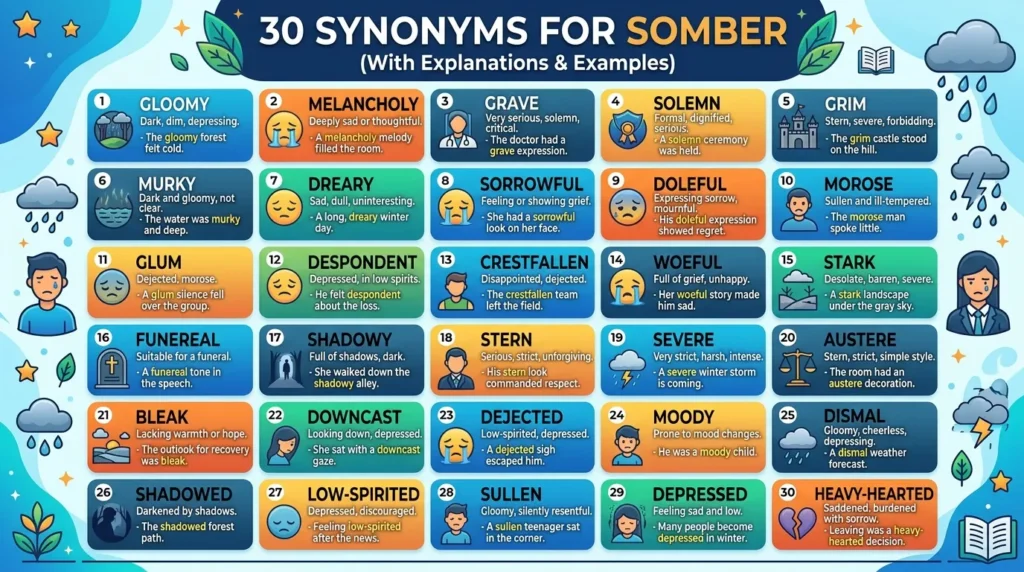
This guide gives you 30 simple synonyms for somber. Along with easy sentences, word origins, pronunciation guides, and clear categories.
Meaning of Somber
Definition
Somber (Adjective): Dark, dull, serious, gloomy, or sad in spirit or appearance.
Examples
- Everyone spoke in a somber voice during the memorial assembly.
- The painter used somber colors like dark grey and deep brown.
Connotative Meaning
- Positive tone: Represents quiet respect, calm seriousness, and deep reflection.
- Negative tone: Feels sad, depressing, gloomy, or lonely.
- Neutral tone: Simply describes dim lighting or dark-colored clothes.
Etymology
- Source language: Came from Latin through French.
- Latin: Sub (under) + umbra (shade or shadow).
- Old French: Sombre (meaning “dark” or “shadowy”).
- Modern English: Literally means “under a shadow” or wrapped in shadow.
For more information https://synonymhubb.com/synonyms-for-proper/
Pronunciation
- US: /ˈsɑːmbər/
- UK: /ˈsɒmbə/
Syllables
som-ber (2 parts)
Affixation Pattern of Somber
- Root: Somber (means dark or gloomy)
- Word Formation:
- Noun: Somberness / Somberity
- Adjective: Somber / Unsomber
- Adverb: Somberly
Synonyms for Somber
1. Gloomy (Adjective) — US: /ˈɡluːmi/ | UK: /ˈɡluːmi/
Meaning: Dark, dim, or making you feel sad and hopeless.
Examples:
The rainy morning felt cold and gloomy.
He walked home with a gloomy look on his face.
2. Solemn (Adjective) — US: /ˈsɑːləm/ | UK: /ˈsɒləm/
Meaning: Very serious, quiet, and deeply respectful.
Examples:
The soldiers kept a solemn silence during the parade.
She gave a solemn promise to keep the secret.
3. Sad (Adjective) — US: /sæd/ | UK: /sæd/
Meaning: Feeling unhappy, sorrowful, or full of grief.
Examples:
She felt sad when her ice cream fell on the ground.
It was a very sad ending to the storybook.
4. Dark (Adjective) — US: /dɑːrk/ | UK: /dɑːk/
Meaning: Having little or no light; deep in shade or color.
Examples:
He wore a dark jacket to the evening meeting.
The dark clouds brought heavy rain to the town.
5. Serious (Adjective) — US: /ˈsɪriəs/ | UK: /ˈsɪəriəs/
Meaning: Thoughtful, quiet, and not joking or playing around.
Examples:
The teacher gave a serious talk about safety rules.
His face turned serious when reading the news.
6. Dismal (Adjective) — US: /ˈdɪzməl/ | UK: /ˈdɪzməl/
Meaning: Cheerless, dull, and creating a dreary feeling.
Examples:
The wet, grey weather made the park look dismal.
They stayed indoors on that dismal afternoon.
7. Melancholy (Adjective) — US: /ˈmɛlənkɑːli/ | UK: /ˈmelənkəli/
Meaning: A gentle, thoughtful feeling of sadness.
Examples:
The quiet piano song had a melancholy tune.
She stared out the window in a melancholy mood.
8. Dreary (Adjective) — US: /ˈdrɪri/ | UK: /ˈdrɪəri/
Meaning: Dull, bleak, and making you feel bored or sad.
Examples:
Cleaning old dusty shelves was a dreary task.
The landscape looked dreary after the leaves fell.
9. Grave (Adjective) — US: /ɡreɪv/ | UK: /ɡreɪv/
Meaning: Very serious, heavy, and full of concern.
Examples:
The doctor spoke with a grave expression.
They discussed a grave issue concerning the environment.
10. Dim (Adjective) — US: /dɪm/ | UK: /dɪm/
Meaning: Not bright; lacking clear light or brightness.
Examples:
We read by the light of a dim lamp.
The theater grew dim right before the movie started.
11. Joyless (Adjective) — US: /ˈdʒɔɪləs/ | UK: /ˈdʒɔɪləs/
Meaning: Without any happiness, cheer, or fun.
Examples:
It felt like a joyless day without any outdoor games.
The empty playground looked cold and joyless.
12. Heavy-hearted (Adjective) — US: /ˌhɛvi ˈhɑːrtɪd/ | UK: /ˌhevi ˈhɑːtɪd/
Meaning: Feeling weighed down by grief or sorrow.
Examples:
He waved a heavy-hearted goodbye to his hometown.
The team was heavy-hearted after losing the finals.
13. Murky (Adjective) — US: /ˈmɜːrki/ | UK: /ˈmɜːki/
Meaning: Dark, cloudy, and hard to see through clearly.
Examples:
The fish swam through the murky lake water.
The room was lit only by a murky street light.
14. Mournful (Adjective) — US: /ˈmɔːrnfl/ | UK: /ˈmɔːnfl/
Meaning: Full of sorrow or expression of deep loss.
Examples:
The dog gave a mournful howl at the moon.
She sang a mournful song about old times.
15. Subdued (Adjective) — US: /səbˈdjuːd/ | UK: /səbˈdjuːd/
Meaning: Quiet, soft, and kept under calm control.
Examples:
The children were subdued after playing hard all day.
The room was decorated in subdued tones of blue.
16. Bleak (Adjective) — US: /bliːk/ | UK: /bliːk/
Meaning: Cold, empty, windswept, and without hope.
Examples:
The snowy mountains looked bleak in winter.
Without trees, the hillside appeared bare and bleak.
17. Shadowy (Adjective) — US: /ˈʃædoʊi/ | UK: /ˈʃædəʊi/
Meaning: Filled with shadows or partially hidden in darkness.
Examples:
The shadowy hallway looked mysterious at night.
We saw a shadowy shape behind the curtain.
18. Sober (Adjective) — US: /ˈsoʊbər/ | UK: /ˈsəʊbə/
Meaning: Serious, sensible, plain, and not flashy.
Examples:
He wore a sober dark suit for the ceremony.
She gave a sober answer after thinking carefully.
19. Funereal (Adjective) — US: /fjuːˈnɪriəl/ | UK: /fjuːˈnɪəriəl/
Meaning: Very slow, dark, and quiet like at a funeral.
Examples:
The clock ticked at a slow, funereal pace.
A funereal hush fell over the quiet room.
20. Overcast (Adjective) — US: /ˌoʊvərˈkæst/ | UK: /ˌəʊvəˈkɑːst/
Meaning: Covered completely with grey clouds; lacking sun.
Examples:
The sky was overcast all afternoon.
We took umbrellas because of the overcast weather.
21. Sullen (Adjective) — US: /ˈsʌlən/ | UK: /ˈsʌlən/
Meaning: Silent, gloomy, and bad-tempered.
Examples:
The sullen child sat in the corner without speaking.
He gave a sullen look when asked to do his chores.
22. Sunless (Adjective) — US: /ˈsʌnləs/ | UK: /ˈsʌnləs/
Meaning: Without sunlight; dark and shady.
Examples:
Plants grow slowly in a sunless corner.
It was a chilly, sunless day in the valley.
23. Cheerful-less (Adjective) — US: /ˈtʃɪr ləs/ | UK: /ˈtʃɪə ləs/
Meaning: Lacking cheer, warmth, or comfort.
Examples:
The unheated cabin felt cold and cheerless.
He sat in a cheerless room waiting for the bus.
24. Low-spirited (Adjective) — US: /loʊ ˈspɪrɪtɪd/ | UK: /ləʊ ˈspɪrɪtɪd/
Meaning: Feeling down, sad, or lacking energy.
Examples:
She felt low-spirited when her friend moved away.
Resting helped the low-spirited puppy get happy again.
25. Crestfallen (Adjective) — US: /ˈkrɛstfɔːlən/ | UK: /ˈkrestfɔːlən/
Meaning: Disappointed and sad because something went wrong.
Examples:
He looked crestfallen when his balloon popped.
The team returned crestfallen after the loss.
26. Sombre (Adjective) — US: /ˈsɑːmbər/ | UK: /ˈsɒmbə/
Meaning: The British spelling variation of somber (dark and quiet).
Examples:
The church had a sombre and peaceful mood.
Dark curtains added a sombre touch to the study.
27. Downcast (Adjective) — US: /ˈdaʊnkæst/ | UK: /ˈdaʊnkɑːst/
Meaning: Looking downward because of sadness or shame.
Examples:
She had downcast eyes while saying sorry.
His downcast expression showed he was feeling sad.
28. Quiet (Adjective) — US: /ˈkwaɪət/ | UK: /ˈkwaɪət/
Meaning: Making little noise, calm, and subdued in feeling.
Examples:
They spent a quiet hour reading near the window.
The forest was peaceful and quiet after sunset.
29. Unsmiling (Adjective) — US: /ʌnˈsmaɪlɪŋ/ | UK: /ʌnˈsmaɪlɪŋ/
Meaning: Serious, stern, and not showing a smile.
Examples:
The unsmiling guard stood tall at the gate.
She remained unsmiling during the serious speech.
30. Sorrowful (Adjective) — US: /ˈsɑːroʊfl/ | UK: /ˈsɒrəʊfl/
Meaning: Full of grief, sadness, and deep regret.
Examples:
She gave a sorrowful glance at the broken vase.
The poem told a sorrowful story about lost sea ships.
Prototype Meaning
When children hear somber, they picture dark rainy skies. A quiet room where people speak in whispers, or wearing dark black or grey clothes to a very serious event.
Prototype Categorization
- Darkness & Shadowy Light: Dark, Dim, Murky, Shadowy, Overcast, Sunless, Sombre.
- Sadness & Sorrow: Sad, Melancholy, Heavy-hearted, Mournful, Joyless, Low-spirited, Crestfallen, Downcast, Sorrowful.
- Serious & Quiet Respect: Solemn, Serious, Grave, Subdued, Sober, Quiet, Unsmiling.
- Gloomy & Cold Weather/Atmosphere: Gloomy, Dismal, Dreary, Bleak, Funereal, Sullen, Cheerless.
Antonyms of Somber
- Bright
- Cheerful
- Happy
- Sunny
- Joyful
- Lively
Short Questions and Answers
- What does somber mean?
- It means dark, dull, gloomy, or serious in mood or appearance.
- When should I use somber?
- Use it when writing about cloudy weather, dark clothes, quiet respectful events, or sad feelings.
- Is somber an adjective or a noun?
- It is an adjective! (The related adverb is somberly).
- What is the difference between somber and sombre?
- Somber is American English spelling, while sombre is British English spelling. Both mean the exact same thing.
Conclusion
Synonyms for somber can help you describe sad, serious, or quiet feelings in a clearer. Words such as sad, gloomy, serious, dark, sorrowful, and melancholy can make your English natural. Each word has a slightly different meaning, so choosing the right synonym helps you express the exact mood. For English learners, these words can improve speaking, writing, reading, and everyday communication. Synonyms for somber can also help you avoid repeating somber too often. Practice synonyms for somber in simple sentences about feelings, places, events, and stories. With regular practice, you can build a stronger vocabulary. Also express ideas and emotions with greater confidence.

I’m Zahid Abbas, an educator, researcher, and digital publishing strategist with a passion for linguistics, grammar, and clear communication. As a content creator and SEO specialist, I craft research-driven, reader-focused content that empowers learners and makes knowledge accessible worldwide.