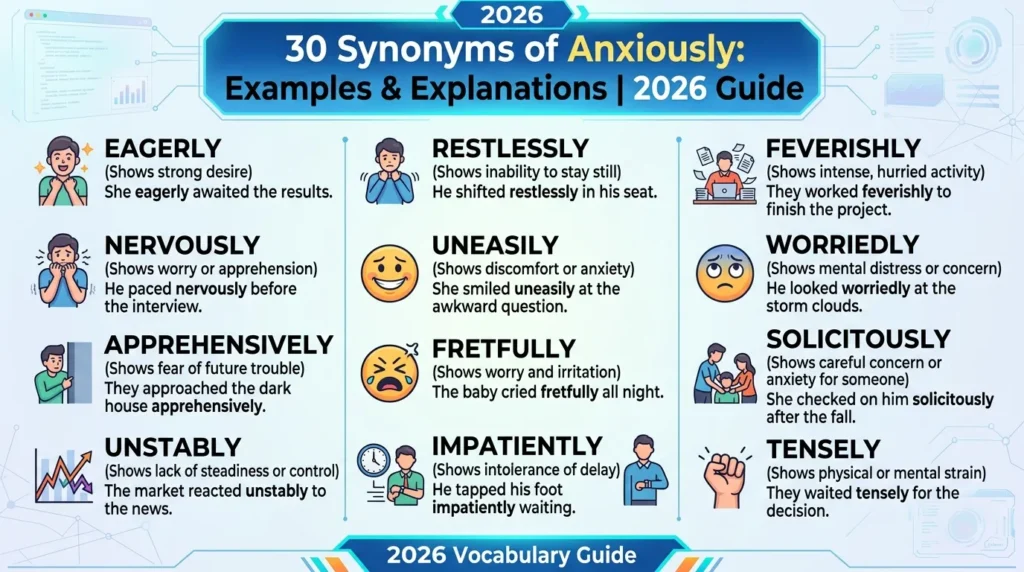
The word anxiously means feeling worried, nervous, or eager about something that may happen. Imagine a student waiting for exam results. The student checks the phone again and again and waits anxiously for the message.
People use this word often in daily conversations, stories, news, and professional writing. It helps describe emotions connected to fear, stress, excitement, or uncertainty. However, using the same word many times can make writing repetitive.
Learning synonyms of anxiously helps English learners improve vocabulary and express emotions more clearly. It also helps writers create stronger and more natural sentences. In this article, you will learn the meaning of anxiously, its pronunciation, history, grammar, and 30 useful synonyms with examples.
You will also explore semantic categories, antonyms, and simple questions to improve your English communication skills.
Meaning of Anxiously
Definition
Anxiously (adverb): in a worried, nervous, or eager way.
Examples
- She waited anxiously for the doctor’s call.
- The parents looked anxiously at the clock.
Connotative Meaning
(Connotation means the feeling or emotion a word suggests beyond its basic meaning.)
- Positive tone: eager, excited, hopeful
- Negative tone: worried, fearful, nervous
- Neutral tone: emotionally concerned or attentive
Etymology
- From Latin anxius meaning “troubled” or “worried”
- Later entered English through Old French and Latin influence
Short History:
- Old English (450–1100): similar words described worry and fear
- Middle English (1100–1500): “anxious” entered English usage
- Modern English (1500–Present): “anxiously” became common in emotional descriptions
Pronunciation (US & UK – IPA)
- US: /ˈæŋkʃəsli/
- UK: /ˈæŋkʃəsli/
Syllables
- anx-ious-ly
Affixation Pattern of Anxiously
- Root: anxious
- Prefix: none
- Suffix: -ly
Word Formation:
- anxiety (noun)
- anxious (adjective)
- anxiously (adverb)
- anxiousness (noun)
Synonyms of Anxiously
1. Nervously (adverb)
US: /ˈnɜːrvəsli/ | UK: /ˈnɜːvəsli/
Meaning: in a worried or uneasy way
Examples:
- He spoke nervously during the interview.
- She waited nervously outside the room.
2. Worriedly (adverb)
US: /ˈwɜːridli/ | UK: /ˈwʌridli/
Meaning: in a concerned way
Examples:
- The mother looked worriedly at her child.
- He asked worriedly about the news.
3. Uneasily (adverb)
US: /ʌnˈiːzəli/ | UK: /ʌnˈiːzɪli/
Meaning: in an uncomfortable or nervous way
Examples:
- She smiled uneasily.
- He moved uneasily in his chair.
4. Fearfully (adverb)
US: /ˈfɪrfl̩i/ | UK: /ˈfɪəfəli/
Meaning: in a frightened way
Examples:
- The child looked fearfully outside.
- She spoke fearfully about the storm.
5. Restlessly (adverb)
US: /ˈrɛstləsli/ | UK: /ˈrestləsli/
Meaning: without being calm or relaxed
Examples:
- He slept restlessly all night.
- She walked restlessly around the room.
6. Tensively (adverb)
US: /ˈtɛnslɪ/ | UK: /ˈtensli/
Meaning: in a stressed or strained way
Examples:
- They waited tensively for the result.
- He answered tensively.
7. Apprehensively (adverb)
US: /ˌæprɪˈhensɪvli/ | UK: /ˌæprɪˈhensɪvli/
Meaning: with fear about the future
Examples:
- She entered the office apprehensively.
- He listened apprehensively.
8. Agitatedly (adverb)
US: /ˈædʒəteɪtɪdli/ | UK: /ˈædʒɪteɪtɪdli/
Meaning: in a disturbed way
Examples:
- He spoke agitatedly during the argument.
- She paced agitatedly.
9. Disturbedly (adverb)
US: /dɪˈstɜːrbdli/ | UK: /dɪˈstɜːbdli/
Meaning: in an emotionally troubled way
Examples:
- She looked disturbedly at the letter.
- He reacted disturbedly.
10. Concernedly (adverb)
US: /kənˈsɜːrndli/ | UK: /kənˈsɜːndli/
Meaning: in a caring and worried way
Examples:
- She asked concernedly about his health.
- He looked concernedly at the sky.
11. Fretfully (adverb)
US: /ˈfrɛtfəli/ | UK: /ˈfretfəli/
Meaning: in a worried and irritated way
Examples:
- She waited fretfully by the phone.
- He sighed fretfully.
12. Alarmedly (adverb)
US: /əˈlɑːrmdli/ | UK: /əˈlɑːmdli/
Meaning: in a shocked or worried way
Examples:
- He looked alarmedly at the smoke.
- She reacted alarmedly.
13. Eagerly (adverb)
US: /ˈiːɡərli/ | UK: /ˈiːɡəli/
Meaning: with excitement and strong interest
Examples:
- The children waited eagerly for gifts.
- She listened eagerly.
14. Impatiently (adverb)
US: /ɪmˈpeɪʃəntli/ | UK: /ɪmˈpeɪʃəntli/
Meaning: in a way that shows frustration while waiting
Examples:
- He tapped the desk impatiently.
- She waited impatiently outside.
15. Panickily (adverb)
US: /ˈpænɪkli/ | UK: /ˈpænɪkli/
Meaning: in a panicked way
Examples:
- He searched panickily for his keys.
- She spoke panickily.
16. Hesitantly (adverb)
US: /ˈhezɪtəntli/ | UK: /ˈhezɪtəntli/
Meaning: in an uncertain way
Examples:
- She answered hesitantly.
- He walked hesitantly into the room.
17. Cautiously (adverb)
US: /ˈkɔːʃəsli/ | UK: /ˈkɔːʃəsli/
Meaning: in a careful and worried way
Examples:
- He moved cautiously forward.
- She spoke cautiously.
18. Doubtfully (adverb)
US: /ˈdaʊtfəli/ | UK: /ˈdaʊtfəli/
Meaning: with uncertainty
Examples:
- She looked doubtfully at the plan.
- He replied doubtfully.
19. Stressfully (adverb)
US: /ˈstrɛsfəli/ | UK: /ˈstresfəli/
Meaning: in a stressed manner
Examples:
- He handled the week stressfully.
- She worked stressfully before exams.
20. Shakily (adverb)
US: /ˈʃeɪkɪli/ | UK: /ˈʃeɪkɪli/
Meaning: with physical or emotional shaking
Examples:
- She spoke shakily.
- He stood shakily near the door.
21. Timidly (adverb)
US: /ˈtɪmɪdli/ | UK: /ˈtɪmɪdli/
Meaning: in a shy or fearful way
Examples:
- She knocked timidly.
- He smiled timidly.
22. Insecurely (adverb)
US: /ˌɪnsɪˈkjʊrli/ | UK: /ˌɪnsɪˈkjʊəli/
Meaning: without confidence
Examples:
- He acted insecurely during the interview.
- She spoke insecurely.
23. Edgily (adverb)
US: /ˈedʒɪli/ | UK: /ˈedʒɪli/
Meaning: in a tense or nervous way
Examples:
- He laughed edgily.
- She waited edgily.
24. Excitedly (adverb)
US: /ɪkˈsaɪtɪdli/ | UK: /ɪkˈsaɪtɪdli/
Meaning: in a very happy and eager way
Examples:
- The children shouted excitedly.
- She waited excitedly for the trip.
25. Jitterily (adverb)
US: /ˈdʒɪtərɪli/ | UK: /ˈdʒɪtərɪli/
Meaning: with nervous energy
Examples:
- He moved jitterily around the room.
- She laughed jitterily.
26. Frantically (adverb)
US: /ˈfræntɪkli/ | UK: /ˈfræntɪkli/
Meaning: in a wild and worried way
Examples:
- She searched frantically for her phone.
- He waved frantically for help.
27. Suspiciously (adverb)
US: /səˈspɪʃəsli/ | UK: /səˈspɪʃəsli/
Meaning: with doubt or mistrust
Examples:
- He looked suspiciously at the stranger.
- She listened suspiciously.
28. Troubledly (adverb)
US: /ˈtrʌbəldli/ | UK: /ˈtrʌbəldli/
Meaning: in a mentally disturbed way
Examples:
- She stared troubledly at the paper.
- He sighed troubledly.
29. Overworryingly (adverb)
US: /ˌoʊvərˈwɜːriɪŋli/ | UK: /ˌəʊvəˈwʌriɪŋli/
Meaning: with too much worry
Examples:
- She checked the door overworryingly.
- He asked questions overworryingly.
30. Longingly (adverb)
US: /ˈlɔːŋɪŋli/ | UK: /ˈlɒŋɪŋli/
Meaning: with strong emotional desire
Examples:
- She looked longingly at the sea.
- He waited longingly for home.
Prototype Meaning
The most common meaning of anxiously is feeling nervous, worried, or eager while waiting for something important. People often imagine someone waiting for news, results, or an uncertain event.
Prototype Categorization
- Fear and worry: nervously, fearfully, apprehensively
- Stress and tension: tensively, restlessly, frantically
- Eagerness and hope: eagerly, excitedly, longingly
- Uncertainty and doubt: hesitantly, doubtfully, cautiously
Categorization helps writers choose the best synonym based on emotion, tone, and situation.
Antonyms of Anxiously
Antonyms
- Calmly (adverb): in a peaceful way
- Confidently (adverb): with confidence
- Relaxedly (adverb): in a relaxed manner
- Peacefully (adverb): without stress or worry
- Carefreely (adverb): without concern or anxiety
Short Questions and Answers
What does anxiously mean?
- It means feeling worried, nervous, or eager about something.
When should anxiously be used?
- Use it when describing stress, worry, excitement, or waiting.
Is anxiously positive or negative?
- It can be both positive and negative depending on context.
How is it different from similar words?
- “Anxiously” often combines worry and expectation, while words like “nervously” mainly focus on fear.
Conclusion
Learning synonyms of anxiously and synonyms of anxiously improves vocabulary and emotional expression. It helps English learners describe feelings more clearly in speaking and writing. Using different synonyms also avoids repetition and makes communication more natural.Understanding emotional vocabulary builds confidence in storytelling, conversations, essays, and professional writing. These words help describe worry, excitement, stress, and hope with greater accuracy. Practice learning and using new words daily. Small vocabulary habits can greatly improve your English fluency and communication skills over time.

I’m Zahid Abbas, an educator, researcher, and digital publishing strategist with a passion for linguistics, grammar, and clear communication. As a content creator and SEO specialist, I craft research-driven, reader-focused content that empowers learners and makes knowledge accessible worldwide.