The word depressed means feeling deeply sad, hopeless, or emotionally low. Imagine someone sitting quietly after losing something important. They may feel depressed and unable to enjoy normal activities. This word is common in daily conversations, books, health discussions, and emotional writing because people often talk about sadness and mental feelings.
Learning synonyms of depressed helps English learners express emotions more clearly and naturally. It also helps writers avoid repeating the same word again and again. Different synonyms can describe different levels of sadness, disappointment, or emotional pain. In this article, you will learn the meaning of depressed, its pronunciation, history, grammar, and 30 useful synonyms with meanings and examples. You will also explore semantic categories, antonyms, and short questions to improve your vocabulary and communication skills.
Meaning of Depressed
Definition
Depressed (adjective): feeling very sad, unhappy, or emotionally low for a period of time.
Examples
- She felt depressed after hearing the bad news.
- He looked depressed during the meeting.
Connotative Meaning
(Connotation means the feeling or emotion a word suggests beyond its basic meaning.)
- Positive tone: can suggest emotional honesty or sensitivity
- Negative tone: sadness, hopelessness, emotional pain
- Neutral tone: low emotional state or mood
Etymology
- From Latin deprimere meaning “to press down”
- Entered English through Old French and Latin influence
Short History:
- Old English (450–1100): similar words described sadness and heaviness
- Middle English (1100–1500): emotional suffering words became more common
- Modern English (1500–Present): “depressed” began describing emotional and mental states
Pronunciation (US & UK – IPA)
- US: /dɪˈprɛst/
- UK: /dɪˈprest/
Syllables
- de-pressed
Affixation Pattern of Depressed
- Root: press
- Prefix: de-
- Suffix: -ed
Word Formation:
- depress (verb)
- depressed (adjective)
- depressing (adjective)
- depression (noun)
- depressive (adjective/noun)
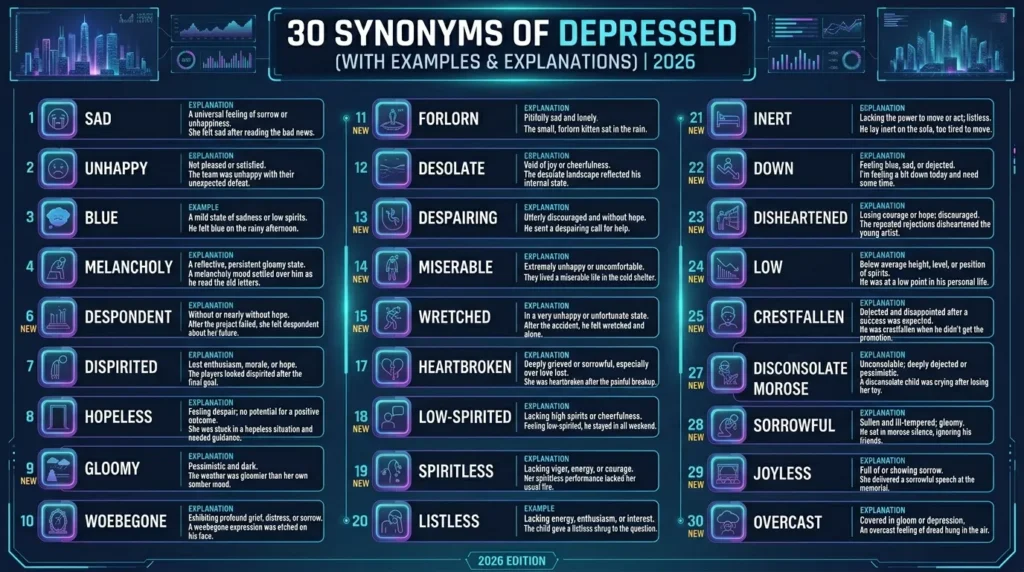
30 Synonyms of Depressed
1. Sad (adjective)
US: /sæd/ | UK: /sæd/
Meaning: feeling unhappy
Examples:
- She felt sad after the movie.
- He looked sad all day.
2. Unhappy (adjective)
US: /ʌnˈhæpi/ | UK: /ʌnˈhæpi/
Meaning: not feeling happy
Examples:
- The child seemed unhappy.
- He became unhappy at work.
3. Miserable (adjective)
US: /ˈmɪzərəbəl/ | UK: /ˈmɪzərəbəl/
Meaning: extremely unhappy
Examples:
- She felt miserable after the breakup.
- Rainy weather made him miserable.
4. Downcast (adjective)
US: /ˈdaʊnkæst/ | UK: /ˈdaʊnkɑːst/
Meaning: feeling low and discouraged
Examples:
- He looked downcast after losing.
- She sounded downcast on the phone.
5. Gloomy (adjective)
US: /ˈɡluːmi/ | UK: /ˈɡluːmi/
Meaning: feeling dark and unhappy
Examples:
- The room felt gloomy.
- She became gloomy during winter.
6. Melancholy (adjective/noun)
US: /ˈmɛlənˌkɑːli/ | UK: /ˈmelənkəli/
Meaning: deep thoughtful sadness
Examples:
- He felt melancholy at sunset.
- The song had a melancholy mood.
7. Heartbroken (adjective)
US: /ˈhɑːrtˌbroʊkən/ | UK: /ˈhɑːtˌbrəʊkən/
Meaning: deeply sad from emotional pain
Examples:
- She was heartbroken after the loss.
- He looked completely heartbroken.
8. Hopeless (adjective)
US: /ˈhoʊpləs/ | UK: /ˈhəʊpləs/
Meaning: without hope
Examples:
- He felt hopeless about the future.
- She gave a hopeless sigh.
9. Blue (adjective)
US: /bluː/ | UK: /bluː/
Meaning: feeling sad or low
Examples:
- I feel blue today.
- Rainy days make her blue.
10. Dejected (adjective)
US: /dɪˈdʒɛktɪd/ | UK: /dɪˈdʒektɪd/
Meaning: sad because of disappointment
Examples:
- He looked dejected after failing.
- She sounded dejected.
11. Discouraged (adjective)
US: /dɪsˈkɜːrɪdʒd/ | UK: /dɪsˈkʌrɪdʒd/
Meaning: losing confidence or hope
Examples:
- She felt discouraged after criticism.
- He became discouraged quickly.
12. Despairing (adjective)
US: /dɪˈsperɪŋ/ | UK: /dɪˈspeərɪŋ/
Meaning: feeling complete hopelessness
Examples:
- He gave a despairing look.
- She felt despairing after the news.
13. Low (adjective)
US: /loʊ/ | UK: /ləʊ/
Meaning: emotionally weak or sad
Examples:
- I feel low today.
- She sounded emotionally low.
14. Sorrowful (adjective)
US: /ˈsɑːroʊfəl/ | UK: /ˈsɒrəʊfəl/
Meaning: full of sadness
Examples:
- His face looked sorrowful.
- She gave a sorrowful smile.
15. Miserly (adjective)
US: /ˈmaɪzərli/ | UK: /ˈmaɪzəli/
Meaning: emotionally unhappy or cold
Examples:
- He appeared miserly and upset.
- Her mood stayed miserly.
16. Somber (adjective)
US: /ˈsɑːmbər/ | UK: /ˈsɒmbə/
Meaning: serious and sad
Examples:
- The funeral had a somber mood.
- He spoke in a somber voice.
17. Mournful (adjective)
US: /ˈmɔːrnfəl/ | UK: /ˈmɔːnfəl/
Meaning: expressing sadness or grief
Examples:
- She gave a mournful look.
- The music sounded mournful.
18. Glum (adjective)
US: /ɡlʌm/ | UK: /ɡlʌm/
Meaning: quiet and unhappy
Examples:
- He looked glum after school.
- She stayed glum all evening.
19. Woeful (adjective)
US: /ˈwoʊfəl/ | UK: /ˈwəʊfəl/
Meaning: full of sadness
Examples:
- The child gave a woeful cry.
- He looked woeful and tired.
20. Crestfallen (adjective)
US: /ˈkrɛstˌfɔːlən/ | UK: /ˈkrestˌfɔːlən/
Meaning: disappointed and sad
Examples:
- She felt crestfallen after losing.
- He looked crestfallen.
21. Forlorn (adjective)
US: /fərˈlɔːrn/ | UK: /fəˈlɔːn/
Meaning: lonely and unhappy
Examples:
- The dog looked forlorn.
- He felt forlorn after moving away.
22. Brokenhearted (adjective)
US: /ˌbroʊkənˈhɑːrtɪd/ | UK: /ˌbrəʊkənˈhɑːtɪd/
Meaning: emotionally hurt and sad
Examples:
- She felt brokenhearted.
- He became brokenhearted after the loss.
23. Disheartened (adjective)
US: /dɪsˈhɑːrtənd/ | UK: /dɪsˈhɑːtənd/
Meaning: losing motivation and hope
Examples:
- He felt disheartened by failure.
- She became disheartened quickly.
24. Morose (adjective)
US: /məˈroʊs/ | UK: /məˈrəʊs/
Meaning: gloomy and bad-tempered
Examples:
- He sounded morose.
- She stayed morose all day.
25. Despondent (adjective)
US: /dɪˈspɑːndənt/ | UK: /dɪˈspɒndənt/
Meaning: feeling hopeless and discouraged
Examples:
- He became despondent after rejection.
- She looked despondent.
26. Troubled (adjective)
US: /ˈtrʌbəld/ | UK: /ˈtrʌbəld/
Meaning: emotionally disturbed or worried
Examples:
- She seemed troubled lately.
- He gave a troubled sigh.
27. Downhearted (adjective)
US: /ˌdaʊnˈhɑːrtɪd/ | UK: /ˌdaʊnˈhɑːtɪd/
Meaning: feeling discouraged and sad
Examples:
- Don’t feel downhearted.
- She looked downhearted after the test.
28. Pessimistic (adjective)
US: /ˌpɛsəˈmɪstɪk/ | UK: /ˌpesɪˈmɪstɪk/
Meaning: expecting bad things
Examples:
- He became pessimistic about life.
- Her tone sounded pessimistic.
29. Weepy (adjective)
US: /ˈwiːpi/ | UK: /ˈwiːpi/
Meaning: likely to cry easily
Examples:
- She felt weepy all day.
- He became strangely weepy.
30. Distressed (adjective)
US: /dɪˈstrɛst/ | UK: /dɪˈstrest/
Meaning: emotionally upset and unhappy
Examples:
- She looked distressed after the call.
- He sounded deeply distressed.
Prototype Meaning
The most common meaning of depressed is feeling emotionally low, sad, and without energy or hope. People usually imagine someone quiet, unhappy, and struggling to enjoy daily life.
Prototype Categorization
- General sadness: sad, unhappy, blue
- Deep emotional pain: heartbroken, brokenhearted, mournful
- Hopeless feelings: hopeless, despairing, despondent
- Quiet emotional states: gloomy, glum, somber
Categorization helps writers choose the best synonym based on emotional intensity and situation.
Antonyms of Depressed
Antonyms
- Happy (adjective): feeling joy or pleasure
- Cheerful (adjective): full of happiness
- Optimistic (adjective): hopeful about the future
- Excited (adjective): feeling strong happiness or interest
- Hopeful (adjective): expecting good things
Short Questions and Answers
What does depressed mean?
- It means feeling deeply sad, emotionally low, or hopeless.
When should depressed be used?
- Use it when describing sadness, emotional pain, or low mood.
Is depressed positive or negative?
- It is usually negative because it describes emotional suffering.
How is it different from similar words?
- “Depressed” often suggests deeper and longer sadness than words like “sad” or “upset.”
Conclusion
Learning synonyms of depressed and synonyms of depressed improves vocabulary and emotional communication skills. It helps English learners describe feelings more clearly in speaking and writing. Using different synonyms also avoids repetition and makes communication more natural and expressive. These words help writers explain emotional pain, disappointment, sadness, and hopelessness with better accuracy. Understanding emotional vocabulary also builds confidence in conversations, storytelling, essays, and professional communication. Practice using new words daily in sentences and discussions. Small vocabulary habits can greatly improve your English fluency, emotional expression, and writing quality over time.

I’m Zahid Abbas, an educator, researcher, and digital publishing strategist with a passion for linguistics, grammar, and clear communication. As a content creator and SEO specialist, I craft research-driven, reader-focused content that empowers learners and makes knowledge accessible worldwide.