The word naive means innocent, inexperienced, or too trusting. Imagine a young traveler visiting a big city for the first time. The traveler believes every stranger and trusts every promise. People may describe that person as naive.
This word is common in daily conversations, books, education, and psychology because it explains human behavior and experience. Sometimes it describes kindness and honesty, while other times it suggests lack of knowledge or poor judgment.
Learning synonyms of naive helps English learners express ideas more clearly and avoid repeating the same word. It also helps writers choose the best tone for stories, essays, and conversations. In this article, you will learn the meaning of naive, its pronunciation, history, grammar, and 30 useful synonyms with examples. You will also explore categories, antonyms, and simple questions to improve your vocabulary and communication skills.
Meaning of Naive
Definition
Naive (adjective): showing innocence, lack of experience, or too much trust.
Examples
- She was naive enough to believe the fake story.
- His naive smile showed honesty and innocence.
Connotative Meaning
- Positive tone: innocent, honest, pure
- Negative tone: inexperienced, foolish, easily tricked
- Neutral tone: lacking knowledge or experience
Etymology
- From French naïf meaning “natural” or “innocent”
- Derived from Latin nativus meaning “native” or “natural”
Short History:
- Old English (450–1100): similar ideas existed using words for innocence
- Middle English (1100–1500): French influence introduced related forms
- Modern English (1500–Present): “naive” became common for innocence and inexperience
Pronunciation (US & UK – IPA)
- US: /naɪˈiːv/
- UK: /naɪˈiːv/
Syllables
- na-ive
Affixation Pattern of Naive
- Root: naive
- Prefix: none
- Suffix: none
Word Formation:
- naive (adjective)
- naively (adverb)
- naivety / naiveté (noun)
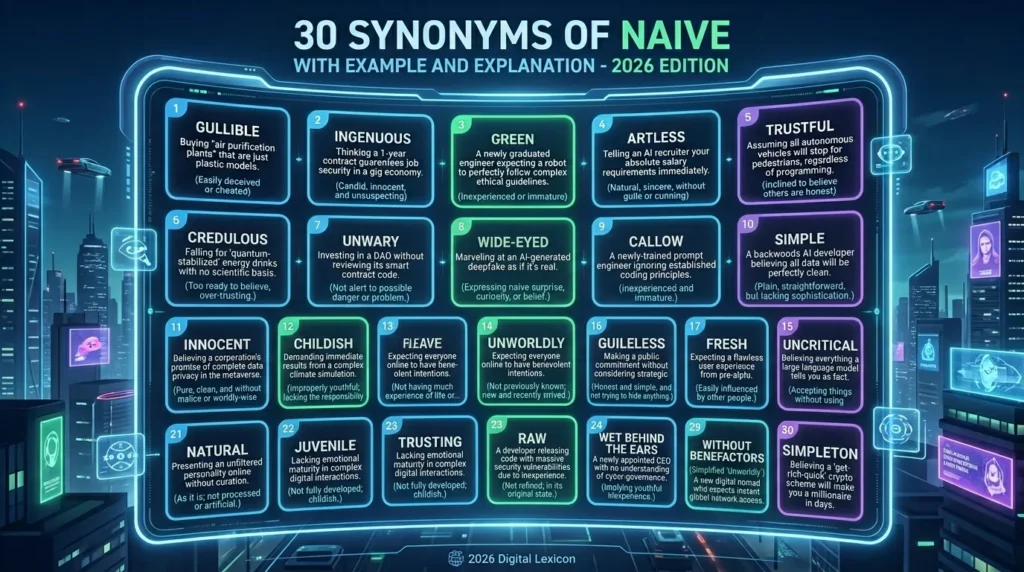
30 Synonyms of Naive
1. Innocent (adjective)
US: /ˈɪnəsənt/ | UK: /ˈɪnəsənt/
Meaning: free from guilt or bad experience
Examples:
- The child looked innocent.
- She gave an innocent answer.
2. Trusting (adjective)
US: /ˈtrʌstɪŋ/ | UK: /ˈtrʌstɪŋ/
Meaning: willing to believe others easily
Examples:
- He was too trusting of strangers.
- Her trusting nature caused problems.
3. Gullible (adjective)
US: /ˈɡʌləbl/ | UK: /ˈɡʌlɪbəl/
Meaning: easily fooled or deceived
Examples:
- The scam targeted gullible people.
- She seemed gullible online.
4. Inexperienced (adjective)
US: /ˌɪnɪkˈspɪriənst/ | UK: /ˌɪnɪkˈspɪəriənst/
Meaning: lacking practical knowledge
Examples:
- The new worker was inexperienced.
- He made inexperienced mistakes.
5. Unsophisticated (adjective)
US: /ˌʌnsəˈfɪstɪkeɪtɪd/ | UK: /ˌʌnsəˈfɪstɪkeɪtɪd/
Meaning: simple and lacking worldly knowledge
Examples:
- She had an unsophisticated view.
- His style looked unsophisticated.
6. Simple (adjective)
US: /ˈsɪmpəl/ | UK: /ˈsɪmpəl/
Meaning: plain and uncomplicated
Examples:
- He had a simple understanding.
- Her simple nature was charming.
7. Childlike (adjective)
US: /ˈtʃaɪldlaɪk/ | UK: /ˈtʃaɪldlaɪk/
Meaning: innocent like a child
Examples:
- She had a childlike smile.
- His wonder felt childlike.
8. Credulous (adjective)
US: /ˈkrɛdʒələs/ | UK: /ˈkredjʊləs/
Meaning: too ready to believe things
Examples:
- Credulous readers believed the rumor.
- He sounded credulous.
9. Unworldly (adjective)
US: /ʌnˈwɜːrldli/ | UK: /ʌnˈwɜːldli/
Meaning: lacking knowledge of real-world matters
Examples:
- She seemed unworldly.
- His ideas were unworldly.
10. Green (adjective)
US: /ɡriːn/ | UK: /ɡriːn/
Meaning: new and inexperienced
Examples:
- The young employee was green.
- He felt green in business.
11. Unaware (adjective)
US: /ˌʌnəˈwer/ | UK: /ˌʌnəˈweə/
Meaning: not knowing something
Examples:
- She was unaware of the danger.
- He looked completely unaware.
12. Artless (adjective)
US: /ˈɑːrtləs/ | UK: /ˈɑːtləs/
Meaning: natural and without deception
Examples:
- Her artless honesty impressed everyone.
- He gave an artless reply.
13. Pure (adjective)
US: /pjʊr/ | UK: /pjʊə/
Meaning: morally clean and innocent
Examples:
- The child had a pure heart.
- Her intentions were pure.
14. Honest (adjective)
US: /ˈɑːnɪst/ | UK: /ˈɒnɪst/
Meaning: truthful and sincere
Examples:
- He gave an honest answer.
- Her honest nature was refreshing.
15. Openhearted (adjective)
US: /ˌoʊpənˈhɑːrtɪd/ | UK: /ˌəʊpənˈhɑːtɪd/
Meaning: kind and emotionally open
Examples:
- She was openhearted with friends.
- His openhearted attitude helped others.
16. Uncritical (adjective)
US: /ʌnˈkrɪtɪkəl/ | UK: /ʌnˈkrɪtɪkəl/
Meaning: accepting things too easily
Examples:
- He was uncritical of bad advice.
- Her view seemed uncritical.
17. Wide-eyed (adjective)
US: /ˌwaɪd ˈaɪd/ | UK: /ˌwaɪd ˈaɪd/
Meaning: showing innocence and surprise
Examples:
- The tourists looked wide-eyed.
- She listened in a wide-eyed way.
18. Innocuous (adjective)
US: /ɪˈnɑːkjuəs/ | UK: /ɪˈnɒkjuəs/
Meaning: harmless and simple
Examples:
- He made an innocuous comment.
- Her questions sounded innocuous.
19. Foolish (adjective)
US: /ˈfuːlɪʃ/ | UK: /ˈfuːlɪʃ/
Meaning: lacking wisdom or good judgment
Examples:
- It was foolish to trust him.
- She made a foolish choice.
20. Ignorant (adjective)
US: /ˈɪɡnərənt/ | UK: /ˈɪɡnərənt/
Meaning: lacking knowledge
Examples:
- He was ignorant of the rules.
- She sounded ignorant about science.
21. Unsuspecting (adjective)
US: /ˌʌnsəˈspektɪŋ/ | UK: /ˌʌnsəˈspektɪŋ/
Meaning: unaware of danger or trickery
Examples:
- The thief fooled unsuspecting tourists.
- She remained unsuspecting.
22. Fresh (adjective)
US: /frɛʃ/ | UK: /freʃ/
Meaning: new and inexperienced
Examples:
- He was fresh out of college.
- The team had many fresh players.
23. Tender (adjective)
US: /ˈtɛndər/ | UK: /ˈtendə/
Meaning: gentle and sensitive
Examples:
- She had a tender heart.
- His voice sounded tender.
24. Harmless (adjective)
US: /ˈhɑːrmləs/ | UK: /ˈhɑːmləs/
Meaning: not dangerous or dishonest
Examples:
- The joke was harmless.
- He looked completely harmless.
25. Frank (adjective)
US: /fræŋk/ | UK: /fræŋk/
Meaning: open and direct
Examples:
- She gave a frank opinion.
- His frank answer surprised everyone.
26. Sincere (adjective)
US: /sɪnˈsɪr/ | UK: /sɪnˈsɪə/
Meaning: honest and genuine
Examples:
- Her apology sounded sincere.
- He gave a sincere smile.
27. Trustful (adjective)
US: /ˈtrʌstfəl/ | UK: /ˈtrʌstfəl/
Meaning: full of trust
Examples:
- The puppy looked trustful.
- She remained trustful of others.
28. Natural (adjective)
US: /ˈnætʃrəl/ | UK: /ˈnætʃrəl/
Meaning: simple and unaffected
Examples:
- Her behavior felt natural.
- He gave a natural reaction.
29. Beginner (noun)
US: /bɪˈɡɪnər/ | UK: /bɪˈɡɪnə/
Meaning: a person new to something
Examples:
- Every beginner makes mistakes.
- She joined as a beginner.
30. Novice (noun)
US: /ˈnɑːvɪs/ | UK: /ˈnɒvɪs/
Meaning: someone with little experience
Examples:
- The novice asked many questions.
- He remained a novice driver.
Prototype Meaning
The most typical meaning of naive is someone who is innocent, inexperienced, and too trusting. People usually imagine a kind person who believes others easily and lacks experience with difficult situations.
Prototype Categorization
- Innocence and purity: innocent, pure, childlike
- Lack of experience: novice, beginner, green
- Too trusting: gullible, trusting, credulous
- Honesty and openness: sincere, frank, openhearted
Antonyms of Naive
- Experienced (adjective): having knowledge and skill
- Wise (adjective): showing good judgment
- Sophisticated (adjective): knowledgeable about the world
- Cautious (adjective): careful and not easily fooled
- Shrewd (adjective): clever and practical
Short Questions and Answers
What does naive mean?
- It means innocent, inexperienced, or too trusting.
When should naive be used?
- Use it when describing someone who lacks experience or believes things easily.
Is naive positive or negative?
- It can be positive for innocence or negative for lack of judgment.
How is it different from similar words?
- “Naive” focuses on innocence and trust, while “ignorant” mainly means lacking knowledge.
Conclusion
Learning synonyms of naive and synonyms of naive improves vocabulary and emotional expression. It helps English learners describe personality, experience, and behavior more clearly in speaking and writing. Using different synonyms also avoids repetition and creates more natural communication. These words are useful in storytelling, conversations, essays, and professional writing. They help writers explain innocence, honesty, trust, and inexperience with greater accuracy. Practice using new vocabulary daily to build stronger English confidence. Small learning habits can greatly improve fluency and communication skills over time.

I’m Zahid Abbas, an educator, researcher, and digital publishing strategist with a passion for linguistics, grammar, and clear communication. As a content creator and SEO specialist, I craft research-driven, reader-focused content that empowers learners and makes knowledge accessible worldwide.