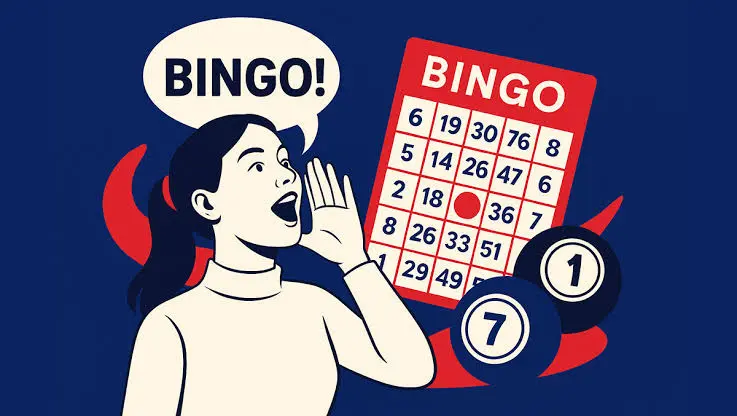

In a bingo hall, the caller says “two fat ladies” and the room answers, “wobble, wobble!” Nobody needs a translation. A stranger who walks in off the street or only played Bitcoin bingo online would need several.
Bingo has its own small language, with a nickname for every number from 1 to 90. And this piece decodes the best-known calls and sorts them by how they work, so you won’t feel like a stranger when joining your first offline bingo game.
Why numbers get nicknames
Callers have long used rhyming nicknames, known as “bingo lingo”, for the numbers 1 to 90. Some date back to around 1900. These names have a practical purpose: a nickname keeps a number clear in a noisy hall. In some clubs the caller says the number and the players chant the rhyme. Others run it the other way round.
A second job was fun. The rhymes, puns, and jokes make calling more interactive and stop the early rounds, when nobody can win yet, from dragging. Many calls grew out of “Housey Housey”, the version of the game that troops played in the Second World War. That explains the military slang.
The game itself is far older. It traces back to an Italian lottery of the mid-1500s. The name arrived in 1929, when a New York toymaker named Edwin Lowe called numbers for friends and one excited player shouted “Bingo!” by mistake, and the name stuck.
Calls that look like their number or rhyme
The easiest nicknames describe what the digits look like.
- Legs eleven (11): The two ones stand like a pair of legs.
- Two little ducks (22): The two twos look like ducks side by side.
- Two fat ladies (88): The two eights side by side look like two curvy figures.
- Kelly’s eye (1): It is military slang, possibly a nod to Ned Kelly’s helmet, whose eye slot resembles the numeral. The call may be older than either Kelly or a comic hero of the same name, so the origin is open.
Some nicknames work by sound alone. Tom Mix (6) is Cockney rhyming slang, and Tom Mix was an early Hollywood Western star. Top of the shop (90) names the highest number in the game, and “shop” refers to the game itself and rhymes with “top”.
Clickety click (66) is a puzzle. The two sixes sound like a typewriter or a railway track when said fast. Wikipedia gives the rhyme and no clear origin, so read the typewriter story as a guess.
Calls with a story behind them
Some nicknames lean on superstition. Lucky seven (7) works because seven is thought lucky in many cultures. Unlucky for some (13) draws on the number’s reputation for bad luck in Western culture.
Doctor’s orders (9) is linked to a laxative pill that army doctors reportedly issued. Wikipedia places it in the First World War. Players often answer with a mock cough.
Key of the door (21) is traditionally linked to the age of majority, which was 21 before it was lowered to 18. Royal salute is another call for 21, and it refers to the 21-gun salute.
Legs eleven has a longer life than its shape suggests. Wikipedia says it appears in First World War references, as Australian slang for a tall, thin man and as the nickname of an Australian battalion. Its use has also been criticised as sexist, and wolf-whistle responses have reportedly led to some players being banned from halls in recent years.
Number 10 changes with the times. The call names whoever lives at 10 Downing Street, and Wikipedia says the earliest recorded use was “Macmillan’s Den” in the early 1960s. That is why one guide lists “Boris’s Den” and Wikipedia lists “Keir’s den”. “Dahnin’ Street” is a rhyming-slang version that no election can change.
What the lingo is for
Without the nicknames, a bingo hall is a room of people watching numbers, but with them it’s a call-and-response, a joke, and a small history lesson at the same time. Each call is a word game: a digit becomes a shape, a rhyme, a soldier’s joke, or a name from the news.
The numbers stay the same from hall to hall, but the nicknames are what each hall adds just for fun.
Also Read
- Synonyms for Via 30 Powerful Words to Explore 2026
- Synonyms of Complacent,30 Best word for 2026
- What Is a Synonym for Also? 15 Useful Alternatives