The word consequences means the results, outcomes, or effects that happen because of an action or choice. Imagine dropping an ice cream cone on the ground the consequence is that it gets dirty, and you no longer have a treat to eat.
We use synonyms for consequences when talking about what happens. After making a choice, breaking a rule, or conducting a science experiment. Learning new ways to say consequences helps learners make their story writing clear. English learners and content writers need synonyms for consequences too.
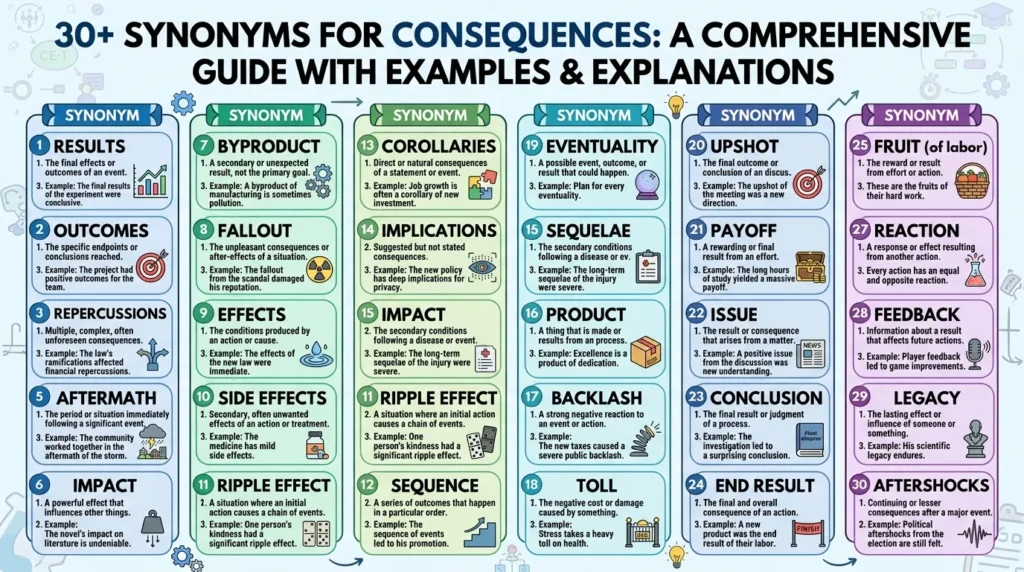
This guide gives you 30 simple synonyms for consequences. Along with easy sentences, word origins, pronunciation guides, and clear categories.
Meaning of Consequences
Definition
Consequences (Noun, Plural): The results, effects, or outcomes produced by a cause or a previous action.
Examples
- Eating too much candy can lead to bad consequences for your teeth.
- She studied hard every day and enjoyed the good consequences of getting top marks.
Connotative Meaning
- Positive tone: Can mean rewarding results, achievements, or success after hard work.
- Negative tone: Often used to warn about punishments, penalties, or unwanted trouble following a mistake.
- Neutral tone: Simply describes the natural outcome or fallout of an action.
Etymology
- Source language: Came from Latin roots through Old French.
- Latin: Consequentia (from con- meaning “together” + sequi meaning “to follow”).
- Modern English: Literally means things that “follow together” after an event or action!
Pronunciation
- US: /ˈkɑːnsəkwənsəz/
- UK: /ˈkɒnsɪkwənsɪz/
Syllables
con-se-quen-ces (4 parts)
Affixation Pattern of Consequences
- Root: Consequence (means result or effect)
- Suffix: -s (makes it plural)
- Word Formation:
- Noun: Consequence / Consequences
- Adjective: Consequent / Consequential
- Adverb: Consequently
Also read more about https://synonymhubb.com/synonyms-for-awareness/
Synonyms for Consequences
1. Results (Noun) — US: /rɪˈzʌlts/ | UK: /rɪˈzʌlts/
Meaning: Things that happen or exist because of something else.
Examples:
The results of the science experiment were surprising.
Good study habits lead to great test results.
2. Effects (Noun) — US: /ɪˈfɛkts/ | UK: /ɪˈfekts/
Meaning: Changes produced by an action or cause.
Examples:
The warm sun had positive effects on the growing plants.
Lack of sleep can have negative effects on your mood.
3. Outcomes (Noun) — US: /ˈaʊtkʌmz/ | UK: /ˈaʊtkʌmz/
Meaning: The final decisions, end states, or results of a situation.
Examples:
We waited eagerly for the final outcomes of the game.
Hard teamwork produced happy outcomes for everyone.
4. Aftermath (Noun) — US: /ˈæftərmæθ/ | UK: /ˈɑːftəmæθ/
Meaning: The period of time right after a major event, often used for troubles.
Examples:
Clean-up began in the aftermath of the storm.
They discussed the aftermath of the broken vase incident.
5. End products (Noun Phrase) — US: /ɛnd ˈprɑːdʌkts/ | UK: /end ˈprɒdʌkts/
Meaning: The final goods or results created at the very end of a process.
Examples:
The colorful drawings were the end products of art class.
Tasty cookies are the end products of careful baking.
6. Penalties (Noun) — US: /ˈpɛnəltiz/ | UK: /ˈpenəltiz/
Meaning: Punishments or losses given for breaking rules.
Examples:
There are strict penalties for cheating on a test.
He faced minor penalties like losing ten minutes of recess.
7. Payoffs (Noun) — US: /ˈpeɪɔːfs/ | UK: /ˈpeɪɒfs/
Meaning: Positive rewards or final benefits gained from working hard.
Examples:
Winning the trophy was the great payoff for practicing daily.
High grades are the payoffs of doing homework on time.
8. Impacts (Noun) — US: /ˈɪmpækts/ | UK: /ˈɪmpækts/
Meaning: Strong, powerful influences or effects on something.
Examples:
Recycling has great impacts on keeping the Earth clean.
The novel made deep impacts on the readers.
9. Fruits (Noun Plural) — US: /fruːts/ | UK: /fruːts/
Meaning: The good outcomes or rewards brought about by hard work.
Examples:
She enjoyed the fruits of her labor after building the robot.
Peace and safety are the fruits of following rules.
10. Repercussions (Noun) — US: /ˌriːpərˈkʌʃnz/ | UK: /ˌriːpəˈkʌʃnz/
Meaning: Unintended negative results that happen after an event.
Examples:
Yelling out in class had serious repercussions.
Think carefully before acting to avoid bad repercussions.
11. Up-shots (Noun) — US: /ˈʌpʃɑːts/ | UK: /ˈʌpʃɒts/
Meaning: The overall conclusions or final results of a situation.
Examples:
The upshot of our meeting was that we get a new pet.
The upshot of finishing early meant free play time.
12. Outputs (Noun) — US: /ˈaʊtpʊts/ | UK: /ˈaʊtpʊts/
Meaning: The amount of work or material produced by a person or machine.
Examples:
The factory boosted its weekly outputs of toys.
Her total written output was two full pages.
13. Fallout (Noun) — US: /ˈfɔːlaʊt/ | UK: /ˈfɔːlaʊt/
Meaning: The unpleasant effects or lingering trouble left after an argument.
Examples:
The fallout from their fight lasted all afternoon.
They tried to repair the friendship after the fallout.
14. Reactions (Noun) — US: /riˈækʃnz/ | UK: /riˈækʃnz/
Meaning: Actions or feelings caused by something else happening.
Examples:
Her sudden shout caused funny reactions from the cats.
The chemical test showed colorful reactions.
15. Chain reactions (Noun Phrase) — US: /tʃeɪn riˈækʃnz/ | UK: /tʃeɪn riˈækʃnz/
Meaning: A series of events where each outcome causes the next one to happen.
Examples:
Knocking over one book set off a chain reaction across the desk.
A smile can create a warm chain reaction of kindness.
16. Sequels (Noun) — US: /ˈsiːkwəlz/ | UK: /ˈsiːkwəlz/
Meaning: Things that follow after a prior event, like a second book or movie.
Examples:
The sequel to the story showed what happened next.
Hard work is often the preface, and success is the sequel.
17. Punishments (Noun) — US: /ˈpʌnɪʃmənts/ | UK: /ˈpʌnɪʃmənts/
Meaning: Unpleasant duties or losses given to correct bad behavior.
Examples:
Loss of screen time is one of the punishments for misbehaving.
Fair punishments help children learn right from wrong.
18. Endings (Noun) — US: /ˈɛndɪŋz/ | UK: /ˈendɪŋz/
Meaning: The final parts, outcomes, or conclusions of stories and events.
Examples:
Fairy tales usually have happy endings.
The twist endings of the mystery book surprised us.
19. Products (Noun) — US: /ˈprɑːdʌkts/ | UK: /ˈprɒdʌkts/
Meaning: The things that come out of or are created by an action.
Examples:
Clean streets are the products of responsible citizens.
Great ideas are the products of creative thinking.
20. Developments (Noun) — US: /dɪˈvɛləpmənts/ | UK: /dɪˈveləpmənts/
Meaning: New events or results growing out of an ongoing situation.
Examples:
We watched for new developments in the weather forecast.
The police shared latest developments in the investigation.
21. Issues (Noun) — US: /ˈɪʃuːz/ | UK: /ˈɪʃuːz/
Meaning: The topics, problems, or results being discussed or handled.
Examples:
Messy desks can cause organizational issues.
They worked through all their group work issues.
22. Conclusions (Noun) — US: /kənˈkluːʒnz/ | UK: /kənˈkluːʒnz/
Meaning: Final judgments, decisions, or endings reached by reasoning.
Examples:
Scientists write clear conclusions at the end of reports.
We came to peaceful conclusions after talking it out.
23. Returns (Noun) — US: /rɪˈtɜːrnz/ | UK: /rɪˈtɜːnz/
Meaning: The profits, gains, or positive results earned back from effort.
Examples:
Daily reading gives great returns in your vocabulary test!
Planting seeds yields rich returns in garden vegetables.
24. Backlashes (Noun) — US: /ˈbækˌlæʃəz/ | UK: /ˈbækˌlæʃəz/
Meaning: Strong, negative reactions or pushbacks from people.
Examples:
The new restrictive rules caused a quick backlash from students.
Rude comments always create a bad backlash.
25. Effects (Noun) — US: /ɪˈfɛkts/ | UK: /ɪˈfekts/
Meaning: The events or conditions that follow directly from a cause.
Examples:
The direct effects of heavy rain were flooded roads.
Good food has healthy effects on growing bodies.
26. Reverberations (Noun) — US: /rɪˌvɜːrbəˈreɪʃnz/ | UK: /rɪˌvɜːbəˈreɪʃnz/
Meaning: Continuing acoustic echoes or long-lasting secondary effects.
Examples:
The loud pop created reverberations across the gym.
The big news had reverberations all through the school.
27. Echoes (Noun) — US: /ˈɛkoʊz/ | UK: /ˈekəʊz/
Meaning: Repeating effects or lingering memories of past events.
Examples:
The historic speech left echoes for generations.
Her kind words had lasting echoes in my heart.
28. Complications (Noun) — US: /ˌkɑːmplɪˈkeɪʃnz/ | UK: /ˌkɒmplɪˈkeɪʃnz/
Meaning: Extra difficulties or complex problems arising out of a situation.
Examples:
Skipping steps in a recipe causes cooking complications.
Rain added new complications to our outdoor game.
29. Sequelae (Noun Plural) — US: /sɪˈkwiːliː/ | UK: /sɪˈkwiːliː/
Meaning: Secondary conditions or consequences following an illness or event.
Examples:
Coughing can be one of the minor sequelae of a cold.
Tiredness was a natural sequela after the long marathon.
30. Traces (Noun Plural) — US: /ˈtreɪsəz/ | UK: /ˈtreɪsəz/
Meaning: Small marks or remaining signs left behind after an event.
Examples:
The muddy boots left traces all over the clean rug.
There were no traces of cake left on the plate.
Prototype Meaning
When children hear consequences, they picture cause-and-effect dominoes: pushing one domino down causes every single block down the line to fall over, one right after another.
Prototype Categorization
- General Results & Outcomes: Results, Outcomes, Effects, End products, Upshots, Endings, Conclusions.
- Positive Rewards & Gains: Payoffs, Fruits, Returns, Outputs, Products.
- Bad Reactions & Trouble: Repercussions, Fallout, Penalties, Punishments, Backlashes, Complications.
- Chain Events & Long-term Signs: Chain reactions, Aftermath, Repercussions, Echoes, Reverberations, Traces, Sequels, Developments.
Antonyms of Consequences
- Cause
- Origin
- Source
- Start
- Beginning
- Reason
Short Questions and Answers
- What does consequences mean?
- It means the outcomes, results, or effects that happen because of an action.
- When should I use consequences?
- Use it when writing about the results of choices, science experiments, rules, or behavior.
- Is consequences a noun or a verb?
- It is a noun (plural of consequence)!
- Are consequences always bad?
- No! Consequences can be good (like getting a gold star for studying) or bad (like losing recess for breaking a rule).
Conclusion
Synonyms for consequences can help you talk about the results. Also effects of actions and choices in a clearer way. Words such as results, effects, outcomes, results, impacts, and repercussions can make your English more varied and natural. Each synonym has a slightly different meaning and tone, so learning synonyms for consequences helps you choose the best one for each situation. For English learners, these alternatives can improve writing, speaking, reading, and everyday communication. They also help you avoid repeating the word consequences too often. Try using synonyms for consequences in simple sentences about actions, decisions, and events. With regular practice, you can build a stronger vocabulary. Express your ideas clearly, and speak English with greater confidence.

I’m Zahid Abbas, an educator, researcher, and digital publishing strategist with a passion for linguistics, grammar, and clear communication. As a content creator and SEO specialist, I craft research-driven, reader-focused content that empowers learners and makes knowledge accessible worldwide.