The word demon refers to an evil spirit, monster, or mythical creature. That causes harm, trouble, or mischief. Imagine reading an exciting fairytale about a dark, spooky castle where a horned monster guards a secret treasure chest. That shadowy creature in storybooks is what we call a demon.
We use synonyms for demon to describe mythical monsters, villains in fantasy video games, or even mischievous feelings like a bad habit. Learning new ways to say demon help learners make their creative writing exciting. English learners and content writers need synonyms for demon too.
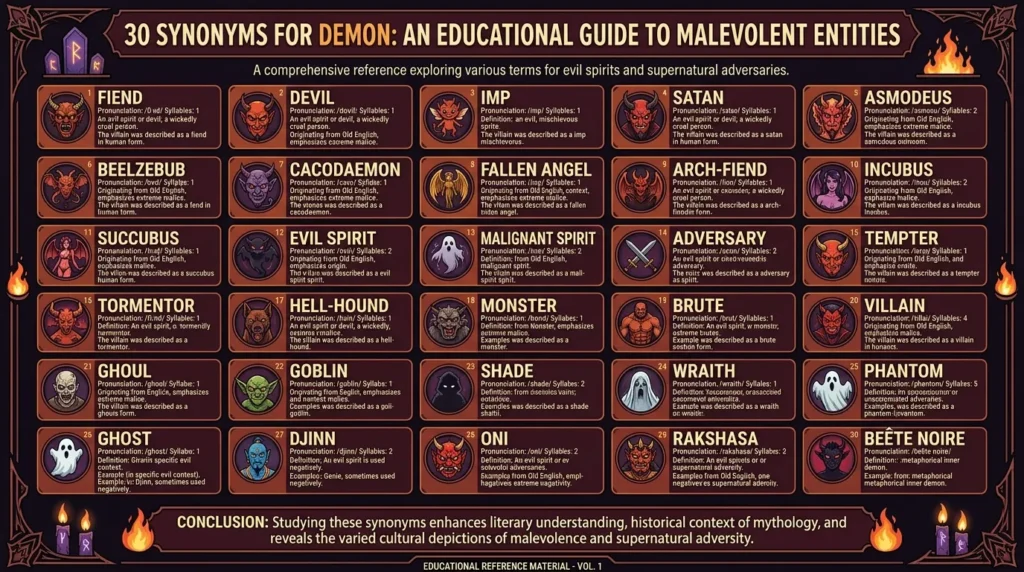
This guide gives you 30 simple synonyms for demon. Along with easy sentences, word origins, pronunciation guides, and clear categories.
Meaning of Demon
Definition
Demon (Noun): An evil spirit or monster in myths and fairytales; a cruel, wicked creature or person.
Examples
- The brave knight fought against the fiery demon in the fable.
- In fairy tales, heroes often trick a sneaky demon to save the day.
Connotative Meaning
- Positive tone: Rarely positive, but can describe incredible energy, skill, or drive (e.g., “a speed demon on the track”).
- Negative tone: Represents cruelty, evil, darkness, and wickedness.
- Neutral tone: Refers generally to mythical folklore creatures or video game characters.
Etymology
- Source language: Came from Ancient Greek through Latin.
- Greek: Daimon (originally meaning “divine power” or “guiding spirit”).
- Late Latin: Daemon (came to mean “evil spirit” in early religious writings).
- Modern English: Refers to a dark, supernatural creature in stories and folklore.
You can also get more information https://synonymhubb.com/synonyms-for-somber/
Pronunciation
- US: /ˈdiːmən/
- UK: /ˈdiːmən/
Syllables
de-mon (2 parts)
Affixation Pattern of Demon
- Root: Demon (means evil spirit)
- Word Formation:
- Noun: Demon / Demonology / Demoniac
- Adjective: Demonic / Demonical
- Adverb: Demonically
Synonyms for Demon
1. Devil (Noun) — US: /ˈdɛvl/ | UK: /ˈdevl/
Meaning: A powerful evil spirit or ruler of dark realm in folklore.
Examples:
The villain in the story acted like a sneaky devil.
Ancient legends told stories of a winged devil living in the cave.
2. Monster (Noun) — US: /ˈmɑːnstər/ | UK: /ˈmɒnstə/
Meaning: A scary, giant, or unusual creature found in legends.
Examples:
The monster under the bed was just a pile of old shadows.
The hero used a magic sword to defeat the sea monster.
3. Fiend (Noun) — US: /fiːnd/ | UK: /fiːnd/
Meaning: An extremely wicked, cruel, or evil spirit or person.
Examples:
The dark wizard was a cruel fiend who stole all the village gold.
In the storybook, a sneaky fiend guarded the spooky forest gates.
4. Evil spirit (Noun) — US: /ˈiːvl ˈspɪrɪt/ | UK: /ˈiːvl ˈspɪrɪt/
Meaning: A supernatural entity that brings bad luck, fear, or harm.
Examples:
Villagers lit candles to keep away any evil spirit.
The ancient fable described an evil spirit living near the river.
5. Goblin (Noun) — US: /ˈɡɑːblɪn/ | UK: /ˈɡɒblɪn/
Meaning: A small, ugly, and mischievous mythical creature.
Examples:
A green goblin giggled while hiding behind the rock.
The goblin tried to trick the travelers on the forest path.
6. Ogre (Noun) — US: /ˈoʊɡər/ | UK: /ˈəʊɡə/
Meaning: A giant, scary monster in fairy tales that eats or scares people.
Examples:
The friendly giant helped the villagers fight off the mean ogre.
The ogre lived in a stone castle high on the hill.
7. Beast (Noun) — US: /biːst/ | UK: /biːst/
Meaning: A wild, dangerous, or scary animal-like monster.
Examples:
The knight faced a roaring beast at the entrance of the cave.
A wild beast paced around the dark enchanted woods.
8. Imp (Noun) — US: /ɪmp/ | UK: /ɪmp/
Meaning: A small, playful demon that causes minor trouble or pranks.
Examples:
The little imp hid the king’s crown under a chair.
A tiny imp hovered around the wizard’s potion bottle.
9. Villain (Noun) — US: /ˈvɪlən/ | UK: /ˈvɪlən/
Meaning: A wicked character in a story, movie, or game who opposes the hero.
Examples:
The story’s main villain planned to freeze the entire kingdom.
Every good superhero story needs a clever villain.
10. Ghoul (Noun) — US: /ɡuːl/ | UK: /ɡuːl/
Meaning: An evil, ghostly creature from legends that wanders in dark places.
Examples:
Spooky tales describe a shadowy ghoul visiting old ruins.
The ghoul faded away when the morning sun came up.
11. Spectre (Noun) — US: /ˈspɛktər/ | UK: /ˈspektə/
Meaning: A ghost or frightening phantom that floats in the shadows.
Examples:
A pale spectre haunted the hallway in the old tower story.
The hero stood brave when the spooky spectre appeared.
12. Phantom (Noun) — US: /ˈfæntəm/ | UK: /ˈfæntəm/
Meaning: A shadowy ghost or mysterious creature without a real body.
Examples:
The phantom vanished into thin air like puff of smoke.
A glowing phantom glided across the stage in the play.
13. Sprite (Noun) — US: /spraɪt/ | UK: /spraɪt/
Meaning: A small fairy, elf, or magical spirit (sometimes mischievous).
Examples:
A dark sprite danced around the mystical campfire.
The magical sprite played tricks on lost hikers.
14. Brute (Noun) — US: /bruːt/ | UK: /bruːt/
Meaning: A rough, cruel, or very strong physical monster or person.
Examples:
The guards held back the giant brute at the castle door.
He defeated the forest brute using smart tactics rather than strength.
15. Troll (Noun) — US: /troʊl/ | UK: /trɒl/
Meaning: A mythical creature that lives in caves or under bridges.
Examples:
The grumpy troll demanded a coin to let goats cross his bridge.
Three little trolls slept inside the hollow mountain.
16. Wraith (Noun) — US: /reɪθ/ | UK: /reɪθ/
Meaning: A shadowy ghost-like figure or dark spirit that floats quietly.
Examples:
A dark wraith hovered near the abandoned fortress walls.
The wraith disappeared into the cold morning fog.
17. Shadow (Noun) — US: /ˈʃædoʊ/ | UK: /ˈʃædəʊ/
Meaning: A dark shape or mysterious dark spirit in fantasy tales.
Examples:
A strange shadow moved across the moonlit meadow.
The hero fought off shadowy dark forces in the forest.
18. Incubus (Noun) — US: /ˈɪŋkjəbəs/ | UK: /ˈɪŋkjəbəs/
Meaning: A dark spirit or nightmare creature from old myths.
Examples:
Old storybooks spoke of an incubus visiting bad dreams.
The fairy protected the children from the legendary incubus.
19. Succubus (Noun) — US: /ˈsʌkjəbəs/ | UK: /ˈsʌkjəbəs/
Meaning: A tricky folklore demon that tricks people in tales.
Examples:
In ancient myths, a succubus used magical illusions.
The hero recognized the tricks of the succubus in time.
20. Apparition (Noun) — US: /ˌæpəˈrɪʃn/ | UK: /ˌæpəˈrɪʃn/
Meaning: A strange, sudden appearance of a ghostly demon spirit.
Examples:
The travelers gasped when a glowing apparition appeared.
A strange apparition hovered over the old lake.
21. Bogy (Noun) — US: /ˈboʊɡi/ | UK: /ˈbəʊɡi/
Meaning: A scary, imaginary monster used in bedtime stories.
Examples:
Grandmother told a fun story about a silly forest bogy.
The little kid laughed when he realized the bogy was just a tree shadow.
22. Bogeyman (Noun) — US: /ˈboʊɡimæn/ | UK: /ˈbəʊɡimæn/
Meaning: An imaginary scary figure from children’s folklore.
Examples:
Turn on the light to prove there is no bogeyman in the closet!
The bogeyman is just a funny character in old storybooks.
23. Evil one (Noun) — US: /ˈiːvl wʌn/ | UK: /ˈiːvl wʌn/
Meaning: A common story nickname for a main villain or demon.
Examples:
The villagers worked together to drive away the evil one.
The hero trapped the evil one inside a magical stone bottle.
24. Arch-fiend (Noun) — US: /ɑːrtʃ fiːnd/ | UK: /ɑːtʃ fiːnd/
Meaning: The chief or most powerful evil demon in a story.
Examples:
The knight challenged the arch-fiend to a final duel.
The arch-fiend ruled over the dark misty mountains.
25. Mephisto (Noun) — US: /məˈfɪstoʊ/ | UK: /məˈfɪstəʊ/
Meaning: A famous trickster demon name used in classic literature.
Examples:
The tricky villain in the play acted like Mephisto.
Mephisto offered magical wishes with hidden tricks attached.
26. Satan (Noun) — US: /ˈseɪtn/ | UK: /ˈseɪtn/
Meaning: A name for the chief evil spirit or devil in traditional folklore.
Examples:
Fables often portray Satan as a tricky adversary.
In classical tales, Satan was cast out from light into shadow.
27. Lucifer (Noun) — US: /ˈluːsɪfər/ | UK: /ˈluːsɪfə/
Meaning: A literary name for a fallen angel or ruler of dark spirits.
Examples:
Poems often describe Lucifer as a fallen star in old legends.
The storybook illustrated Lucifer with giant dark wings.
28. Beelzebub (Noun) — US: /biːˈɛlzɪbʌb/ | UK: /biːˈelzɪbʌb/
Meaning: An ancient mythological name for a lord of dark spirits.
Examples:
The ancient book warned travelers about Beelzebub.
Legends called Beelzebub the master of dark swarms.
29. Shade (Noun) — US: /ʃeɪd/ | UK: /ʃeɪd/
Meaning: A faint, dark spirit or ghost from ancient underworld myths.
Examples:
A silent shade stood at the edge of the mythical river.
The ancient hero spoke to a wise shade in his dream.
30. Entity (Noun) — US: /ˈɛntəti/ | UK: /ˈentəti/
Meaning: A mysterious magical creature or dark power with its own life.
Examples:
A strange dark entity glided through the haunted forest.
The scientists in the story detected an unknown supernatural entity.
Prototype Meaning
When children hear demon, they picture a horned monster with fiery eyes, sharp claws, red or dark skin, and a tail, living in a dark cave or fantasy world.
Prototype Categorization
- Devils & Fiends: Devil, Fiend, Evil spirit, Arch-fiend, Evil one, Satan, Lucifer, Beelzebub, Mephisto.
- Mythical Monsters & Giants: Monster, Ogre, Beast, Troll, Brute, Goblin, Imp.
- Ghosts & Shadowy Spirits: Ghoul, Spectre, Phantom, Wraith, Apparition, Shade, Shadow, Entity.
- Story Villains & Bedtime Characters: Villain, Bogy, Bogeyman, Sprite, Incubus, Succubus.
Antonyms of Demon
- Angel
- Hero
- Saint
- Guardian
- Protector
- Fairy godmother
Short Questions and Answers
- What does demon mean?
- It means an evil spirit, monster, or cruel creature in myths and storybooks.
- When should I use demon?
- Use it when writing about fantasy adventure stories, fairytale villains, myths, or spooky halloween tales.
- Is demon an adjective or a noun?
- It is a noun! (The related adjective is demonic).
- What is the difference between a demon and an imp?
- A demon is generally a powerful, dangerous monster, while an imp is a tiny creature that just plays small harmless pranks.
Conclusion
Synonyms for demon can help you describe evil, frightening, or supernatural beings. Words such as devil, fiend, monster, evil spirit, demon, and villain can have different meanings, tones, and uses. Some are linked to mythology or religion. While others are used more broadly in stories and everyday language. Understanding synonyms for demon helps you choose the right word for your context. Also avoid repetition, and build a stronger vocabulary. Keep practicing synonyms for demon in sentences to make your writing more engaging.

I’m Zahid Abbas, an educator, researcher, and digital publishing strategist with a passion for linguistics, grammar, and clear communication. As a content creator and SEO specialist, I craft research-driven, reader-focused content that empowers learners and makes knowledge accessible worldwide.