The word blue is one of the most common color words in English. It describes the color of the sky, ocean, and many natural objects. Imagine looking at a clear sky on a sunny day. The calm and peaceful color you see is blue.
People use this word often in daily conversation, fashion, art, design, and emotional expression. Sometimes, blue also describes sadness or calm feelings. Learning synonyms of blue helps English learners improve vocabulary and describe colors more clearly. It also helps writers create vivid and interesting descriptions.
In this article, you will learn the meaning of blue, its pronunciation, history, grammar, and 30 useful synonyms with meanings and examples. You will also explore semantic categories, antonyms, and simple questions to strengthen your English speaking and writing skills.
Meaning of Blue
Definition
Blue (adjective/noun): a color like the sky or sea on a clear day.
Examples
- She wore a blue dress.
- The ocean looked deep blue.
Connotative Meaning
(Connotation means the feeling or emotion a word suggests beyond its basic meaning.)
- Positive tone: calm, peaceful, fresh
- Negative tone: sadness, loneliness
- Neutral tone: a common color name
Etymology
- From Old French bleu meaning “blue”
- Related to Germanic language roots describing shining or pale colors
Short History:
- Old English (450–1100): words for dark and pale blue existed
- Middle English (1100–1500): “blue” became more common through French influence
- Modern English (1500–Present): widely used for color and emotions
Pronunciation (US & UK – IPA)
- US: /bluː/
- UK: /bluː/
Syllables
- blue
Affixation Pattern of Blue
- Root: blue
- Prefix: none
- Suffix: none
Word Formation:
- blue (noun/adjective)
- bluish (adjective)
- blueness (noun)
- blueberry (noun)
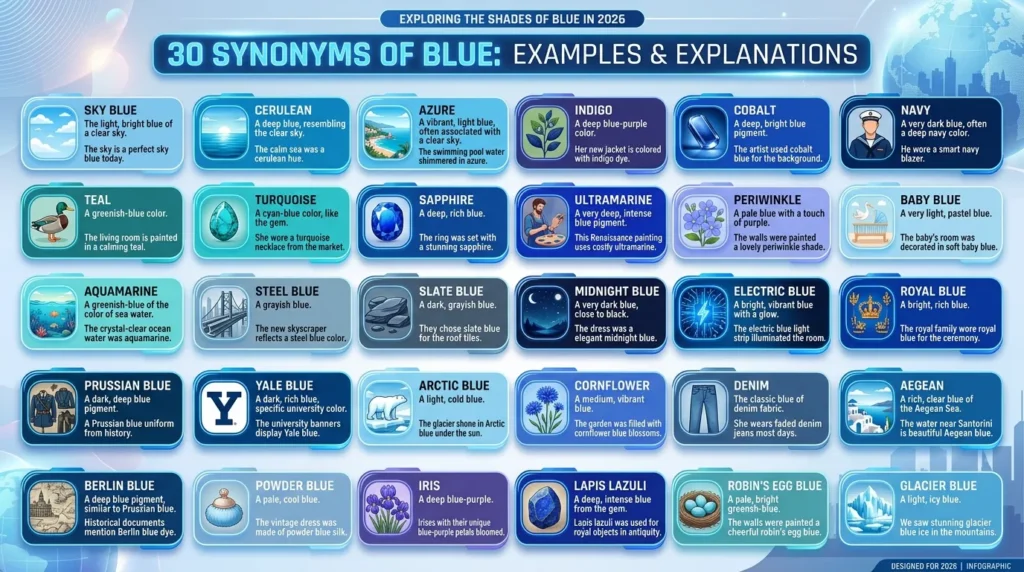
30 Synonyms of Blue
1. Azure (adjective/noun)
US: /ˈæʒər/ | UK: /ˈæʒə/
Meaning: a bright sky-blue color
Examples:
- The sky looked azure.
- She painted the room azure.
2. Navy (adjective/noun)
US: /ˈneɪvi/ | UK: /ˈneɪvi/
Meaning: a very dark blue color
Examples:
- He wore a navy jacket.
- The curtains were navy blue.
3. Sapphire (noun/adjective)
US: /ˈsæfaɪər/ | UK: /ˈsæfaɪə/
Meaning: a rich gemstone blue
Examples:
- Her ring had a sapphire color.
- The lake shone sapphire blue.
4. Cyan (noun/adjective)
US: /ˈsaɪæn/ | UK: /ˈsaɪæn/
Meaning: a greenish-blue color
Examples:
- The screen displayed cyan tones.
- She chose a cyan design.
5. Turquoise (noun/adjective)
US: /ˈtɜːrkɔɪz/ | UK: /ˈtɜːkwɔɪz/
Meaning: a bright blue-green color
Examples:
- She wore turquoise jewelry.
- The water looked turquoise.
6. Teal (noun/adjective)
US: /tiːl/ | UK: /tiːl/
Meaning: a dark greenish-blue color
Examples:
- The sofa was teal.
- He painted the wall teal.
7. Aqua (noun/adjective)
US: /ˈɑːkwə/ | UK: /ˈækwə/
Meaning: a light blue-green color
Examples:
- She bought an aqua dress.
- The pool glowed aqua.
8. Indigo (noun/adjective)
US: /ˈɪndɪɡoʊ/ | UK: /ˈɪndɪɡəʊ/
Meaning: a deep purple-blue color
Examples:
- The cloth was dyed indigo.
- The sky turned indigo at night.
9. Cobalt (noun/adjective)
US: /ˈkoʊbɔːlt/ | UK: /ˈkəʊbɔːlt/
Meaning: a strong bright blue color
Examples:
- The vase was cobalt blue.
- She used cobalt paint.
10. Cerulean (adjective/noun)
US: /səˈruːliən/ | UK: /səˈruːliən/
Meaning: sky-blue color
Examples:
- Birds flew across the cerulean sky.
- The artist painted cerulean waves.
11. Sky-Blue (adjective)
US: /skaɪ bluː/ | UK: /skaɪ bluː/
Meaning: light blue like the sky
Examples:
- She wore a sky-blue shirt.
- The walls were sky-blue.
12. Baby Blue (noun/adjective)
US: /ˈbeɪbi bluː/ | UK: /ˈbeɪbi bluː/
Meaning: a very soft light blue
Examples:
- The blanket was baby blue.
- He picked a baby blue tie.
13. Powder Blue (noun/adjective)
US: /ˈpaʊdər bluː/ | UK: /ˈpaʊdə bluː/
Meaning: a pale blue color
Examples:
- The room looked powder blue.
- She chose powder blue curtains.
14. Royal Blue (noun/adjective)
US: /ˈrɔɪəl bluː/ | UK: /ˈrɔɪəl bluː/
Meaning: a rich bright blue color
Examples:
- The dress was royal blue.
- He painted the sign royal blue.
15. Steel Blue (noun/adjective)
US: /stiːl bluː/ | UK: /stiːl bluː/
Meaning: a grayish blue color
Examples:
- The car was steel blue.
- Clouds appeared steel blue.
16. Denim (noun/adjective)
US: /ˈdɛnɪm/ | UK: /ˈdenɪm/
Meaning: blue color like denim fabric
Examples:
- He wore a denim jacket.
- The design used denim shades.
17. Ocean Blue (noun/adjective)
US: /ˈoʊʃən bluː/ | UK: /ˈəʊʃən bluː/
Meaning: deep blue like the sea
Examples:
- The paint looked ocean blue.
- Her eyes were ocean blue.
18. Arctic Blue (noun/adjective)
US: /ˈɑːrktɪk bluː/ | UK: /ˈɑːktɪk bluː/
Meaning: icy pale blue
Examples:
- The lake appeared arctic blue.
- She used arctic blue paint.
19. Electric Blue (noun/adjective)
US: /ɪˈlɛktrɪk bluː/ | UK: /ɪˈlektrɪk bluː/
Meaning: a bright glowing blue
Examples:
- The sign flashed electric blue.
- He wore electric blue shoes.
20. Midnight Blue (noun/adjective)
US: /ˈmɪdnaɪt bluː/ | UK: /ˈmɪdnaɪt bluː/
Meaning: very dark blue like the night sky
Examples:
- The suit was midnight blue.
- The ocean looked midnight blue.
21. Ice Blue (noun/adjective)
US: /aɪs bluː/ | UK: /aɪs bluː/
Meaning: pale cold blue
Examples:
- Her eyes were ice blue.
- The room glowed ice blue.
22. Peacock Blue (noun/adjective)
US: /ˈpiːkɑːk bluː/ | UK: /ˈpiːkɒk bluː/
Meaning: rich blue-green color
Examples:
- The fabric was peacock blue.
- She liked peacock blue designs.
23. Slate Blue (noun/adjective)
US: /sleɪt bluː/ | UK: /sleɪt bluː/
Meaning: grayish medium blue
Examples:
- The walls were slate blue.
- He painted the fence slate blue.
24. Marine Blue (noun/adjective)
US: /məˈriːn bluː/ | UK: /məˈriːn bluː/
Meaning: deep sea-like blue
Examples:
- The boat was marine blue.
- She loved marine blue colors.
25. Periwinkle (noun/adjective)
US: /ˈpɛriˌwɪŋkəl/ | UK: /ˈperɪwɪŋkəl/
Meaning: pale purple-blue color
Examples:
- The flowers looked periwinkle.
- She painted the room periwinkle.
26. Ultramarine (noun/adjective)
US: /ˌʌltrəməˈriːn/ | UK: /ˌʌltrəməˈriːn/
Meaning: a deep vivid blue
Examples:
- The artist used ultramarine paint.
- The sea appeared ultramarine.
27. Blueberry (noun/adjective)
US: /ˈbluːˌberi/ | UK: /ˈbluːbəri/
Meaning: dark blue like blueberries
Examples:
- The sweater was blueberry colored.
- She liked blueberry shades.
28. Aquamarine (noun/adjective)
US: /ˌækwəməˈriːn/ | UK: /ˌækwəməˈriːn/
Meaning: light sea-blue color
Examples:
- The gem looked aquamarine.
- The water glowed aquamarine.
29. Navy Blue (noun/adjective)
US: /ˈneɪvi bluː/ | UK: /ˈneɪvi bluː/
Meaning: very dark strong blue
Examples:
- He bought a navy blue coat.
- The car was navy blue.
30. Bluish (adjective)
US: /ˈbluːɪʃ/ | UK: /ˈbluːɪʃ/
Meaning: slightly blue in color
Examples:
- The clouds looked bluish.
- Her scarf had a bluish shade.
Prototype Meaning
The most typical meaning of blue is the color of the sky and sea. People often imagine calm oceans, peaceful skies, cool weather, or feelings of sadness when hearing this word.
Prototype Categorization
- Light blue shades: sky-blue, baby blue, powder blue
- Dark blue shades: navy, midnight blue, cobalt
- Blue-green shades: teal, turquoise, aqua
- Emotional and natural shades: ocean blue, arctic blue, cerulean
Categorization helps writers choose the best synonym based on brightness, emotion, style, and context.
Antonyms of Blue
Antonyms
- Red (noun/adjective): a warm strong color
- Orange (noun/adjective): a bright warm color
- Yellow (noun/adjective): a light sunny color
- Golden (adjective): shining yellow color
- Scarlet (noun/adjective): bright red color
Short Questions and Answers
What does blue mean?
- Blue is a color like the sky or sea.
When should blue be used?
- Use it when describing colors, emotions, clothing, nature, or design.
Is blue positive or negative?
- It can be positive for calmness or negative for sadness.
How is it different from similar words?
- “Blue” is a general color term, while words like “navy” or “azure” describe specific shades.
Conclusion
Learning synonyms of blue and synonyms of blue improves vocabulary and descriptive writing skills. These words help English learners describe colors, emotions, fashion, art, and nature more clearly. Using different synonyms also avoids repetition and makes communication richer and more creative. Understanding shades and color vocabulary builds confidence in speaking and writing. It also helps writers create vivid images and stronger descriptions. Practice learning and using new words every day. Small vocabulary habits can greatly improve your English fluency and expression over time.

I’m Zahid Abbas, an educator, researcher, and digital publishing strategist with a passion for linguistics, grammar, and clear communication. As a content creator and SEO specialist, I craft research-driven, reader-focused content that empowers learners and makes knowledge accessible worldwide.